
SyskeyOT is an India-based technology company specializing in Operational Technology (OT) cybersecurity and unified asset intelligence for critical infrastructure and industrial environments. The company helps organizations build greater resilience by combining comprehensive asset visibility with cybersecurity, health monitoring, and performance intelligence. Its platform brings together critical capabilities such as OT asset discovery and inventory, vulnerability management, security log and event management, network monitoring, and real-time asset health monitoring.
SyskeyOT is designed to operate across complex industrial environments, including legacy OT/ICS systems and industrial protocols. This enables organizations to address cybersecurity and operational risks without disrupting critical processes. Through solutions such as Scribbler Log Manager, Asset Manager, SyskeyOT Cockpit, and Windows Agent, the company helps utilities and industrial enterprises strengthen visibility, security, reliability, and operational continuity.
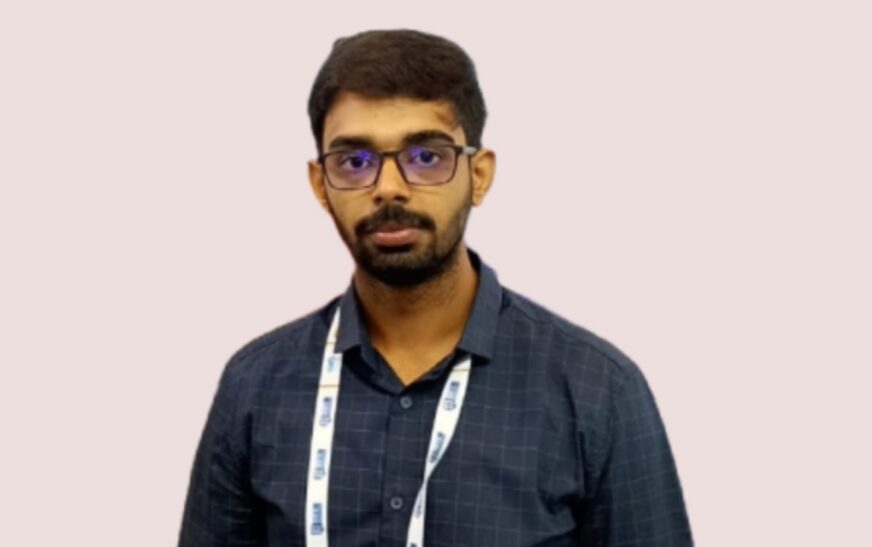
In an exclusive conversation with The Interview World at Powergen India 2026, Koushik MS, Business Development Engineer at SyskeyOT, discussed the company’s approach to OT cybersecurity and its technology portfolio. He explained how SyskeyOT protects its AI-driven network intrusion detection capabilities against emerging adversarial-AI threats. He also outlined the company’s current market footprint across geographies and customer segments and shared its strategic priorities for the next five years.
Here are the key takeaways from the conversation.
Q: Could you elaborate on SyskeyOT’s cybersecurity solution?
A: At SyskeyOT, we provide a unified OT asset intelligence and cybersecurity platform designed for critical sectors such as oil and gas, energy, manufacturing, and other industrial environments.
Our unified platform, SyskeyOT Cockpit, enables organizations to manage, monitor, and secure their critical operations from a single platform. It brings together multiple capabilities, including OT asset and log management, cyber exposure management, and secure remote access.
Together, these capabilities give critical-sector organizations comprehensive visibility into their OT environments while helping them strengthen security, improve asset health, and optimize operational performance.
First, SyskeyOT Cockpit provides unified asset management. It collects and correlates asset, log, network, and operational data to build a comprehensive and continuously updated view of the OT environment. This gives security and operations teams the visibility they need to understand their assets, identify potential risks, and monitor overall asset health and performance.
Next, we assess the collected asset information against vulnerability databases. This enables us to identify vulnerabilities associated with individual assets, assess their cyber exposure, and help organizations prioritize the risks that require attention.
Finally, SyskeyOT provides secure remote access to critical OT assets. Organizations can remotely access and manage these assets while maintaining strong security controls and protecting critical operations from unauthorized access.
Q: With AI itself becoming a potential attack surface, how does SyskeyOT ensure that its AI-driven network intrusion detection solution is protected against adversarial or rogue AI?
A: AI has been evolving continuously since its inception, and its role in enterprise applications is becoming increasingly significant. I believe the next generation of AI will play a critical role in strengthening cybersecurity by identifying and blocking rogue or malicious AI-driven intrusions within even the most robust security ecosystems.
At SyskeyOT, we are already applying AI to our cybersecurity platform to make detection more intelligent and adaptive. Our AI module continuously learns from network traffic and real-time operational data, establishing a baseline of normal behaviour. Once that baseline is established, the system can identify deviations in real time. If it detects an anomaly, suspicious behaviour, or potentially malicious activity, it automatically flags and responds to the threat.
This approach enables cybersecurity to move beyond conventional, rule-based detection toward a more proactive, continuously learning defence mechanism, one that can adapt to emerging threats as they evolve.
Q: What is SyskeyOT’s current market footprint in terms of geographies and customer segments?
A: Our OT solutions are trusted by leading organizations across major global markets. In India, our customers include Power Grid Corporation of India (POWERGRID), Greenko, Jakson Green, and GAIL (Gas Authority of India Limited). In the UK, National Grid is among our key customers. In the Middle East, particularly in Dubai, Dubai Electricity and Water Authority (DEWA) is one of our premium customers.
Our presence also extends across the GCC, with leading organizations such as ACWA Power in Saudi Arabia, KAHRAMAA in Qatar, and the GCC Interconnection Authority relying on our solutions. In the United States, we serve prominent utilities including Pacific Gas and Electric Company (PG&E), Pepco, and Evergy. Collectively, these engagements demonstrate the scale, reliability, and global adoption of our OT solutions across critical energy and utility infrastructure.
Q: What are the company’s strategic priorities for the next five years in terms of market expansion, new product development, and innovation?
A: Although we have developed an in-house product, we continue to research and investigate emerging challenges in critical environments. We first identify the underlying problems and assess their potential impact. Based on these findings, we then develop and deliver the most appropriate solutions to address our clients’ specific requirements. This approach enables us to continuously refine our technology while providing solutions that are practical, relevant, and outcome-driven.