

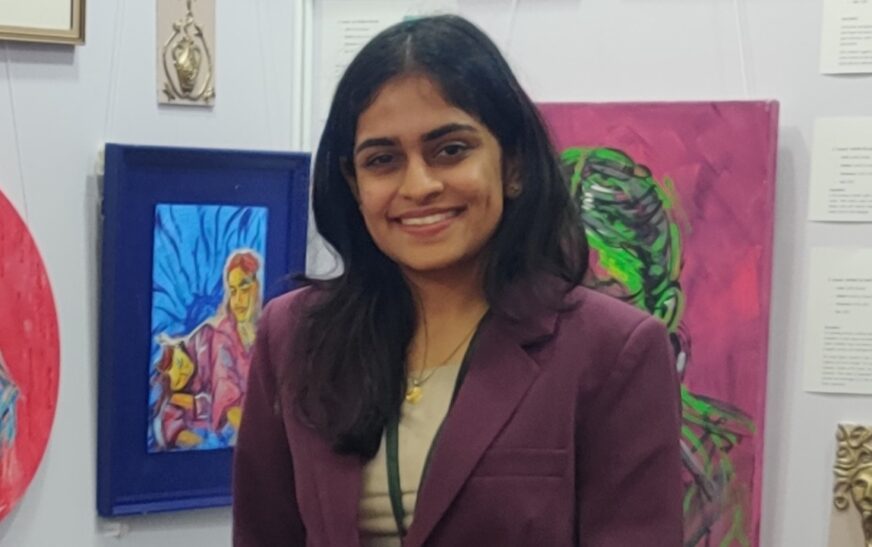
Surbhi Jhanwar, an Indian artist and founder of The Abnormal Lines, constructs a distinct visual language that interrogates convention through line-based abstraction. Her practice embraces a contemporary sensibility; it fuses minimalism with expressive narrative, and in doing so, redefines the boundaries of traditional aesthetics. Moreover, she positions art as an accessible medium, one that invites introspection while championing individuality. At its core, her work engages deeply with human relationships, rendering emotion through deliberate, evocative forms.
Importantly, her trajectory reflects a broader shift within India’s evolving art ecosystem. Like many self-driven, independent practitioners, she navigates the intersection of entrepreneurship and artistic inquiry. A lawyer-turned-artist, Jhanwar redirects analytical precision into her visual practice. Consequently, her brushwork captures the complexity of human emotion and the subtle dynamics of interpersonal connection with striking clarity.
In an exclusive interaction with The Interview World at The Haat of Art, Jhanwar articulates the conceptual foundations of her work and clarifies the message she seeks to convey. She also reflects on her artistic journey, evaluates audience reception, and outlines her exhibition history. Furthermore, she offers a forward-looking perspective by hinting at her upcoming thematic explorations. What follows are the key insights from this incisive and engaging conversation.
Q: What core themes define your art, and what message do you seek to communicate to viewers and potential collectors?
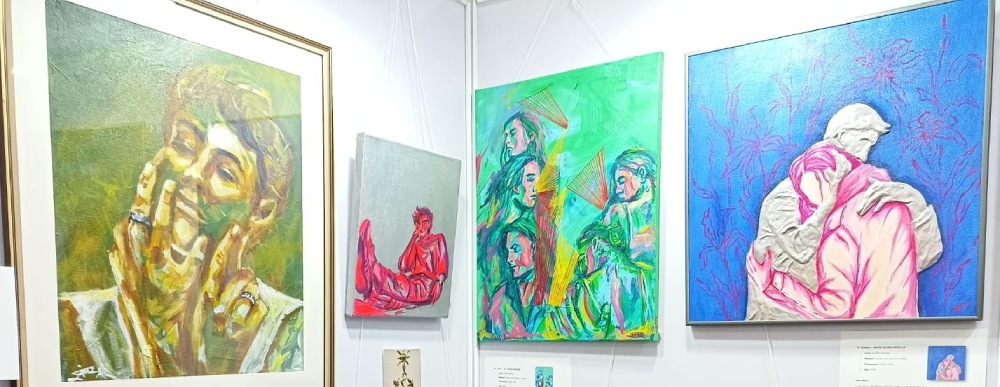
A: My artistic practice operates within the domain of abstract expressionism. I deploy a vivid, saturated colour palette to externalize emotion, particularly those feelings we habitually suppress. As human beings, we often internalize our emotional states; we conceal them, either out of discomfort or quiet embarrassment. Consequently, these unarticulated emotions accumulate beneath the surface.
Against this backdrop, my work interrogates the emotional condition of being human. It examines how we coexist with one another, with nature, and with the environments we inhabit. At the same time, it turns inward, probing the relationship we sustain with ourselves. Therefore, my practice consistently foregrounds human emotion and the intricate, often fragile, networks of connection that define our shared existence.
Q: How long have you been practicing as an artist, and is your training formal or self-directed?
A: I am a self-taught artist, and I have engaged with art since childhood, treating it as an intuitive and deeply ingrained pursuit. Professionally, however, I trained and practiced as a lawyer.
Today, I have chosen to pursue art as my primary vocation. I intend to develop it further and build a sustained career within this field.
While I attempted to balance both law and art, the two demanded fundamentally different forms of attention and discipline. Law, as is often said, is an exacting profession; it requires total cognitive and emotional commitment. In practice, it left little space for creative freedom. As a result, I found it increasingly difficult to sustain artistic exploration alongside it. Eventually, I recognized that my creative work required a level of mental openness that my legal practice could not accommodate.
Q: Is this your first participation in The Haat of Art, and how has the audience response been so far?
A: This marks my first participation in The Haat of Art, although I have exhibited my work earlier as well. I come from Raipur, Chhattisgarh, where I have previously presented my practice in several exhibitions. There too, audiences responded to my work as a distinct visual language, one that invites emotional engagement rather than passive viewing.
At the core of my practice lies the intention to foster resonance. I want viewers to connect with their own emotional states through my work. Therefore, I do not impose a fixed interpretation. Instead, I open a space where individual perception can unfold. Each viewer brings a different sensibility, and that plurality of response is essential to my process.
So far, the response has been deeply encouraging. People have not only engaged with the visual elements but also connected them to their inner emotions. While my descriptions offer a guiding framework, viewers consistently arrive at their own interpretations. Ultimately, this layered exchange between artwork, emotion, and perception is precisely what I aim to achieve, and the reception has affirmed that direction.
Q: How many exhibitions have you participated in so far, and what are your plans going forward, including any aspirations for international platforms?
A: I began exhibiting my work in 2024. Since then, I have participated in three to four exhibitions. Most recently, I presented my work at the Lalit Kala Akademi.
Looking ahead, I intend to expand my practice beyond national platforms. I actively seek opportunities that place my work in international contexts. Ultimately, I aim to take my art to a global stage where it reaches wider audiences and fosters deeper resonance across diverse cultural perspectives.
Q: Given that your work focuses on human relationships and emotions, what theme are you planning to explore next?
A: My next direction builds on the language of human emotion, but moves it toward healing and manifestation. I intend to deepen this exploration by shaping it into what I call manifestation-based art.
Alongside my existing portrait practice, I plan to integrate a more reflective layer. I can create a portrait while also engaging with the subject’s aspirations, how they envision themselves and where they hope to see themselves in the future. In this way, the artwork becomes both representation and intention.
Ultimately, I aim to merge emotion, identity, and aspiration within a single visual framework. Through this approach, the work not only reflects who a person is but also helps them connect with what they wish to become, turning the artwork into a space for conscious visualization and personal projection.


1 Comment
Appreciate the effort you put into this.
Comments are closed.