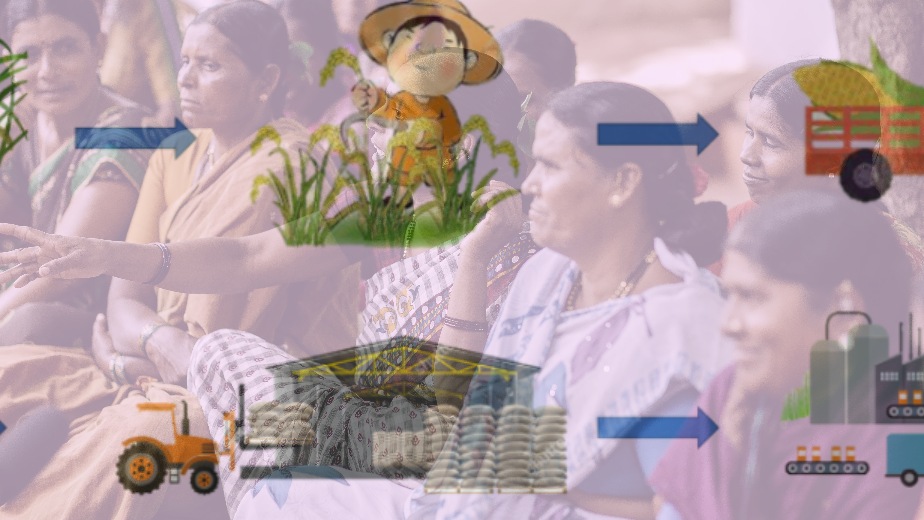


PRADAN (Professional Assistance for Development Action), founded in 1983 in New Delhi, advances equitable rural transformation across India. It works directly with communities, particularly marginalized women, to strengthen livelihoods and deepen democratic participation. The organization builds robust self-help groups, cultivates collective leadership, and systematically expands access to markets, formal credit, and government entitlements.
To achieve these outcomes, PRADAN deploys trained development professionals to live and work alongside rural households. They co-create durable income streams, embed climate-resilient agricultural practices, and reinforce accountable local governance. As a result, the organization now operates across multiple states and supports millions of households. At its core, PRADAN pursues a clear mandate: enable the poorest citizens to secure dignified livelihoods and exercise agency through collective action.
At the Hindu Business Line Agri & Commodity Summit 2026, in an exclusive conversation with The Interview World, Sarbani Bose, CoE Lead, Gender Equality at PRADAN, articulated the organization’s strategic priorities. She detailed targeted interventions that strengthen women’s participation in rural agriculture. She explained how PRADAN facilitates women landholders’ access to institutional credit and public agricultural finance schemes. Furthermore, she evaluated the uptake of emerging agricultural technologies among rural women farmers and identified structural enablers that accelerate adoption. Finally, she outlined policy and market reforms necessary to catalyse sustained growth in the agricultural sector.
The following captures the principal insights from that discussion.
Q: What specific programs and initiatives has PRADAN implemented to advance women’s empowerment and promote gender equity in rural agriculture?
A: At PRADAN, we have scaled a flagship initiative across multiple states: women-led agricultural production clusters. Under this model, we organize 100 to 150 women at the village level into formal producer groups. They consolidate production, aggregate output, and negotiate collectively. As a result, they achieve scale, reduce transaction costs, and strengthen their bargaining power in the marketplace.
Simultaneously, we institutionalize convergence with government departments. We formalize state-level agreements to align schemes, technical resources, and funding streams. Consequently, women’s groups gain structured access to public programs. In addition, we mobilize financial support to secure high-quality technical assistance. Experts from leading organizations and universities provide agronomic guidance, capacity building, and market intelligence.
This integrated approach has delivered measurable impact. Women’s incomes have increased significantly. Moreover, by positioning women at the forefront of production and marketing, we have strengthened their direct engagement with markets. They now transact as recognized economic actors. Importantly, they assert a clear identity as women farmers, such as producers, earners, and asset owners.
Therefore, beyond income enhancement, the program advances ownership. Women build assets in their own names. They generate independent earnings. And, in doing so, they reinforce both economic autonomy and social recognition.
Q: How is your organization enabling women farmers without land titles to access institutional credit and government agricultural finance schemes?
A: Access to affordable credit remains a structural constraint. The scale of investment required for productive agriculture continues to outpace the financing available to rural women. Consequently, a persistent capital gap limits growth and diversification.
However, self-help groups have emerged as a critical financial backbone. Women routinely draw working capital from SHGs to finance input purchases and manage production cycles. This mechanism offers speed, flexibility, and trust-based lending. Therefore, SHG credit continues to serve as a primary and dependable source of short-term finance.
In addition, the Cluster Investment Fund (CIF) under the National Rural Livelihoods Mission (NRLM) has strengthened resource mobilization. By channelling capital directly to community institutions, CIF enables women’s collectives to invest in agriculture, build shared infrastructure, and expand operations. As a result, women have improved their capacity to pool risk and leverage larger opportunities.
Beyond these instruments, uptake of the Kisan Credit Card (KCC) has provided supplementary formal credit in select cases. Although coverage remains limited, KCC offers structured access to institutional finance and reduces dependence on informal lenders.
Taken together, SHG credit, CIF support under NRLM, and selective access to KCC constitute the principal financing pathways currently available to women farmers. Nonetheless, the broader credit deficit persists and demands systemic resolution.
Q: How do you assess the adoption of emerging digital technologies in agriculture by rural women farmers?
A: Adoption of appropriate agricultural technology among rural women farmers is strong and steadily accelerating. In particular, drip irrigation and solar-powered systems have gained significant traction. Drip irrigation optimizes water use, improves input efficiency, and enhances crop productivity. As a result, it strengthens both sustainability and profitability.
Even more transformative is solar irrigation. Solar energy has begun to redefine on-farm power economics. It reduces dependence on diesel, shields farmers from volatile fuel prices, and lowers recurring operating costs. Consequently, it improves margins and stabilizes incomes.
The PM-KUSUM scheme has catalysed this shift by promoting decentralized solar solutions in agriculture. However, incremental adoption is insufficient. Policymakers and implementing agencies must move beyond pilot-scale deployment and design mechanisms to scale solar irrigation systems rapidly and equitably. Financing innovation, streamlined approvals, and targeted subsidies will prove essential.
For women farmers, such technologies are not optional enhancements; they are strategic enablers. Reduced energy costs directly expand net income. Greater control over irrigation strengthens crop planning and productivity. Encouragingly, women farmers are not passive beneficiaries. They adopt, operate, and manage these technologies effectively. Therefore, scaling climate-smart and cost-efficient innovations such as solar irrigation must remain central to advancing women-led agricultural growth.
Q: What two policy interventions would you recommend to the government to significantly strengthen and accelerate growth in the agricultural sector?
A: We must now shift from incremental deployment to systemic scale-up of solar irrigation. Solar irrigation holds substantial untapped potential. Capital flows from external sources have already begun to accelerate. However, fragmented implementation constrains impact. Therefore, we must integrate installation, financing, ownership, and enterprise development into a single, coherent strategy.
First, government investment must expand in both scope and depth. Public capital should de-risk infrastructure while crowding in private and blended finance. At the same time, implementation models must prioritize community ownership. Women’s collectives, self-help groups, producer groups, and farmer producer organizations (FPOs), should lead installation, management, and maintenance. This approach anchors assets within local institutions and ensures accountability.
Second, solar irrigation should not operate as a standalone intervention. Instead, it must underpin the entire agricultural value chain. When irrigation, processing, storage, and micro-enterprises run on solar energy, production systems become cost-efficient, climate-resilient, and scalable. Consequently, energy transitions translate directly into income gains.
Finally, sustainability requires institutional architecture. We must design durable platforms that integrate financing mechanisms, technical service providers, maintenance ecosystems, and market linkages. In doing so, we move beyond subsidy-driven distribution and build self-sustaining, women-led energy enterprises. Only then will solar irrigation realize its full transformative potential.
Q: Given the capital-intensive nature of solar irrigation systems, what specific fiscal or policy incentives do you expect from the government to support their adoption?
A: If poor rural women are to lead this transition, the policy architecture must recognize their capital constraints. They will require targeted incentives, interest subvention, and viability-gap funding. Without such financial support, adoption at scale will remain aspirational. Therefore, public investment must deliberately lower entry barriers and absorb initial risk.
Equally important is structured technical assistance. Women’s collectives need support in system design, installation oversight, operations management, and preventive maintenance. Capacity building cannot remain episodic; it must be institutionalized. Only then can community-owned assets function reliably and deliver sustained returns.
India already operates Custom Hiring Centres (CHCs) across rural geographies. These platforms provide a ready institutional template. We should assess how existing CHCs can integrate solar-based infrastructure and energy services. With appropriate redesign, they can evolve into decentralized energy and equipment hubs.
However, infrastructure alone is insufficient. Women’s producer groups (PGs) and self-help groups (SHGs) require working capital to operate and manage these systems effectively. Dedicated funds should flow directly to these collectives to cover operational expenses, maintenance reserves, and service delivery costs. Moreover, solar assets should support multiple productive uses, not only irrigation, but also processing, storage, and other rural enterprises.
By combining financial incentives, technical support, and institutional strengthening, we can enable women-led platforms to manage solar infrastructure sustainably and at scale.