

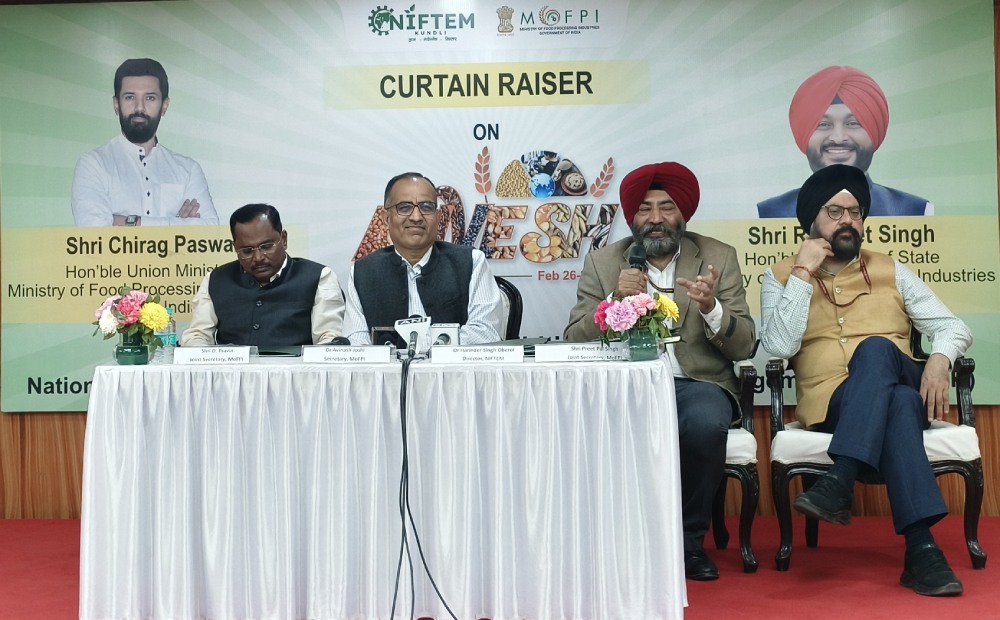
ANVESH–2026, the International Conference on Advanced Next Generation Vision for Emerging and Sustainable Healthy Foods, will take place from 26 to 28 February 2026. National Institute of Food Technology Entrepreneurship and Management, Kundli (NIFTEM-K), an Institute of National Importance under the Ministry of Food Processing Industries, Government of India, is organising the conference. Over three intensive days, the conference will convene researchers, industry leaders, policymakers, and innovators from more than 25 countries. Together, they will examine frontier advances in food processing, sustainability, nutrition science, and value-added food systems. With over 1,000 delegates expected, ANVESH–2026 will deliver a structured, high-impact programme comprising plenary sessions, keynote addresses, expert panels, curated roundtables, a technology exhibition, and a live culinary showcase. Each element will spotlight breakthrough innovations across the entire food processing value chain.
More importantly, the conference will address strategic imperatives shaping the global food ecosystem. These include food safety and traceability, digital compliance architectures, alternative proteins, nutraceutical innovation, waste valorisation, and circular economy frameworks. By foregrounding these themes, ANVESH–2026 will reinforce India’s ambition to strengthen its food systems, expand processed food output, and enhance global competitiveness. At its core, the conference recognises that modern food technologies are critical to reducing post-harvest losses, optimising resource efficiency, and building resilient, sustainable food systems.
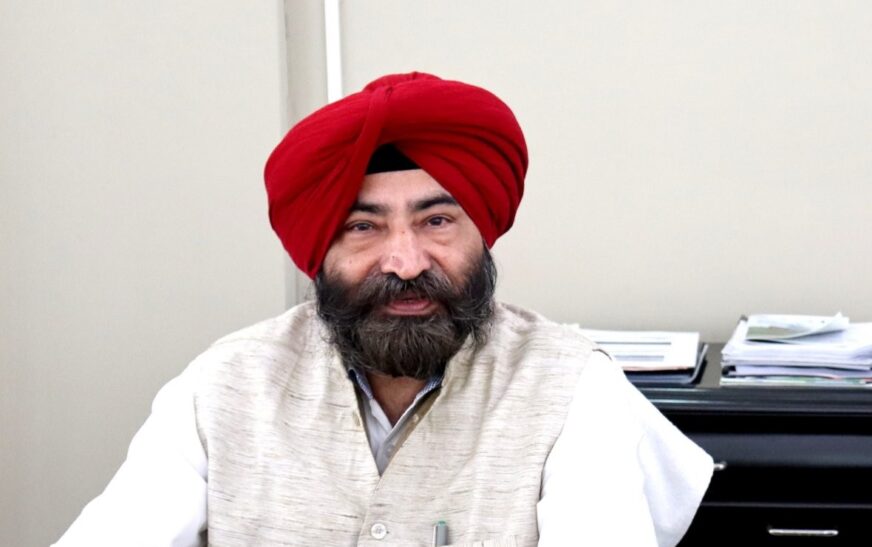
In an exclusive interaction with The Interview World, Dr. Harinder Singh Oberoi, Director of NIFTEM-K, articulates the strategic vision underpinning ANVESH–2026. He outlines how India can transition from ensuring food security to asserting global food leadership. He explains how NIFTEM-K equips entrepreneurs and startups with the technical, managerial, and regulatory competencies required to scale. Furthermore, he analyses the potential economic multiplier effects that could arise from accelerated growth in India’s food processing sector. Finally, he addresses and clarifies persistent misconceptions surrounding processed foods.
What follows are the key insights from this in-depth and forward-looking conversation.
Q: Could you elaborate on the vision and objectives of ANVESH–2026, and highlight the key innovations, emerging technologies, and distinguished participants being brought to the platform?
A: ANVESH–2026 creates a rare and deliberate convergence. It brings academicians, researchers, startups, entrepreneurs, and chefs onto a single platform. Such alignment across the entire food ecosystem is difficult to achieve at one time and in one place. Therefore, the conference is designed to catalyse meaningful exchange rather than fragmented dialogue.
The exhibition will anchor this convergence. We are hosting 61 stalls, led by major corporates such as Nestlé, Amul, Bisleri, and Sahyadri Farms. Alongside these industry leaders, we are featuring beneficiaries of the PMFME Scheme, grassroots entrepreneurs who represent the emerging base of India’s food processing landscape. Sixteen such entrepreneurs will participate, including ten from Haryana and one each from Punjab, Jammu & Kashmir, and Bihar. In addition, MSME operators from the food sector will showcase their capabilities and products.
Equally important, key public institutions will participate through dedicated stalls. These include National Institute of Food Technology Entrepreneurship and Management, Kundli (NIFTEM-K), Central Warehousing Corporation, National Sugar Institute, North Eastern Regional Agricultural Marketing Corporation (NERAMAC), and TRIFED under the Ministry of Tribal Affairs. Together, they will present innovative products, technologies, and institutional initiatives that strengthen India’s food value chain.
In parallel, 19 startups will display the products and technologies they have developed. This structured proximity to large corporates creates tangible opportunity. Startups can initiate direct engagement with established industry players. Over time, these conversations could mature into third-party manufacturing partnerships or strategic collaborations. Conversely, corporates gain early access to disruptive ideas, agile innovation models, and emerging technologies.
As a result, ANVESH–2026 will not merely host an exhibition; it will engineer a high-value networking ecosystem. By integrating corporates, startups, MSMEs, government institutions, and grassroots entrepreneurs, the conference will foster cross-sector collaboration with measurable long-term impact.
Q: How can India move from food security to global food leadership?
A: India already commands scale. It ranks among the world’s largest agricultural producers. We are the second-largest producer of fruits and vegetables globally, and we lead the world in mango production. In primary production, therefore, our position is formidable.
However, production volume alone does not confer food leadership. The decisive differentiator is processing intensity. In this domain, India lags behind several emerging economies, including Thailand, Mexico, and Philippines. These countries convert a significantly higher proportion of their agricultural output into value-added products. As a result, they capture greater economic value, reduce post-harvest losses, and expand their export footprint.
Therefore, if India seeks to transition from food sufficiency to global food leadership, it must decisively raise its processing levels. This shift is not optional; it is strategic. Higher processing intensity preserves food, enhances shelf life, improves supply chain efficiency, and strengthens resilience.
Critically, this transformation must begin at the farm gate. We must enable on-farm and near-farm processing at scale. When farmers become processors, they move up the value chain. They capture higher margins. They stabilise income. Over time, this value addition generates a multiplier effect across rural economies.
As more farmers adopt processing, the benefits will cascade. Rural enterprises will expand. Aggregation models will strengthen. Exports will grow. In turn, India will not only produce at scale but also process at scale, thereby converting agricultural strength into sustainable global leadership.
Q: How does your institution equip entrepreneurs and startups with the skills required to scale, innovate, and compete effectively in the market?
A: We operate six fully functional pilot plants. We designed these facilities to upscale laboratory innovations into commercially viable technologies. At the same time, we use them as applied learning platforms for entrepreneurship development. Here, students move beyond theory and engage directly with process engineering, product standardisation, and scale-up protocols.
The outcomes are already visible. Six second-year B.Tech students have emerged as co-founders of a startup. They translated classroom concepts into market-ready solutions by leveraging the pilot plant ecosystem. This integration of academic instruction with hands-on validation has strengthened our institutional startup culture. Students do not merely study food technology; they operationalise it.
Moreover, we extend this ecosystem beyond our campus. We invite students from universities across the country. We also onboard aspiring and existing entrepreneurs. Within the pilot plants, we demonstrate the end-to-end product development cycle. Participants learn how to conceptualise a product, optimise formulations, and standardise processes. Subsequently, we train them to conduct shelf-life studies, design appropriate packaging systems, and build compliant branding strategies.
In addition, we provide structured training in regulatory compliance, quality assurance, and market positioning. Through this comprehensive capacity-building framework, we equip entrepreneurs with the technical depth and operational discipline required to scale sustainably.
Q: What economic multiplier effects could emerge if the food processing industry scales significantly in the country?
A: The economic opportunity is substantial and quantifiable. Post-harvest losses erode value at a systemic level. In practical terms, every kilogram of grain lost represents not merely wasted output, but squandered inputs, land, water, labour, energy, and capital. In effect, one kilogram of grain lost negates the productive effort required to generate it. Such waste is economically indefensible.
Therefore, even marginal improvements in loss reduction can produce outsized gains. If India reduces total post-harvest losses by just one or two percent, the incremental value retained would translate into thousands of crores of rupees added to the national economy. This is not speculative optimism; it is arithmetic grounded in scale.
The solution lies in accelerating processing intensity. India must raise its food processing levels to at least 25–30 percent of total agricultural output. Higher processing improves shelf life, stabilises prices, strengthens supply chains, and unlocks value addition across the farm-to-fork continuum.
Once this threshold is achieved, the multiplier effects will become visible. Farmers will secure better price realisation. Rural enterprises will expand. Exports will strengthen. Consequently, the food processing sector will evolve into a major growth engine, driving sustained expansion in the Indian economy.
Q: A common perception is that processed food is inherently unhealthy. How do you respond to this view?
A: I categorically reject the claim that processed food is inherently harmful. I say this as a food scientist grounded in evidence, not rhetoric. In reality, nothing we consume is entirely unprocessed. Processing begins the moment we alter food from its raw state.
Consider milk. We boil or pasteurise it before consumption to ensure safety. Consider wheat. We do not eat raw grain; we mill it into flour and then convert it into chapatis, bread, or cakes. Similarly, we do not consume paddy; we mill and cook rice before eating it. In each case, processing enhances safety, digestibility, shelf life, and convenience. Therefore, the issue is not whether food is processed. The issue is the degree and nature of processing.
For this reason, we developed a comprehensive compendium at NIFTEM-K. With support from the Ministry and industry stakeholders, we undertook rigorous work to clarify definitions and eliminate ambiguity. The compendium systematically explains what constitutes food, what qualifies as primary, secondary, and tertiary processing, and how to interpret terms such as high fat, sugar, and salt (HFSS) and ultra-processed foods. It also provides evidence-based guidance on what to consume, in what proportion, and under what lifestyle conditions.
Ultimately, this debate hinges on awareness and scientific literacy. Unfortunately, social media ecosystems often amplify voices that criticise food processing without understanding its underlying science. Simplistic narratives gain traction, while nuanced evidence receives less attention. That imbalance distorts public perception.
Therefore, responsible communication is essential. Scientists must uphold rigour. Equally, media professionals must exercise discernment. Food processing, when applied appropriately, enhances food safety, reduces waste, improves nutrition delivery, and strengthens supply chains. Excessive consumption of high-sugar beverages or confectionery is undeniably unhealthy. However, moderation, combined with physical activity, remains the operative principle. The risk arises not from processing per se, but from imbalance in dietary behaviour and lifestyle choices.






1 Comment
Hmm it seems like your website ate my first comment (it was super long) so I guess I’ll just sum it up what I submitted and say, I’m thoroughly enjoying your blog. I as well am an aspiring blog blogger but I’m still new to the whole thing. Do you have any tips for rookie blog writers? I’d genuinely appreciate it.
Comments are closed.