
EpiLogic GmbH, founded in 1996, has established itself as one of Germany’s foremost authorities in applied phytopathology. The company concentrates on fungal plant pathogens and conducts rigorous in vivo and in vitro sensitivity studies, reinforced by advanced molecular analyses. Through this work, EpiLogic reveals how pathogens evolve, adapt, and ultimately develop resistance to fungicides.
Serving agrochemical companies, research institutions, and regulatory agencies across Europe, the firm monitors resistance dynamics with exacting precision. Its research spans a broad spectrum of crops, including cereals, grapes, potatoes, and tomatoes, and covers major disease threats such as powdery mildews, net blotch, Cercospora leaf spot, and Septoria.
Furthermore, EpiLogic operates annual European sampling programmes that integrate air-sampling networks, field submissions, miniaturized assays, and molecular diagnostics. This multilayered approach generates detailed seasonal, regional, and long-term resistance intelligence.
With more than 25 years of scientific leadership, EpiLogic delivers decisive, data-driven insights that fortify sustainable crop protection, support fungicide registration, and inform regulatory risk assessment across Europe.
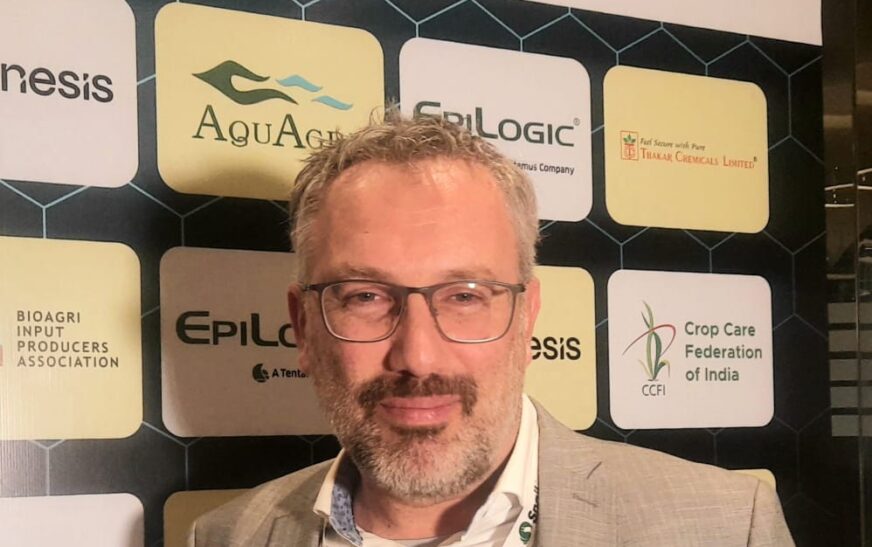
In an exclusive conversation with The Interview World at the 3rd Edition of BRAND R.Comm – Agriculture & Rural Communication Summit & Awards 2025, organized by Snail Integral Pvt. Ltd., Gijs Manneveld, Managing Director of EpiLogic GmbH, outlines the company’s solutions for the agriculture sector. He explains the value EpiLogic brings to farmers and agribusinesses, offers a window into its global operations, identifies opportunities in the Indian market, and shares his perspective on the future of plant-pathological solutions in India.
The following are the key insights from his compelling discussion.
Q: Could you elaborate on what offerings EpiLogic provides for the agriculture domain?
A: At EpiLogic, we provide a service that rigorously tests both chemical products and biofungicides against a wide range of pathogens. We then deliver the data our clients need to assess how effectively their products perform, both in the field and against specific pathogens, while working under fully standardized laboratory conditions. This controlled environment removes the variability that typically arises in field trials. As a result, companies gain a clear, reliable understanding of how their product behaves before they move to large-scale field testing.
Q: What specific value do your solutions deliver to the agriculture sector, particularly for farmers and agricultural companies?
A: The value we deliver lies not only in explaining how a product works but also in providing an early-warning system for emerging pathogen threats. Every product and every chemical mode of action faces the risk of pathogen adaptation or resistance. Therefore, companies need to detect these shifts as early as possible so they can adjust their strategies in time.
Farmers, too, rely on this assurance. They must know that the products they apply can be trusted and will perform consistently. Beyond supporting R&D by clarifying a product’s mode of action, we also play a critical role after a product reaches the market. When clients commission a monitoring study or a long-term surveillance program with us, we assess, year after year and across different regions of India, how pathogen populations respond to their products.
If we detect early signs of change, companies can intervene immediately to protect product performance. This prevents the worst-case scenario: yield losses triggered by local pathogen hotspots. Ultimately, our value lies in understanding when, where, and how adaptation and resistance begin to emerge, and ensuring our partners stay ahead of these shifts.
Q: Could you share insights into your operations across the globe?
A: EpiLogic currently operates in Germany and, in practice, across all of Europe, where we conduct patented testing throughout the region. We are now expanding our global footprint. We are establishing a laboratory in the United States to serve North America, and on 8 December we will officially open our new facility in India. Moreover, we belong to the Tentamus Group, a global network of laboratories with a presence throughout Asia, North America, Europe, and parts of the Middle East.
Q: How do you assess the potential and opportunities of the Indian market?
A: I see tremendous promise in the Indian market. India is an agricultural powerhouse, yet it has not fully realized its potential. That is precisely why EpiLogic is here. We believe we can meaningfully support India by addressing challenges related to pathogens, resistance, and plant pathology. In doing so, we aim to strengthen the country’s agricultural resilience and unlock greater productivity.
Q: During your initial surveys and visits to India, how did you evaluate the plant pathology conditions and the market needs prior to launching your operations here?
A: In India, we see a sharp rise in plant diseases, mirroring trends worldwide, driven by climate change and the cross-border movement of pathogens. At the same time, the country benefits from a deep and vibrant scientific tradition in plant pathology, supported by strong academic institutions. Yet despite this expertise, a significant gap remains: India lacks sufficient commercial solutions that can help companies address plant-pathology challenges at scale. That gap is where we believe we can contribute meaningfully.