


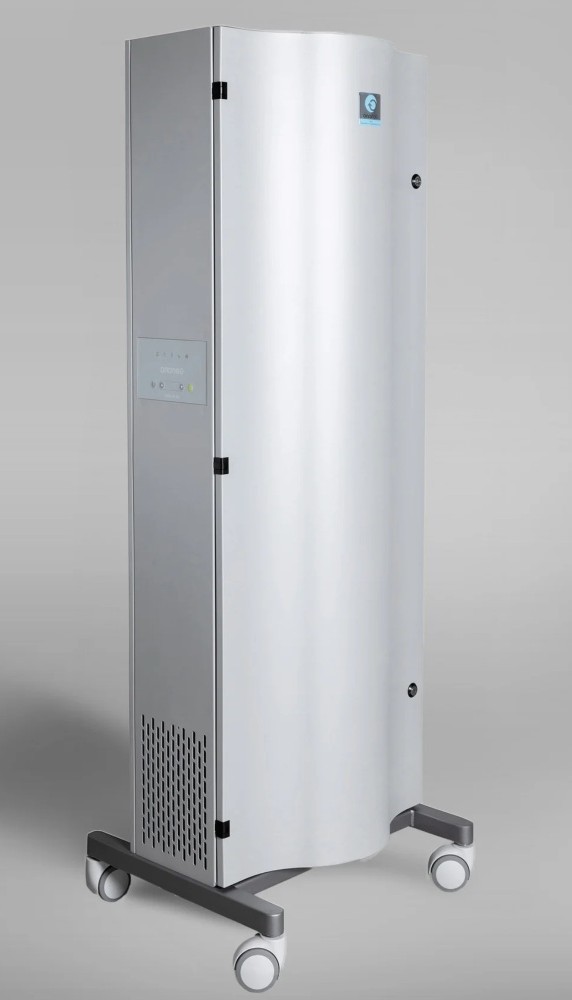
Founded in Finland in 1999, Genano has redefined what clean air truly means. From its headquarters in Espoo, the company has built a global presence with one bold mission: to deliver ultra-pure air that safeguards people, processes, and performance. At the heart of its innovation lies patented cold-plasma technology. Unlike conventional filters, it doesn’t just trap contaminants, it eliminates them. Viruses, bacteria, nanoparticles, even toxic gases, destroyed at a nanoscale precision of 0.003 microns. No filters. No clogging. No compromise. The outcome is continuous, safe, and cost-efficient clean air.
Genano’s solutions serve where purity cannot be optional: high-risk hospital wards, IVF labs, surgical theatres, and cleanrooms. They also support industries fighting VOCs and public spaces striving for healthier air. The impact is measurable: fewer infections, stronger patient outcomes, and controlled trials showing zero trace of coronaviruses. And Genano goes further. With Clean Air as a Service, the company monitors, maintains, and guarantees air purity. This is not simply air cleaning. It is air transformation.
In an exclusive conversation with The Interview World, Alok Gupta, Clean Air Expert – India at Genano Group, delves into the edge of cold-plasma technology over HEPA filters, the unmatched benefits of nanoscale purification, and its critical role in hospitals. He also outlines its applications across industries, the company’s focus on sustainability, and how AI and IoT can elevate predictive monitoring.
What follows are the key insights from this powerful interaction.
Q: Genano’s filterless cold-plasma technology is unique. How do you position this against conventional HEPA-based competitors?
A: Genano’s patented cold-plasma technology marks a decisive break from conventional mechanical filtration. HEPA filters stop at 0.3 microns. Genano goes further. It eradicates ultrafine particles as small as 0.003 microns, just 3 nanometers, along with viruses and harmful gaseous impurities. And it achieves this without relying on disposable filters. The result is clear: a solution that is sustainable, low-maintenance, and remarkably reliable. For critical environments such as hospitals and cleanrooms, this leap in air purification redefines what true protection means.
Q: Your systems claim to capture particles as small as 3 nanometers. Could you elaborate on how this capability translates into real-world benefits, particularly in high-risk environments?
A: Capturing particles at the nanoscale creates a decisive safety margin in environments where contamination can be life-critical. Consider IVF laboratories. Here, even trace nanoparticles may compromise embryo development. In ICUs or isolation wards, nanoscale pathogens that slip past HEPA filters can still spark dangerous infections. Genano eliminates these threats. It safeguards hospitals, laboratories, and patients with uncompromising protection that goes beyond conventional filtration.
Q: With rising concern over healthcare-associated infections (HAIs), how critical is nanoscale air purification to the future of hospital safety?
A: As healthcare-associated infections (HAIs) rise to the forefront of concern, nanoscale air decontamination has shifted from a luxury to a necessity. Genano’s advanced technology tackles this challenge head-on. It minimizes airborne transmission risks, strengthens infection control protocols, and safeguards patient recovery. In turn, it drives measurable improvements in outcomes: lowering HAI-related morbidity, reducing mortality, and cutting costs for healthcare providers.
Q: Beyond healthcare, what industries stand to benefit the most from Genano’s VOC abatement and air purification systems?
A: Healthcare may remain the foremost priority, yet the impact extends far beyond hospitals. Multiple industries reap substantial benefits from nanoscale air decontamination. In pharmaceuticals and cleanrooms, it safeguards product integrity at every stage of production. In food and beverage, it shields manufacturing environments from contamination, protecting both process and consumer. In electronics and semiconductors, it ensures dust-free precision, where even the smallest particle can compromise performance. And in chemical and R&D laboratories, it enables the safe handling of VOCs and hazardous particulates, protecting both people and innovation.
Q: Given global climate and pollution challenges, how does Genano balance health outcomes with environmental responsibility?
A: Genano embeds sustainability at the core of its design. Unlike conventional systems, it eliminates the need for disposable HEPA filters, cutting biomedical waste at the source. Its stainless-steel units, proven to last over 15 years, deliver enduring performance while reducing replacement cycles. The integrated AutoWash technology further lowers environmental impact by ensuring self-cleaning efficiency. At the same time, every system operates with remarkable energy efficiency, delivering continuous clean air while keeping operating costs under control.
Q: What role do you see artificial intelligence, IoT, or predictive monitoring playing in the evolution of Genano’s Clean Air as a Service™ model?
A: We view digitalization as the next frontier in clean air solutions. By embedding IoT sensors, AI-powered predictive analytics, and remote monitoring, our Clean Air as a Service™ model transforms how environments are safeguarded. It delivers real-time intelligence on air quality, system performance, and maintenance needs. As a result, safety remains uninterrupted, energy use stays optimized, and operational efficiency reaches new heights.








3 Comments
I find the advancements in nanoscale air purification technology really impressive, especially its implications for healthcare and beyond. The focus on sustainability and AI integration makes it seem like a highly promising solution for the future.
I found this article incredibly insightful, particularly the emphasis on nanoscale air purifications critical role in healthcare and beyond. The blend of technological detail with real-world applications like in hospitals and cleanrooms truly highlighted its transformative potential.
Impressive insight into the revolutionary role of nanoscale air purification, especially in healthcare. The emphasis on sustainability and advanced tech like AI integration truly highlights its transformative potential for safety and efficiency.
Comments are closed.