

Oratrics is redefining the future of communication and leadership education. Founded in 2018, this next-generation EdTech platform empowers children, teens, and adults across 15+ countries through live, AI-assisted, interactive coaching. With its headquarters in Bengaluru, India, and a growing presence in Oklahoma City, USA, Oratrics delivers a global learning experience rooted in both Eastern values and Western pedagogy.
Specializing in public speaking, storytelling, debate, personality development, and emotional intelligence, Oratrics offers structured programs that span from kindergarten to adulthood. Its curriculum includes leadership and life skills—and even financial literacy—for learners as young as eight. Every session is designed to transform shy individuals into confident communicators capable of commanding attention on stage, in classrooms, and in everyday interactions.
At the core of its methodology lies a bold mission: to turn readers into thinkers, thinkers into speakers, and students into empowered voices equipped for the real world. Oratrics operates with a compact but expert team, each dedicated to nurturing articulate, thoughtful leaders of tomorrow. The platform aspires to become a “global destination” for communicative excellence.
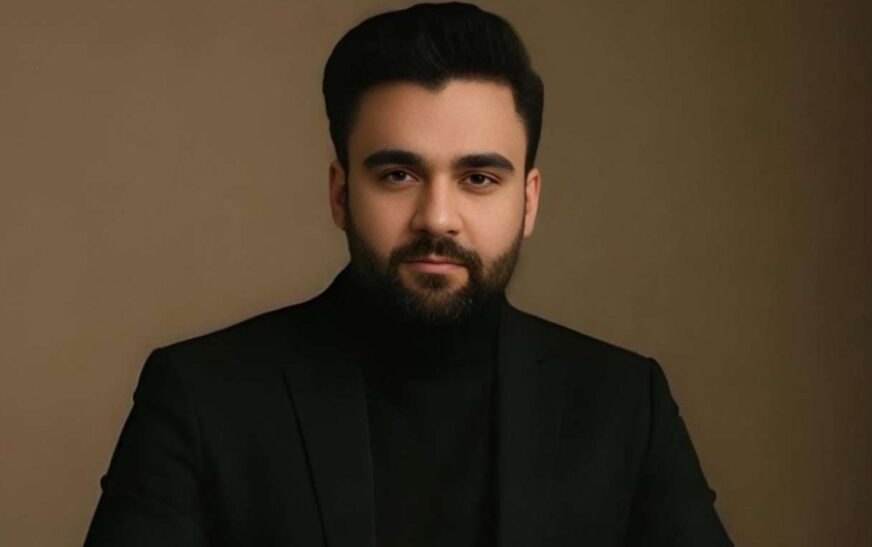
In an exclusive interview with The Interview World, Samad Shoeb, Co-founder and CEO of Oratrics, reveals the inspiration behind the venture and reflects on the complexities of operating across multiple geographies. He elaborates on the flagship “Future Human Program,” explains how AI complements—rather than replaces—human mentorship, and shares insights into the metrics that gauge program effectiveness. He also unveils future offerings and articulates his strategic vision for expansion in both content and format.
Here are the key takeaways from this engaging and insightful conversation.
Q: What inspired you to establish Oratrics: The Personality Enrichment School in 2018, and how has that initial vision evolved since its founding?
A: The idea behind Oratrics emerged from a striking realization: traditional education teaches students what to think, but rarely how to express themselves, lead others, or thrive beyond the classroom.
We witnessed a troubling pattern—brilliant minds struggling to communicate their ideas, talented students crippled by stage fright, and imaginative thinkers unable to articulate their vision. Years of academic instruction had left them equipped with knowledge but deprived of the most vital life skills—confidence, communication, creativity, leadership, and self-awareness.
That gap became our call to action.
We launched Oratrics to tackle this global challenge head-on. Not as a patchwork fix, but as a complete reinvention. We built a revolutionary, AI-powered, skill-based learning ecosystem designed to restore what conventional schooling had overlooked—the human element. Our goal was bold: to create a system that is future-ready, emotionally intelligent, globally scalable, and personally transformative.
Our mission is clear and unwavering: To empower every learner—from a curious five-year-old to a seasoned professional—to speak with clarity, write with purpose, lead with conviction, and evolve into their fullest potential.
Oratrics is more than just a platform.
It’s a movement. A reimagination of education—built not just for the 21st century, but for the world we dare to create.
Q: With a presence in over 15 countries (US, UK, Canada, UAE, etc.), what challenges and opportunities have emerged in scaling across different cultures?
A: Scaling across cultures has offered a powerful blend of rewards and revelations. While the core needs—confidence, expression, and leadership—remain universal, learning preferences and communication norms differ dramatically across regions.
To address this, we adopted a dual approach: we localized our content to reflect regional idioms, cultural values, and real-world scenarios, while preserving a cohesive global learning architecture. This strategy allowed us to stay relevant without compromising our vision.
One of our most exciting breakthroughs has been the creation of international peer-to-peer learning environments. Students now collaborate across borders and time zones, gaining exposure to diverse perspectives and enriching their communicative skills through real interaction.
However, this journey hasn’t been without its challenges. Chief among them: delivering content in a culturally sensitive manner while maintaining high engagement across age groups. We met this head-on through our live coaching model and dynamically adaptive curriculum—both of which have proven critical in navigating the complexities of global education with consistency and care.
Q: The new “Future Human Program™” includes modules like AI, cybersecurity, podcasting, and entrepreneurship. What led to its creation, and how do you measure its impact?
A: We launched the Future Human Program™ in response to a pressing reality: the world is evolving far faster than traditional education can keep pace. Today’s learners require more than academic knowledge—they need adaptive skills, digital fluency, emotional intelligence, and real-world creativity to thrive.
To meet this need, we built an integrated learning experience that fuses AI-powered tools with public speaking, writing, cybersecurity, and entrepreneurial thinking. Our goal is not just to educate but to equip students to lead in an unpredictable, interconnected world.
We measure success through a range of transformation metrics: sharper articulation, active participation in global challenges, AI-generated progress insights, and real-time parental feedback. Each data point reflects growth, but the most powerful validation comes from our students themselves. Learners who once struggled to speak up now present their ideas with confidence—on global virtual stages, in front of international audiences.
That’s not just progress. That’s transformation.
Q: Programs feature AI-assisted feedback in areas such as speech clarity and pace. How does this technology complement rather than replace human mentorship?
A: AI empowers us to scale personalization like never before. It delivers instant, unbiased feedback on key communication dimensions—voice modulation, tone, pacing, and structure—each essential for measurable improvement. Yet, technology alone isn’t enough. That’s where human mentorship transforms the experience. Coaches go beyond data; they bring empathy, emotional resonance, and strategic adaptability. They interpret AI insights, personalize guidance, and help learners internalize feedback in a way that truly sticks.
This powerful fusion of AI precision and human intuition forms the backbone of our approach. While technology pinpoints what needs improvement, mentors illuminate how to improve—with heart, context, and care. It’s this seamless integration of machine intelligence and human connection that defines Oratrics—and distinguishes us in the evolving landscape of soft-skills education.
Q: What key metrics or feedback do you rely on to measure program effectiveness for both students and corporate clients?
A: We deploy a multi-layered evaluation framework to measure real impact. At the core, AI-generated performance analytics track clarity, tone, and vocabulary. Alongside, we use personality growth indicators, engagement scores, and structured mentor assessments to capture deeper progress.
For students, we go further. Parental feedback, learner testimonials, and tangible transformation markers—like confidence on public platforms, participation in competitions, or independently crafted speeches—offer crucial validation.
For corporate professionals, we assess outcomes through presentation impact, clarity in internal communication, and confidence in team settings.
Yet across both audiences, the clearest proof lies in what follows: high retention rates, repeated enrolments, and strong word-of-mouth referrals. These signals don’t just affirm the program’s effectiveness—they show it’s genuinely valued.
Q: As a bootstrapped EdTech pioneer, what emerging trends like AI, microlearning, or gamification are you most excited to integrate into future offerings?
A: We’re thrilled to introduce microlearning paths—compact, skill-driven modules designed for maximum impact in minimal time. Learners can track their progress, revisit key lessons, and master each concept through short, focused bursts.
AI already powers our feedback systems, but we’re taking it further. By harnessing real-time insights, we’re building adaptive learning journeys that respond intelligently to individual growth.
At the same time, we’re reimagining engagement through gamification. Our upcoming ConnektN platform will feature global storytelling tournaments, competitive speech battles, and leadership achievement badges.
The more joyful and challenge-based the experience, the more deeply learning takes root. That’s our philosophy. We aim to make world-class communication and leadership training not only accessible and on-demand—but also interactive, energizing, and genuinely rewarding.
Q: Looking ahead, what key milestones or new programs are planned? Do you foresee expanding into new domains or formats?
A: Our immediate roadmap features the launch of Future Human Studios—offline experiential labs in key cities designed to bring learning to life. These immersive spaces will host storytelling workshops, leadership simulations, structured debates, and hands-on media creation, offering learners a dynamic environment to refine their skills in real time.
Simultaneously, we’re expanding our curriculum to embrace Future World themes—sustainability communication, tech ethics, and global citizenship—preparing learners to lead with purpose in a rapidly changing world.
In parallel, we’re piloting strategic B2B partnerships with schools and institutions to embed Oratrics AI into their existing frameworks, enhancing their programs with intelligent, personalized learning.
Looking ahead, we envision Oratrics as the world’s foremost ecosystem for personality education. By bridging online scale, offline depth, and global reach, we aim to empower millions to communicate with confidence, lead with empathy, and thrive in the future of work and society.


1 Comment
You bring a fresh voice to a well-covered topic.
Comments are closed.