


Founded in 2005, the International Solar Energy Research Center Konstanz (ISC Konstanz), Germany has become a global powerhouse of innovation, propelling the transition toward clean, affordable solar energy. Driven by an uncompromising pursuit of excellence, ISC Konstanz pioneers next-generation photovoltaic technologies that not only push the limits of efficiency but also considerably reduce production costs.
Through bold research initiatives, strategic industry collaborations, and a culture of hands-on knowledge transfer, ISC Konstanz transforms cutting-edge science into tangible, real-world solutions. Beyond its labs and testbeds, the center shapes the future of energy by mentoring emerging talent and setting international benchmarks for solar innovation. In essence, ISC Konstanz doesn’t merely research solar energy; it redefines what’s possible for a sustainable future.
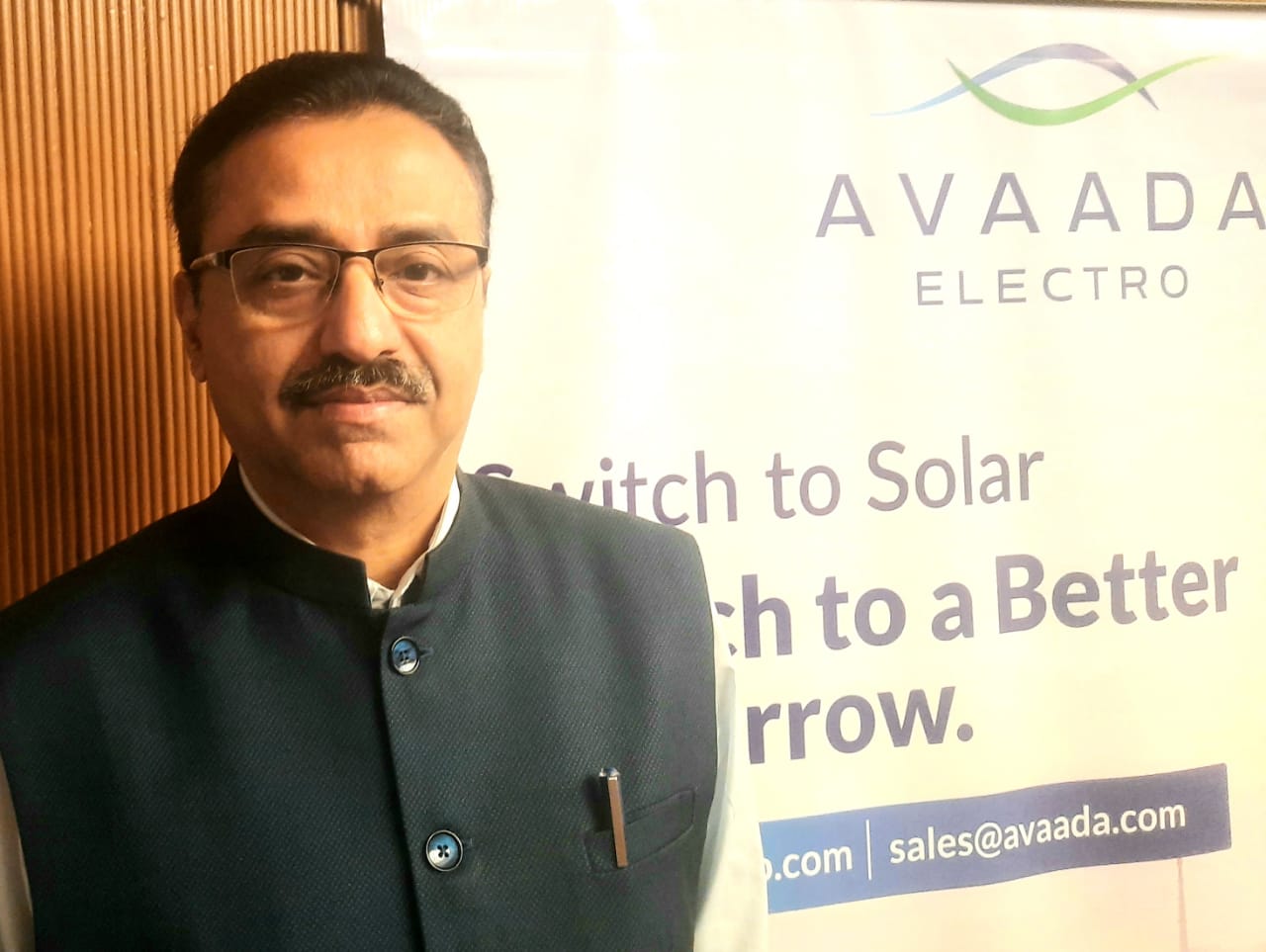
In an exclusive interaction with The Interview World, Dr. Radovan Kopeček, Head of Strategy & Education and Member of the Executive Committee at ISC Konstanz, sheds light on the groundbreaking solar innovations his team is driving. He discusses how the center’s technologies are making solar energy both more efficient and more affordable, explores the sector’s pivotal role in achieving the UN’s SDG goals, and explains how artificial intelligence is poised to revolutionize the solar landscape. Finally, Dr. Kopeček offers his insights on the evolving future of solar energy in India.
The following are the key takeaways from this insightful conversation.
Q: Could you elaborate on the key innovations and research initiatives through which the International Solar Energy Research Center Konstanz is transforming solar technologies?
A: We began exploring n-type technology a few years ago, building on research that started over two decades earlier. N-type material offers significant advantages over conventional p-type silicon, making it the foundation for today’s most advanced solar innovations, including TOPCon and heterojunction technologies.
Our major breakthrough, however, lies in the development of back-contact (or rear-contact) solar cells, a design that pushes crystalline silicon technology to its theoretical efficiency limit of 25–26%. We successfully transferred this cutting-edge technology to China in 2018. Now, Solex is set to become the first company in India to bring this next-generation solar technology into full-scale production.
Q: What are the affordability and efficiency levels of this technology?
A: The current module-level efficiency stands close to 25%, with the potential to reach 26% in the near future. Although this technology is presently more expensive per watt-peak than TOPCon, this cost difference is expected to narrow and eventually reverse as the technology matures.
We have witnessed this pattern of evolution before. The industry first relied on aluminum back-surface field (Al-BSF) cells, which were later replaced by Passivated Emitter and Rear Cell (PERC) technology. TOPCon followed as the next major advancement. Now, the time has come for back-contact technology to define the next generation of high-efficiency solar cells. Within just a few years, its cost per watt-peak is projected to fall below that of today’s TOPCon modules, marking a decisive shift in the economics of solar power.
Q: How is solar energy expected to play a major role in achieving the United Nations’ SDG goals?
A: Today, solar power already stands as the world’s lowest-cost source of electricity. Even when paired with energy storage, it remains the most affordable option. Just a few years ago, many still believed solar energy was impractical, useful only when the sun was shining and useless at night. At that time, storage technology was indeed prohibitively expensive.
However, storage costs have been falling rapidly year after year. When we now assess the total cost of ownership for solar energy combined with storage, it has already become the cheapest source of power available.
Meanwhile, discussions continue around nuclear and coal energy. Yet these technologies are not only slow to deploy but also extremely costly to build and maintain. In contrast, solar energy scales quickly and economically.
By 2045, solar power is projected to supply roughly 80% of the world’s total energy demand, not just electricity, but all forms of energy, supported by advancements in energy storage and hydrogen production. In short, the future of global energy will be driven overwhelmingly by photovoltaics.
Q: How are artificial intelligence and solar energy interconnected?
A: Yes, these will be among the most critical and rapidly advancing technologies of the future. Even the production of solar cells increasingly depends on artificial intelligence to ensure greater stability and efficiency in manufacturing.
In the past, under the banner of “Industry 4.0,” machines were guided by intelligent automation. Now, AI takes this a step further. It can detect failures in real time, identify their causes, and in many cases, correct the process autonomously. This marks a profound shift from automated control to intelligent self-optimization.
AI and solar energy will evolve side by side. Solar power will supply clean energy to AI data centers, while AI will enhance the production and operation of photovoltaic (PV) systems.
For instance, AI data centers consume enormous amounts of electricity. Recently, some companies in the United States, such as Amazon, have considered building small nuclear plants to meet this demand. However, such projects are impractical: small modular reactors are costly and take years to construct.
Instead, the real transformation is already underway. Across the U.S., solar and storage systems are being rapidly deployed to power these data centers efficiently and sustainably.
In essence, solar energy will fuel artificial intelligence, and artificial intelligence will, in turn, refine and manage solar technology, creating a powerful cycle of mutual advancement.
Q: How do you envision the future of solar energy in India?
A: Beyond China, India has now emerged as the fastest-growing solar market in the world. The country has made a strategic decision not only to produce photovoltaic products for its own energy needs but also to serve global demand.
Germany, for instance, is actively seeking new international partners in the solar supply chain. Relying solely on China for high-quality, low-cost solar modules is no longer sustainable. India, therefore, has become an essential and trusted partner in diversifying this global ecosystem.
The outlook for solar manufacturing in India is exceptionally strong, not just for its expanding domestic market, but also for export opportunities in the United States and Europe. With its growing capacity, competitive costs, and technological ambition, India is positioning itself as a global hub for solar production and innovation.








2 Comments
Thank you for covering this so thoroughly. It helped me a lot.
What a great resource. I’ll be referring back to this often.
Comments are closed.