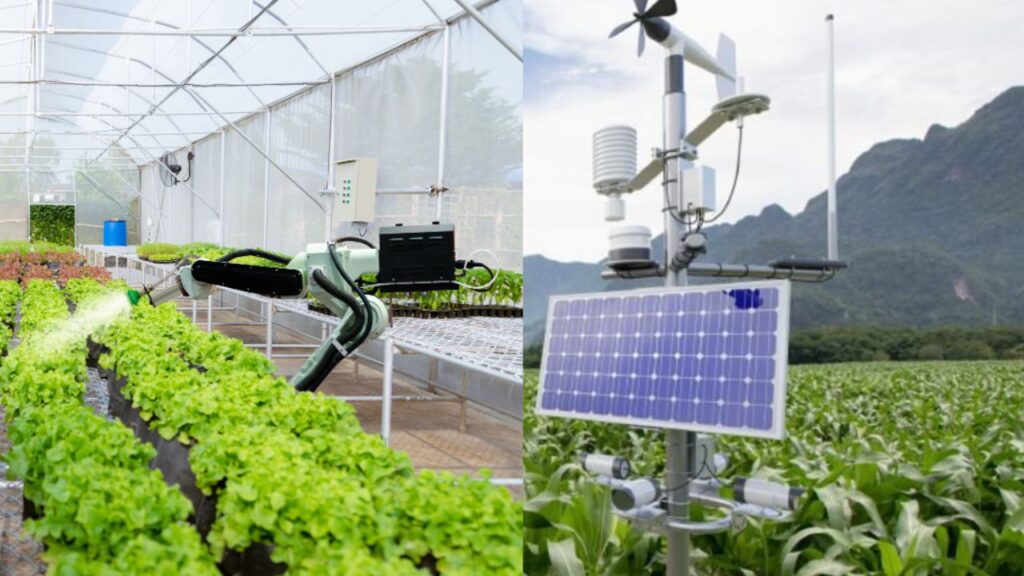


Indian agriculture stands at a defining crossroads, more resilient, diverse, and dynamic than ever before. Once characterized by volatility and uneven growth, the sector has evolved into a stable and steadily expanding pillar of the national economy. Over the past decade, agriculture and allied activities have recorded the highest sustained growth in India’s history, while agricultural instability has declined to nearly one-third of its 1980s level.
This remarkable transformation stems from deep structural shifts: diversification into high-value segments such as livestock, fisheries, and horticulture; rapid expansion of irrigation networks; and the widespread adoption of climate-resilient crop varieties. Collectively, these advances have strengthened the sector’s stability and positioned Indian agriculture to capitalize on emerging global opportunities.
Against this backdrop, we delve into how the sector is leveraging its newfound resilience to enhance competitiveness, sustainability, and inclusive growth on the path to Viksit Bharat @2047.
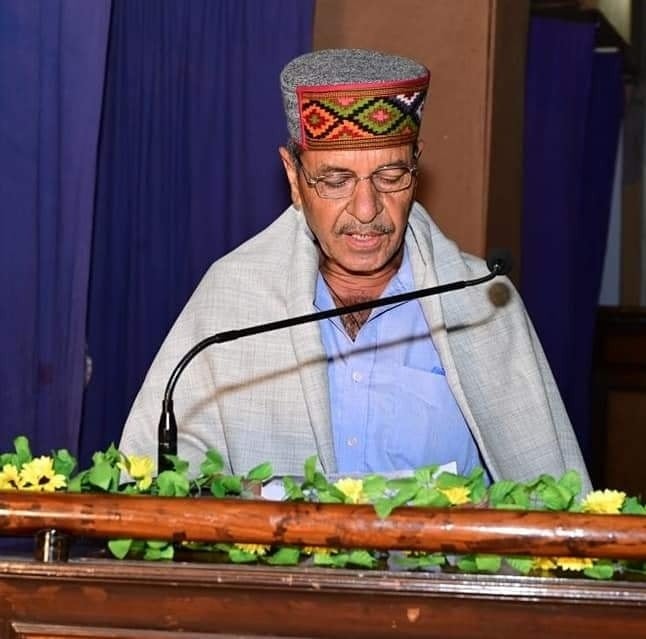
In an exclusive conversation with The Interview World at AgriTech 3.0: Smart Agriculture for Viksit Bharat, hosted by ASSOCHAM, Prof. Ramesh Chand, Member, NITI Aayog, Government of India, shares his insights on the road ahead. He discusses how resilient Indian agriculture can harness emerging opportunities, examines the intricate relationship between climate change and agriculture, and how diverse cropping patterns shape this interaction, outlines strategies to sustain a 5% growth trajectory, and emphasizes the effective utilization of agricultural surpluses to drive economic growth and ensure food security.
Here are the key takeaways from his insightful discussion.
Q: How resilient is Indian agriculture in positioning itself to seize emerging opportunities?
A: You may find this surprising: India’s agricultural instability today is barely one-third of what it was in the 1980s. From the mid-1970s to the mid-1980s, India’s agriculture grew at an average annual rate of about 3.56%, but growth subsequently slowed to roughly 2.4% or lower in the following decades. Since 2014–15, however, the sector has regained momentum. Between 2015–16 and 2024–25, the Gross Value Added (GVA) in agriculture and allied sectors expanded at an impressive 4.45% annually, the highest in India’s history and among the best performances globally.
Crucially, agricultural volatility has fallen sharply. The instability index, measured by the standard deviation of annual growth, is now about one-third of its 1980s peak. Notably, India has not recorded a single year of negative real income growth in agriculture during the last decade, a sharp contrast to earlier periods when downturns were common.
This enhanced stability rests on three fundamental drivers.
First, India’s production base has broadened. Agriculture is no longer dominated by a narrow band of crops. While growth in the traditional crops sector (cereals, oilseeds, field crops) averaged only ~2.46% annually during 2014–15 to 2023–24, the allied sectors, livestock, fisheries, and horticulture, expanded far more rapidly, with fisheries alone growing nearly 9% per year in recent years.
As a result, the composition of agriculture has transformed. The share of the crops sector in total agriculture and allied GVA declined from ~63.8% (triennium ending 2014–15) to ~54.3% (TE 2023–24). Meanwhile, livestock’s share rose by about 8 percentage points, and fishing and aquaculture gained roughly 2.2 points. Within crops, the dominance of field crops fell (from 52.3% to 49.0%), while high-value segments such as condiments, spices, and fruits surged. For instance, the share of condiments and spices more than doubled, underscoring a clear structural shift toward value-added activities.
In short, India’s growth story is now led by high-value and allied activities, livestock, fisheries, and horticulture, rather than traditional cereal-based farming. A broader production base naturally spreads risk and enhances resilience.
Second, the expansion of irrigation has further stabilized output. The gross irrigated area increased from about 98 million hectares to 122 million hectares after 2015–16, reversing earlier declines in public irrigation. This expansion has supported higher productivity, cropping intensity, and a shift toward high-value crops.
Third, the development of climate-resilient crop varieties has improved adaptability. In both rice and wheat, new varieties can withstand terminal heat or submergence, ensuring stable yields even under adverse weather conditions.
Together, these three factors, diversification, irrigation expansion, and resilient crop varieties, have dramatically reduced agricultural instability. Indeed, over the past decade, India has not witnessed a single year of decline in output or farmer income, whereas earlier decades routinely saw two to three such years.
Q: You mentioned that agriculture’s contribution to GDP and its growth over the past 10 years have been quite good, even relative to manufacturing. What explains this trend?
A: Although manufacturing remains a key engine of economic growth, agriculture has demonstrated exceptional resilience and is steadily closing the gap. During the COVID-19 pandemic, when most sectors, including manufacturing, suffered deep disruptions from lockdowns, supply chain breakdowns, and collapsing demand, agriculture stood out as one of the few sectors that continued to expand.
This remarkable stability stemmed from several factors. Agricultural operations were less constrained by mobility restrictions, and the government swiftly designated food production and distribution as essential services, ensuring minimal disruption. At the same time, rural demand stayed relatively robust, supported by increased public procurement, expanded digital access to markets, and proactive policy interventions that kept the sector buoyant.
Ultimately, the pandemic underscored agriculture’s pivotal role as a stabilizing pillar of the Indian economy. While manufacturing is now regaining momentum, agriculture’s consistent performance highlights both its resilience and its growing capacity to drive future GDP growth.
Q: What is the relationship between climate change and agriculture, and how is this relationship influenced by different cropping patterns?
A: There is a clear and undeniable relationship, one that many prefer not to confront. Yet, it must be addressed. Agricultural growth both influences and is influenced by broader ecological and economic conditions.
Now that India’s agricultural growth has become more stable and less volatile, the country has both the opportunity and responsibility to focus on sustainability, resource conservation, and climate-resilient agriculture.
India today possesses the policy flexibility and economic strength to prioritize environmental sustainability without compromising growth. The way forward lies in aligning cropping patterns with natural resource endowments, a strategy that ensures both ecological balance and long-term productivity.
Q: What does a 5% growth rate in agriculture signify, and what strategies can be adopted to achieve and sustain it?
A: If India aspires to become a developed nation, reform is essential. We must aim to improve agricultural growth beyond the current 5%, but we must do so without creating distortions.
Too many distortions already exist in the system, and they weaken the foundation of growth. The focus should be on empowering farmers directly, for instance, through targeted income support rather than inefficient subsidies.
Providing free electricity, for example, distorts resource use and undermines long-term sustainability. Such practices should end. Instead, policy must reward efficiency, productivity, and responsible resource management.
Q: What strategies should be adopted to effectively utilize agricultural surplus for economic growth and food security?
A: We must either process agricultural produce domestically or export it. If we choose to export, we must ensure global competitiveness. For instance, despite a decline in production, India recently announced plans to export 1.5 million tonnes of sugar. Domestic absorption is not feasible, making exports a necessary outlet.
Given the emerging surplus in overall food production, India’s strategy must now evolve from food security to food-system security, one that emphasizes competitiveness, exports, value addition, industrial linkages, and improved nutritional outcomes.
In the broader context of the national vision for Viksit Bharat @2047, agriculture remains pivotal, not only as a driver of economic growth but also as an anchor of inclusive development and rural employment. Sustained, high agricultural growth will elevate rural incomes, strengthen the economic base, and advance India’s long-term development ambitions.