

Corporate Social Responsibility (CSR) in India is undergoing a decisive transformation—from a charitable afterthought to a strategic engine of sustainable growth. Under the mandate of the Companies Act, 2013, forward-looking businesses are aligning CSR priorities with national imperatives. They are combating environmental degradation, championing renewable energy, and embedding sustainability into their operational ethos.
Projects in waste management, afforestation, and water conservation are actively countering ecological decline. Women’s empowerment has surged to the forefront, driven by targeted skill-building, entrepreneurial support, and expanded access to education—each step reinforcing the pursuit of gender equity. Skill development initiatives are closing the employability gap, particularly in rural and underserved regions, arming youth with market-relevant competencies.
Inclusivity now stands as a defining principle. CSR programs are extending opportunities to marginalized communities, persons with disabilities, and minority groups, ensuring that development leaves no one behind. By fusing innovation with strategic partnerships and rigorous impact measurement, Indian corporates are recasting CSR as a force for systemic change—one that shapes social progress while building resilient, future-ready economies. This evolution positions CSR not merely as a moral responsibility, but as a cornerstone of enlightened business leadership.
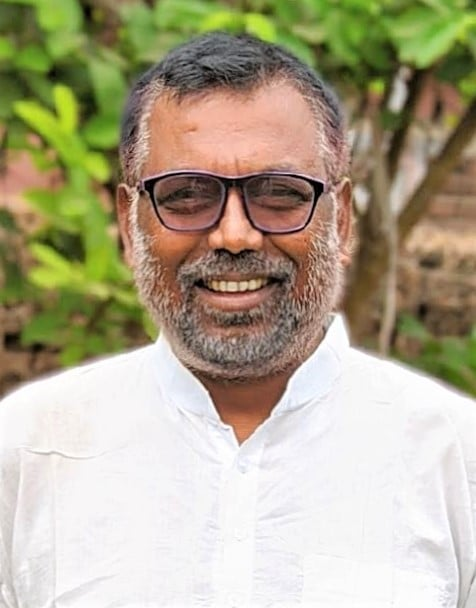
Against this backdrop, The Interview World engaged in an exclusive conversation with Akanksha Chaturvedi, Co-chair of the FICCI Women Empowerment Committee and Head – Corporate Strategy, Marketing, CRM, DEI & ESG at Gainwell Commosales Pvt. Ltd., during the FICCI CSR Summit and Awards. She shared how her organization is driving tangible social impact through CSR initiatives, outlined the pivotal role of corporate India in advancing ESG and CSR agendas, and explained how targeted programs are empowering women. She also shed light on the challenges in accelerating women’s and rural empowerment across the country.
Here are the most compelling insights from that discussion.
Q: With the CSR domain gaining momentum in India, how is your organization contributing to shaping its growth and impact?
A: CSR has long been woven into the fabric of many companies’ origin stories, embedded in their purpose and values. Yet today, an increasing number of private-sector enterprises are stepping into the arena—not merely to talk about CSR, but to drive tangible, sustainable change on the ground.
The next frontier lies in forging a stronger urban–rural connection through CSR and ESG programs. This alignment is not only timely but vital, as it channels resources and innovation toward bridging socio-economic divides. Among the most critical areas within this approach is skill development—a priority that mirrors the Prime Minister’s vision for a skilled and employable India.
The government has introduced multiple schemes that corporates can leverage under the CSR framework, making it possible to amplify impact through collaboration. This moment demands focused action: building scalable skill development initiatives that address the urban–rural gap, empower communities, and unlock livelihoods.
Larger corporations, with their resources, expertise, and networks, are uniquely positioned to lead this charge. By championing skills as a cornerstone of CSR, they can play a transformative role in creating a more equitable and future-ready India.
Q: How are corporates in India steering their ESG and CSR agendas to drive sustainable and socially impactful change?
A: I see an extraordinary volume of impactful work unfolding across the country. Take a closer look, and you’ll find homegrown giants like the Tatas and Birlas spearheading critical initiatives, alongside MSMEs that are equally committed to transformative change. Across sectors, diverse organizations are leveraging their CSR mandates to drive meaningful impact at the grassroots.
Even in resource-intensive industries, mining companies are collaborating with local tribal cooperatives to identify ways to offset the environmental harm they have caused. These efforts demonstrate a growing sense of accountability and partnership with the communities they affect.
At the core of much of this work lies a common commitment—addressing sustainability and climate change. This focus is not an afterthought; it is the driving force shaping strategies, investments, and long-term goals.
Q: Given that women’s empowerment is central to CSR agenda, how are these efforts evolving, and what measurable impact are they creating on the ground?
A: The future, in my view, appears promising. When we compare today’s efforts with those of fifteen years ago, the progress is nothing short of remarkable. We have advanced by leaps and bounds, with far more impactful programs shaping the social landscape.
Crucially, these initiatives are no longer limited to women as beneficiaries. Increasingly, women are the architects of the programs themselves. As I highlighted in my speech, there is a profound difference between a male-led program designed for women and a women-led program crafted for women. The latter is more attuned to real needs, better tailored to local realities, and far more likely to deliver lasting change.
This shift in leadership and design has strengthened outcomes and deepened sustainability. It reflects not just progress, but a fundamental transformation in how empowerment is envisioned and executed. Over the years, we have moved from intent to impact—and that, to me, is a milestone worth acknowledging.
Q: What key challenges do you foresee in advancing women’s and rural empowerment in India, and how do you see inclusiveness shaping the path forward?
A: One of the most pressing challenges we face is the lack of access to safe spaces. Equally significant is the gap in access to technology and training. An even greater hurdle lies in access to accurate, timely information.
Here, larger corporates, the government, and industry forums like FICCI and CII have a pivotal role to play. They must ensure that even the most remote corners of the country are informed about the opportunities and initiatives underway—how people can participate and how these programs can benefit them in the long term.
These barriers, though substantial, are not insurmountable. With focused collaboration, we can overcome them. In fact, forums like this CSR committee meeting—dedicated to shaping rural transformation—provide the ideal platform to confront these issues head-on. It is in such spaces that dialogue turns into action, and action into lasting change.