

As the Union Budget draws near, policy attention is once again turning to sectors that deliver economic value while anchoring India’s social and cultural fabric. The handicrafts sector squarely fits this mandate. It sustains millions of livelihoods, preserves India’s living heritage, and contributes meaningfully to employment, exports, and inclusive growth. Yet, despite this demonstrable impact, public investment in the sector remains persistently inadequate.
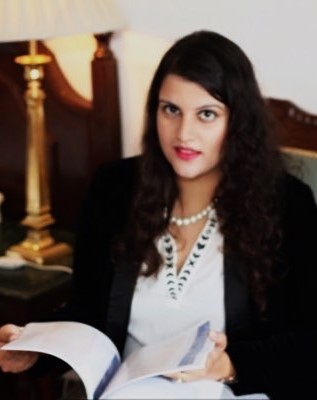
In an exclusive interaction with The Interview World, Tanveen Ratti, Member of the Delhi Crafts Council and the National Federation of Handlooms and Handicrafts, sets out a clear and evidence-based case for enhanced budgetary support. She articulates the economic logic for a significant increase in allocations, draws pointed comparisons with other livelihood programmes, and advances a concise four-point agenda. Together, her proposals focus on improving artisan welfare, strengthening production and procurement systems, and building long-term resilience across India’s handicrafts economy.
The following are the key takeaways from this incisive conversation.
Q: What is your current demand for the handicrafts sector?
A: Regarding the proposed increase in the handicrafts budget in the forthcoming Union Budget, we are unequivocally seeking an allocation of ₹2,100 crore. This demand is grounded in clear economic and social realities. The handicrafts sector provides livelihoods to nearly 70 lakh people across the country, predominantly women, and largely drawn from backward and socially marginalised communities. Consequently, sustained and enhanced public investment in this sector is not optional; it is imperative.
Moreover, handicrafts make a significant contribution to national trade and exports. In 2025 alone, handicraft exports generated over ₹33,000 crore in foreign exchange earnings, underscoring the sector’s strategic importance to the economy. Beyond employment and trade, handicrafts play a critical role in preserving India’s cultural heritage. Artisans do not merely produce goods; they sustain living traditions, transmit intergenerational knowledge, and keep cultural legacies active and evolving.
Therefore, our demands are both specific and urgent. The government must ensure reliable access to quality raw materials for artisans. It must also effectively implement comprehensive health insurance and welfare schemes. Finally, it must guarantee a minimum wage for artisans, particularly during periods of extreme vulnerability caused by economic distress or climatic shocks. Together, these measures will secure livelihoods, strengthen exports, and safeguard India’s cultural continuum.
Q: Could you elaborate on funding economics: current government allocations, and additional support required to uplift handicrafts sector nationwide?
A: In 2024–25, the National Handicrafts Development Programme received an allocation of ₹175 crore. In proportional terms, this amount constituted a mere 5.24 percent of the total budget for the textiles sector. As outlined earlier, this level of funding is manifestly inadequate given the scale and significance of the handicrafts ecosystem.
Accordingly, we are calling for a decisive and necessary escalation in investment. We seek an enhanced allocation of ₹2,100 crore, representing a tenfold increase from the current level. Even so, this proposed amount would account for only 2.4 percent of the total textiles budget projected for 2025–26. Viewed in this context, the demand is not excessive; it is measured, justified, and long overdue.
Q: What is the proposed funding amount?
A: For 2025–26, the government has proposed an estimated allocation of ₹5,272 crore for the textiles sector. However, when adjusted for inflation, this figure should stand at approximately ₹13,775 crore to maintain real spending levels.
Against this backdrop, our demand is both modest and urgent. We are seeking an allocation of just ₹2,100 crore for the National Handicrafts Development Programme, an amount that remains well within reasonable limits, even under a significantly expanded and inflation-adjusted textiles budget.
Q: Could you explain the comparison between MGNREGA unskilled daily wages and handicraft artisan earnings, and clarify its relevance and implications?
A: MGNREGA is a well-conceived and socially transformative programme, rooted in Mahatma Gandhi’s vision of livelihood security for rural households. Under this scheme, the government guarantees up to 100 days of employment per financial year. Daily wages vary across states, ranging from ₹240 in poorer regions to ₹400 in states such as Haryana and Maharashtra, which allocate higher resources.
When averaged nationally, an unskilled worker earns approximately ₹300 per day under MGNREGA. This translates into an annual public expenditure of about ₹30,000 per worker, an amount the government currently considers necessary to ensure basic income security.
In stark contrast, the handicrafts sector receives only 0.85 percent of the government’s total budget, less than one percent, despite sustaining millions of livelihoods. This disparity underscores a clear imbalance in public investment. Therefore, our demand for a substantial increase in the handicrafts budget is both rational and overdue.
Q: Could you share the details of the four demands you are presenting to the government?
A: We are urging the government to substantially enhance allocations under both the National Handicrafts Development Programme and the Handicraft Cluster Development Programme, including the Mega Clusters component. Alongside this increase, we are placing four specific and actionable proposals before the government.
First, we seek the establishment of production and procurement centres within artisan clusters. Such centres would directly address one of the most persistent challenges artisans face, reliable access to raw materials. As articulated by artisans themselves, raw material procurement remains a critical bottleneck. Production and procurement centres would ease this constraint, strengthen local value chains, and enable artisans to sustain and advance their craft traditions and cultural legacy.
Second, we are calling for the introduction of comprehensive health insurance, with particular emphasis on outpatient care. We propose coverage of up to ₹50,000 for a family of four. This measure would require an allocation of approximately ₹500 crore in the forthcoming budget and would provide essential social security to artisan households.
Third, we propose the creation of mini clusters comprising up to 100 artisans each. Specifically, we recommend establishing 200 such clusters at a cost of ₹1.5 crore per cluster, amounting to a total outlay of ₹300 crore. These clusters would enhance collective production capacity, improve market access, and foster local entrepreneurship.
Fourth, we seek dedicated funding for training programmes and exhibitions in both rural and urban areas. An allocation of ₹150 crore would enable skill upgradation, design innovation, and sustained market exposure for artisans across regions.
Together, these four measures form a coherent and targeted agenda to strengthen the handicrafts sector, secure artisan livelihoods, and ensure the long-term viability of India’s craft economy.