
Established in 1986, Maharishi Ayurveda brings the timeless principles of Ayurveda into the contemporary world. Inspired by Maharishi Mahesh Yogi, the organisation combines traditional Ayurvedic knowledge with modern research to develop authentic, high-quality wellness solutions. Its holistic approach spans Ayurvedic medicines and formulations, consultations and treatments, education, and personalised care.
Today, Maharishi Ayurveda offers more than 600 products across a wide range of health and wellness categories, including immunity, digestive health, stress and sleep, joint care, women’s and men’s wellness, oral care, and other everyday health needs. With a presence in more than 40 countries, the organisation continues to expand the reach of Ayurveda while remaining grounded in its traditional foundations. At the same time, it focuses on making Ayurvedic principles relevant, accessible, and compatible with contemporary lifestyles.
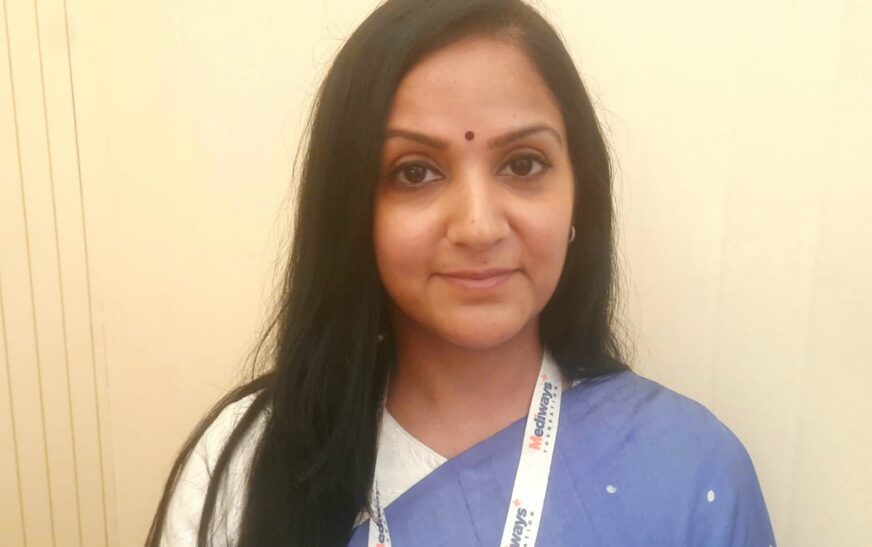
At Nari Shakti 3.0, organised by Mediways Health Foundation, Dr. Rini Vohra Shrivastava, Scientific Advisor, Maharishi Ayurveda, spoke exclusively with The Interview World about the evolving role of Ayurveda in modern healthcare. She explained how the Ayurvedic model addresses mental healthcare and supports complementary approaches to cancer care. She also discussed the growing integration of Ayurveda with modern medicine in cancer care and the emerging body of research examining this approach.
Beyond clinical applications, Dr. Shrivastava highlighted the critical role of emotional well-being in supporting overall health and recovery. She also reflected on how public perception, trust, and confidence in Ayurveda have evolved over the past decade. Her insights offer a timely perspective on how Ayurveda is adapting to contemporary healthcare needs while preserving the principles that underpin the tradition.
Here are the key takeaways from her compelling conversation.
Q: How does the Ayurvedic model integrate mental healthcare and complementary cancer care, and what are its key components, practices, and outcomes?
A: Ayurveda can potentially contribute to cancer care at multiple levels.
The first is screening and risk assessment. As I mentioned, disease progression can be understood through six stages. According to this framework, modern medicine has limited screening tools for detecting risk before the later stages. Ayurveda, by contrast, uses approaches such as Nadi assessment (pulse examination), tongue assessment, and the evaluation of multiple physical parameters to identify early physiological patterns. These assessments could potentially support an individualized risk profile and help identify people who may require closer monitoring or further clinical evaluation.
Modern medicine already uses biological markers for risk assessment. For example, the BRCA1 and BRCA2 genes can indicate an increased risk of certain breast and ovarian cancers. In a similar preventive context, proponents of Ayurveda suggest that Nadi assessment and other traditional parameters may help identify physiological patterns associated with disease risk. However, these approaches require rigorous clinical validation before they can be considered equivalent to established genetic or molecular screening tools.
The second area is supportive cancer care. This is where we have seen particularly relevant applications through our cancer research. Ayurveda may help patients manage treatment-related symptoms such as pain, nausea, loss of appetite, and other adverse effects associated with chemotherapy and its toxicity.
We have conducted three clinical trials involving a Rasayana formulation called Maharishi Amrit Kalash, which has also been investigated in numerous scientific studies. Our research has examined whether such Rasayana-based supplementation can help patients better tolerate cancer treatment. In women undergoing chemotherapy, for example, we observed potential benefits in managing problems such as loss of appetite and other treatment-related difficulties.
This support matters because some patients struggle to complete chemotherapy because of its adverse effects. When side effects become difficult to tolerate, patients may interrupt or discontinue treatment. Ayurveda could therefore have a complementary role in supportive care, helping patients manage treatment-related symptoms and potentially enabling them to remain on their prescribed treatment plan.
The objective should not be to position Ayurveda as a replacement for evidence-based oncology. Rather, its potential value lies in integrating rigorously evaluated Ayurvedic interventions into comprehensive cancer care, particularly where they can improve symptom management, treatment tolerance, and overall patient support.
Q: How is Ayurveda being integrated with modern medicine in cancer care, what research supports this approach, and what international training programs are currently underway?
A: We have conducted training programs in Italy for many years, gradually building a strong panel of medical doctors who have trained in Ayurveda. Importantly, this journey began largely with their own interest. Doctors and healthcare professionals in Italy showed a genuine curiosity about Ayurveda, which gave us the opportunity to introduce its fundamental principles within their existing medical understanding.
We started with simple, practical concepts. Once doctors experienced how everyday practices—such as following an appropriate diet, getting adequate sunlight, maintaining regular sleep, and choosing a light dinner instead of a heavy one could influence overall well-being, they began to take Ayurveda more seriously. These principles were not complicated to understand or implement. Their practical relevance made the connection between Ayurveda and daily health increasingly evident.
Today, we conduct structured Ayurveda training programs for medical doctors in Italy. We have also trained doctors in the United States. More recently, we have seen growing interest from practitioners in functional medicine, including functional gastroenterology, who are incorporating concepts that closely align with Ayurvedic approaches.
For example, they are applying principles related to cleansing, hydration, dietary regulation, and maintaining digestive and metabolic health. Ayurveda also offers a structured approach to women’s health across different stages of life. From puberty and menstruation to pregnancy and menopause, women can follow specific Ayurvedic routines and self-care practices tailored to each phase.
What makes these approaches particularly relevant is their simplicity. Many Ayurvedic routines do not require complicated interventions. Instead, they focus on consistent, practical habits that people can integrate into everyday life and sustain over the long term.
Q: You have also spoken about emotional health. How does emotional well-being contribute to a person’s overall health and recovery?
A: Emotional and mental health profoundly influence our overall well-being. The World Health Organization has identified loneliness as a growing global public-health concern, making it an important risk factor for anxiety, digestive disorders, and other health problems.
The mind and nervous system regulate many essential bodily functions, including digestion and our perception of the world around us. Maharishi Mahesh Yogi emphasized this mind-body connection decades ago, arguing that disease emerges when the physical self falls out of alignment with the deeper self. Over time, such psychological and physiological stress can accumulate and manifest as illness.
We must therefore address mental well-being early, particularly among young girls. Today, many adolescent girls experience significant stress, anxiety, and depression. At the same time, concerns around early or precocious puberty have increased, highlighting the need to examine the broader biological and environmental factors that influence development.
Mental health, therefore, cannot remain an afterthought. We must nurture emotional resilience from childhood and create environments that support psychological balance. When mental well-being deteriorates, the consequences can extend beyond emotional distress to digestive dysfunction and other long-term health challenges. Protecting mental health is consequently an essential part of protecting overall health.
Q: Over the past decade, how has people’s perception, trust, and belief in Ayurveda evolved?
A: I believe the post-COVID period has made people recognize that Ayurveda can play a meaningful role in everyday life. However, Ayurveda does not necessarily mean taking herbs or adding complicated remedies to your routine. Instead, it begins with simple, disciplined habits.
Sleep on time. Wake up early when possible. Get some early-morning sunlight. Eat nutrient-rich foods such as gooseberries regularly. Add turmeric to your meals. These ordinary practices are also part of an Ayurvedic lifestyle.
After all, why does turmeric occupy a place in our kitchens despite its pungent, bitter taste? Traditional wisdom recognized its value long before it became a subject of modern health discussions.
Therefore, Ayurveda is not about constantly adding something new. It is about living in harmony with your daily routine, the seasons, and your body’s natural rhythms. Especially after COVID, people have begun valuing this preventive approach more deeply. They have realized that if we do not take care of our health proactively, we cannot expect to live a healthy, fulfilling life.