The International Mini Conference Series 2025, themed “Integrating Air Quality and Policy Dialogues on SLCPs in the IGP Region” and organised by the University of Gothenburg, Sweden, casts a piercing spotlight on short-lived climate pollutants (SLCPs)—the silent killers behind crippling air pollution. It calls for swift, decisive, and actionable measures to deliver immediate relief to climate change.
This high-impact forum unites academics, researchers, policy think tanks, and civil servants in a shared mission—to exchange insights and shape policy recommendations ready for government adoption. The urgency is undeniable. Climate change now manifests in relentless heatwaves, catastrophic cloudbursts, and rising seas. These threats demand a united front—citizens, governments, and businesses acting in concert.
The global debate on climate responsibility rages on. Developed nations, the historical heavy emitters, must shoulder greater obligations. Meanwhile, developing economies like India—still low on per capita emissions—rightly press for growth leeway under the principles of “differential responsibilities” and intergenerational justice.
The way forward is clear. ESG frameworks, CSR initiatives, SDGs, and global reporting standards must merge into a single, integrated approach. Only through synergy and collaboration can policies converge on the ultimate goal—a habitable, harmonious, and happy planet.
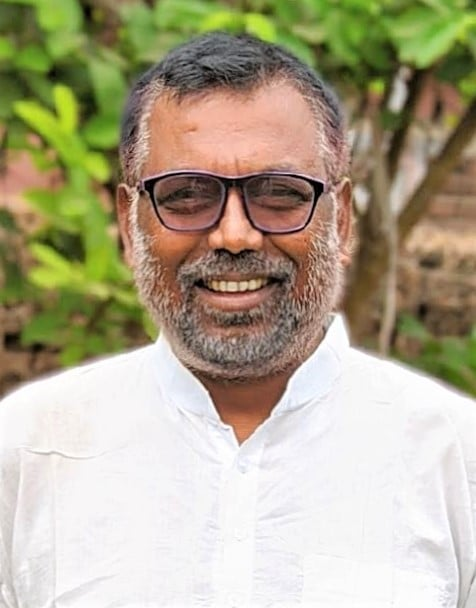
Against this backdrop, The Interview World engaged in an exclusive conversation with Prof. Roopinder Oberoi, Professor & Fellow at the Delhi School of Public Policy & Governance, IoE, University of Delhi, and Founder of the Centre for Innovation and Social Enterprise, KMC, University of Delhi. In this insightful dialogue, Prof. Oberoi reveals how focused conferences transform debates into tangible climate and air quality solutions. She explains the grave health and societal toll of pollution, examines India’s possible stance as developed nations attempt to offload carbon burdens onto developing economies, and explores the intricate interplay between ESG goals and climate change—showing how each shapes the other.
Here are the key takeaways from her compelling conversation.
Q: In what ways do focused conferences like this translate discussions into actionable solutions for tackling climate change and air pollution?
A: The conference casts its gaze on the broader challenge of climate change and air pollution. Yet, its focus remains firmly on immediate, practical remedies. The priority is clear—identify short-term measures that can swiftly alleviate current conditions.
At the heart of this agenda lie short-lived climate pollutants (SLCPs)—aptly called silent killers. They inflict severe harm, but unlike many long-term climate threats, they offer a crucial advantage: targeted action can deliver rapid, measurable results.
Over two days, the conference brings together a diverse spectrum of voices. Stakeholders from academia, research institutions, policy think tanks, and the civil service converge in plenary and technical sessions. They present their research, share insights, and reflect on actionable strategies.
The discussions are not confined to the conference halls. The ultimate aim is to channel these insights into tangible outcomes. By compiling the most significant recommendations emerging from these sessions, the organisers intend to present them to the government. This process ensures that evidence-based ideas are not merely debated, but actively considered for integration into national policy frameworks.
Q: In your view, how severe is the issue of pollution in our society and environment, and what tangible impacts do you foresee on the daily lives of ordinary citizens?
A: The evidence of climate change is no longer distant or abstract—it stares us in the face. Three decades ago, when global gatherings like the Rio Conference, the Brundtland Commission, or the Millennium Development Goals were discussed, the average citizen remained largely unaware. Climate change was an academic or diplomatic concern, not an everyday reality.
Today, that has changed. Every individual, regardless of background, can see and feel its impact. Air pollution, river contamination, and extreme weather events are no longer isolated headlines—they are lived experiences. Delhi, for instance, touched a blistering 50°C just two years ago. In the Himalayan regions, cloudbursts and natural disasters have grown alarmingly frequent. Coastal communities watch sea levels creep higher with each passing year.
Climate change is no longer the preserve of elite debate rooms issuing cautious warnings. The predicted scenarios—global warming exceeding 1.5°C and triggering catastrophic shifts—are already unfolding. Rural and urban communities alike witness these changes daily. Awareness has spread to every corner.
Yet, awareness alone is insufficient. We must escalate from recognition to sensitisation, and from sensitisation to decisive action. That action must be collective. Citizens, governments, bureaucrats, businesses, and investors must move in concert.
Climate change is not a marginal issue—it is vast, urgent, and all-encompassing. It threatens the stability of our planet, our economies, and our lives. Only united, sustained, and coordinated efforts can meet its challenge.
Q: Developed nations often shift climate burdens to developing countries, yet India’s emissions remain lower. In this context, what stance should the government adopt?
A: The debate between the Global North and South remains a recurring fault line in climate discourse. At its core lies a deep contention: over the past century, Western economies—driven by industrialisation and capitalism—exploited the environment to fuel growth. Their profit-oriented systems produced immense externalities, with little regard for ecological consequences.
In contrast, nations once labelled the “Third World” in the 1950s and 1960s had barely begun their industrial journeys. Colonial rule had long stifled their economic development. As these countries stepped into the phase of industrialisation, they faced a different reality—weak economies, widespread poverty, and an urgent need to improve living standards.
The position of the Global South is clear: development cannot be sacrificed at the altar of climate action. These nations argue for greater leeway, more concessions, and differentiated expectations. The principle of differential responsibilities recognises that advanced economies—historically the largest polluters—must shoulder a greater share of the burden.
The disparity is stark. The per capita carbon footprint in poorer nations across Africa and Asia remains far lower than in affluent countries like the United States. Even in India, the middle and lower-income groups maintain relatively sustainable lifestyles. Food waste is minimal, and consumption patterns are conscious and restrained.
This is why calls for a “level playing field” in climate commitments ignore historical and socio-economic realities. Concepts like intergenerational justice and differentiated climate responsibilities must anchor global agreements. India’s target of achieving net-zero emissions by 2070 reflects this pragmatic balance—prioritising both climate action and development—while several Western economies push for a 2050 carbon neutrality goal, a transition timeline shaped by their far earlier industrial head start.
Q: How do you view the relationship between ESG goals and climate change, and in what ways do they influence each other?
A: These goals are deeply interwoven. Yet too often, we treat policy interventions and objectives in silos—fragmented and compartmentalised. That mindset must change. Whether we speak of ESG targets, corporate social responsibility, global reporting standards, or the Sustainable Development Goals, they all ultimately converge on a single mission.
That mission is clear: to make our planet more habitable, more harmonious, and more happy—the three Hs. Achieving this vision demands that every policy intervention and institutional effort, from local to global, interlace and build synergy. Only through such integration can we generate the momentum needed for lasting transformation.
Therefore, whether the recommendations emerge from ESG frameworks or local governance measures, they must find a common platform. The end goal is not only similar—it is identical. Our challenge is to align the pathways, break the silos, and drive collective action toward that shared destination.