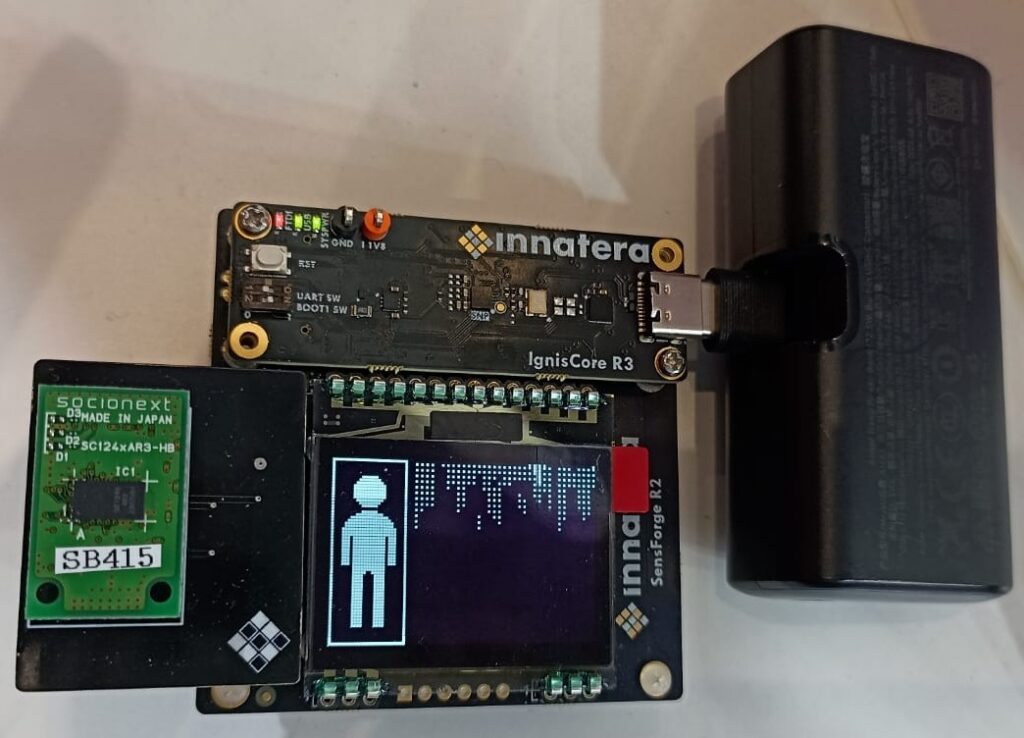


Innatera is a Netherlands-based semiconductor company pioneering neuromorphic computing for ultra-low-power intelligence at the sensor edge. Spun out of Delft University of Technology in 2018, the company develops brain-inspired processors that enable devices to sense, interpret, and respond to real-world signals in real time. At the same time, its technology minimizes energy consumption and helps preserve data privacy by enabling intelligence closer to where data is generated.
At the heart of Innatera’s technology portfolio is its flagship Pulsar neuromorphic microcontroller. It combines event-driven Spiking Neural Networks (SNNs), a RISC-V CPU, CNN acceleration, and multiple sensor interfaces to deliver always-on edge AI with significantly greater energy efficiency. The platform is designed for applications spanning consumer electronics, smart homes, industrial systems, wearables, robotics, and intelligent sensors. By bringing intelligence directly to the sensor edge, Innatera aims to make connected devices faster, more efficient, and increasingly autonomous.
In an exclusive conversation with The Interview World at SEMICON India 2026, Shreyas Derashri, Chief Commercial Officer at Innatera, discussed the company’s neuromorphic chips, their applications, and key real-world use cases. He also shared insights into the commercialization of neuromorphic computing in India and outlined Innatera’s strategy for building a stronger ecosystem around the technology.
Derashri highlighted the company’s developer program and its partnerships with Indian universities and IITs, which are aimed at accelerating neuromorphic innovation while developing the next generation of semiconductor and AI talent. He further discussed Innatera’s innovation strategy and technology roadmap for the next three to five years.
Here are the key takeaways from this compelling conversation.
Q: Could you elaborate on the neuromorphic chips Innatera has developed, their key architectural features, and the specific applications and use cases they are designed to address?
A: Innatera is developing neuromorphic microcontrollers (MCUs) that enable devices to make sense of data directly from their sensors. Sensors are now everywhere. Most modern devices contain anywhere from a few to dozens of them, continuously generating streams of real-world data.
Yet much of this sensor data remains unused. When it is processed, devices often rely on high-end application processors or send the data to GPUs for computation. That approach can deliver powerful AI capabilities, but it comes with a significant energy cost. As AI moves closer to the edge and becomes embedded in increasingly small and power-constrained devices, this model is difficult to sustain.
Innatera addresses this challenge with a brain-inspired, neuromorphic microcontroller designed to process sensor data locally and extract meaningful insights with extremely low power consumption. The MCU can connect to multiple sensors, process their signals directly, and identify relevant information without relying on a powerful external processor or the cloud.
Consider a microphone as a simple example. A device may need to detect a specific keyword, much like the wake words used by Alexa or Siri. It could then interpret a command, such as asking an air conditioner to increase or decrease the temperature.
With Innatera’s approach, these capabilities can run directly on the device. The system can continuously analyze sensor inputs, recognize meaningful patterns, and respond in real time—all while consuming very little power.
Most importantly, the intelligence stays at the edge. Devices can understand and act on sensor data without constantly sending information to cloud infrastructure. This reduces power consumption, minimizes connectivity requirements, and enables a new generation of responsive, always-on intelligent devices.
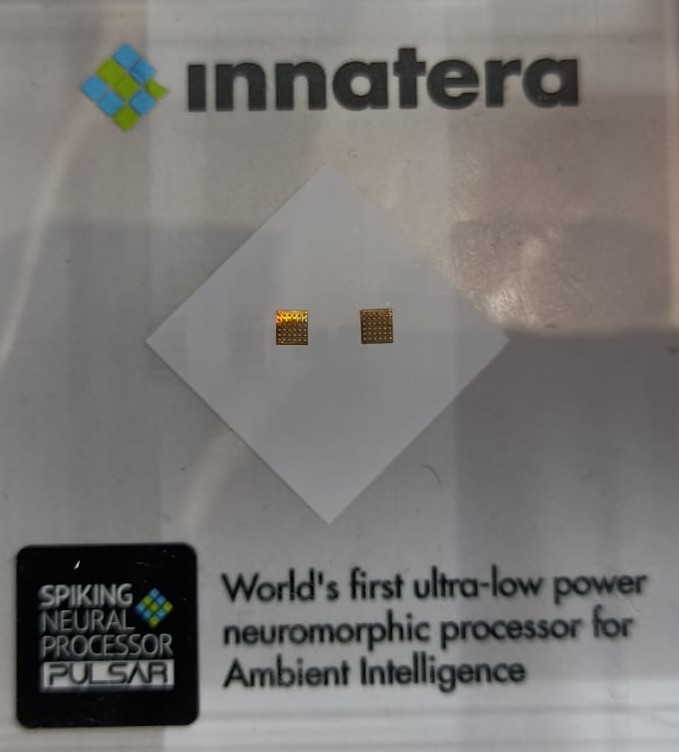
Q: Have you already commercialized your neuromorphic chips in India?
A: Yes, we are already in production. The chip is commercially available, and we launched it last year. Since then, we have been working with several partners in India to bring the technology into real-world applications.
One example is Aumnatic, with whom we are developing the next-generation toy platform. The platform uses our chip for localized radar processing as well as audio processing. This enables the system to perform key sensing and processing functions directly on the device.
We are also working with Aaroh Labs, a Pune-based company that is developing the next generation of smart smoke detectors. Their solution can identify different types of smoke in a room and, importantly, estimate how many people are present.
That capability becomes particularly valuable in the event of a fire. The system can identify the nature of the smoke and determine whether people are present in the room, along with an approximate count. This information can help provide a more complete picture of the situation and support a faster response.
The key requirement for Aaroh Labs was equally important: they wanted the device to operate for five years on a single battery. That is where our technology becomes particularly valuable. Its highly efficient processing architecture enables these advanced sensing capabilities while keeping power consumption extremely low, making long battery life a practical reality.
Q: How do you see your developer program and partnerships with Indian universities and IITs accelerating neuromorphic innovation, talent development, and adoption of next-generation applications in India?
A: We have been working closely with the founders of Innatera as well as its senior executive team to build a strong presence in the Indian market.
As an India-based team, we bring an extensive network of industry and academic relationships. We have already established strong engagement with a wide range of educational institutions across the country. Building on that foundation, we have now launched a developer program in partnership with VLSI Expert in India. Through this initiative, we are placing our development platforms within a growing network of educational and research institutions.
These platforms are designed specifically for universities, including IITs across India. Students and researchers can use them to develop and experiment with next-generation applications, gaining hands-on experience with the technology and its potential use cases.
This developer-led approach is central to our strategy for entering and expanding in the Indian market. By putting the technology directly into the hands of universities, researchers, and students, we are building an ecosystem that can drive innovation and accelerate the development of next-generation applications.
Q: What is your innovation strategy and roadmap for the next three to five years?
A: We want to push our research further into brain-inspired AI because the human brain remains the most energy-efficient intelligent system on the planet. It can perform extraordinarily complex tasks using roughly 20 watts of power, a level of efficiency that today’s data centers cannot match.
That efficiency is the inspiration behind our approach. We aim to understand and translate the fundamental principles of the brain into new AI architectures that deliver intelligence with dramatically lower power consumption.
Ultimately, our goal is ambitious and measurable: to make one billion sensors intelligent by 2030.