

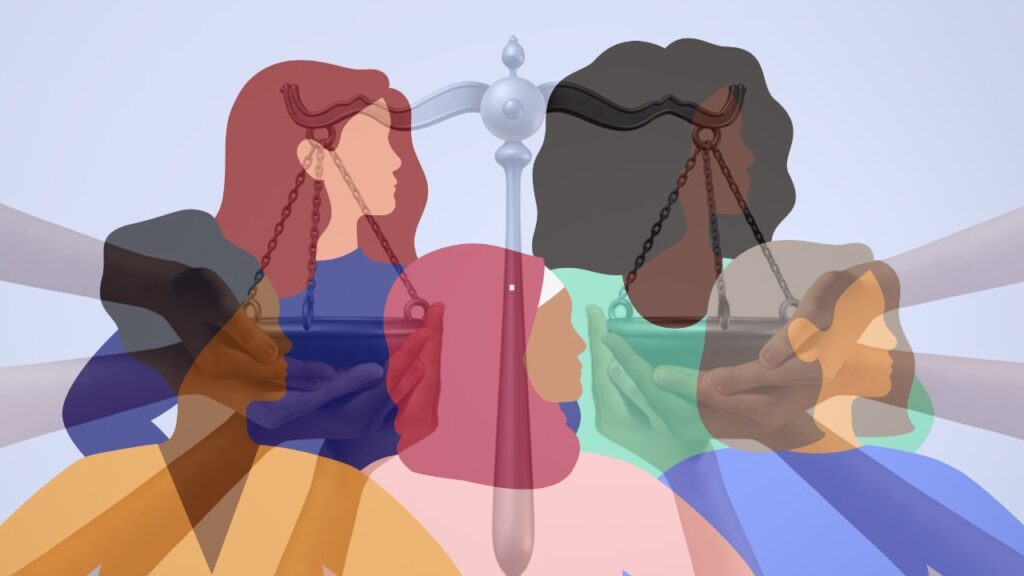
Educating women lays the foundation for true gender equality and lasting economic empowerment. It equips them not only with knowledge but also with the confidence to assert their rights, challenge regressive norms, and shape their own destinies. Education unlocks a world of opportunities—it enables women to participate fully in the workforce, rise to leadership roles, and drive economic growth through meaningful contributions.
But gender equality isn’t just a women’s issue—it’s a societal necessity. When societies invest in educating and empowering women, they cultivate justice, resilience, and shared prosperity. Economic independence frees women from the shackles of dependency, allowing them to uplift not just themselves, but also their families and communities. True empowerment begins with giving women the freedom to dream—and the means to realize those dreams.
Investing in women’s education and equal access isn’t optional—it’s essential. The ripple effect of empowering one woman spans generations. When we support her journey, we don’t just change her life—we transform the future.
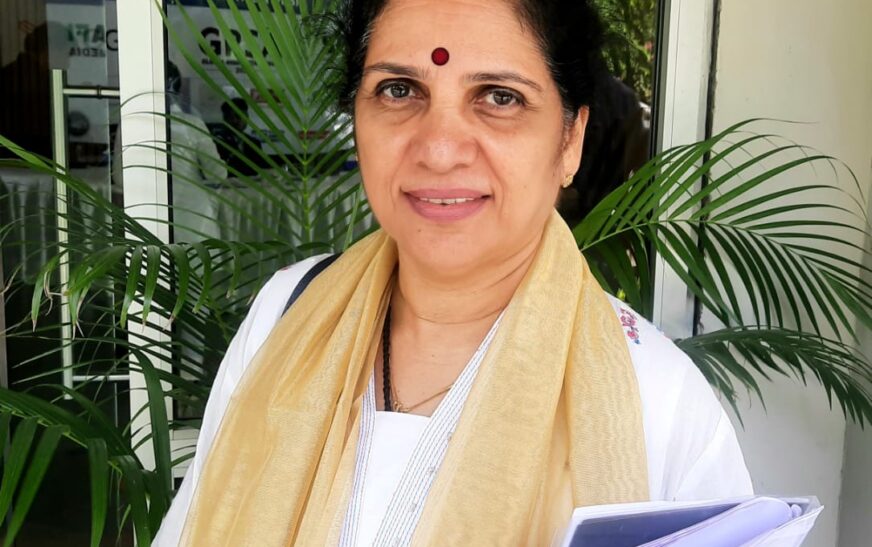
In an exclusive dialogue with The Interview World at the Asia-Africa Global Investment Summit 2025, hosted by Sociafi Media, Asha Gopalan Nair, Advocate at the Supreme Court of India, delves deep into the multifaceted nature of women’s empowerment. She redefines it through the lens of equity, not just equality, and articulates how systemic gender imbalances can be dismantled.
She also examines the evolving role of emerging technologies like AI in the legal profession, and how these tools can both empower and marginalize if not applied inclusively. Moreover, she stresses the need for balanced empowerment—where rights are harmonized with responsibilities and where equity, not excess, guides the discourse.
Crucially, she underscores the indispensable role of education and financial autonomy in transforming women’s lives. Her insights offer a bold, nuanced roadmap for achieving inclusive gender justice in the 21st century.
Here are the key takeaways from her powerful conversation.
Q: How do you personally define women’s empowerment in today’s context—and in your view, should the focus now shift more towards achieving equity rather than just empowerment?
A: Legal frameworks and constitutional rights for women’s empowerment already exist. Yet, the real challenge lies in their lack of implementation.
We have the voice, the vision, and the capability to carve our own place in society. We don’t seek special treatment—certainly not I. We seek the freedom to stand on our own terms. Our education, upbringing, and values equip us with the tools to build our own path to empowerment.
However, the prevailing perception merely acknowledges our presence, not our purpose. That needs to change.
Empowerment is not about token gestures or symbolic representation. It is about creating space—real, tangible space—for women to act, lead, and contribute without imposed limitations.
Do not dictate our terms. Recognize us as equal partners in every sphere of life.
Given the opportunity, women will not only claim their rightful place in society—they will transform it.
Q: While legal reforms have addressed many aspects of gender inequality, disparities still persist in social, economic, and cultural spheres. How do you perceive these forms of inequality, and what steps do you believe are essential to address them?
A: Many women struggle not because they lack capability, but because the system fails to support them. They juggle responsibilities—children, home, and careers—yet society rarely offers the flexibility they need.
Even within households, we often fail to maintain a balanced approach. When conflicts arise, the common refrain is, “What can we do? We’re both working.” But this mindset reveals the deeper issue—an ingrained societal structure that resists shared accountability.
The problem isn’t just logistical; it’s cultural. It’s rooted in how we think, how we operate, and how we perceive gender roles.
Change won’t happen overnight. But if we begin to adjust—if we actively learn to accommodate and support each other—then we create space for everyone to thrive.
Only then can true gender equality emerge—not just as an idea, but as a lived and lasting reality.
Q: Technology is rapidly transforming every industry, and the legal domain is no exception. How do you view the impact of AI and other emerging technologies on legal practice?
A: Technology is reshaping every industry—and the legal field is no exception. Someone recently suggested I take a course in artificial intelligence. But here’s the truth: that alone doesn’t change much.
AI can generate research, compile data, and present information efficiently. Yet, it cannot think for us. It lacks context, critical judgment, and emotional intelligence. These are the qualities that define human reasoning—especially in law.
You can’t simply hand over AI-generated material to a judge and claim, “My job is done.” Junior associates can gather information. But it is our responsibility—as seasoned professionals—to interpret, analyze, and present arguments with clarity and conviction.
AI may be a powerful tool, but it operates without emotion or nuance. That’s where we come in. Technology can assist. But insight, interpretation, and strategic thinking still demand the human mind.
Q: The conversation around gender neutrality has gained momentum, especially with growing awareness that men, too, can face discrimination or victimization. What, in your view, are the underlying factors driving this shift, and how should society respond to ensure truly inclusive gender justice?
A: The imbalance begins at home. In many families, parents invest heavily in grooming their daughters—ensuring they receive a good education, a respectable job, and the skills to navigate life. This is commendable. But often, the same expectations aren’t placed on sons. We raise daughters with discipline and direction, while leaving sons unchallenged and unaccountable.
Take my own family, for instance. If I have a son and a daughter, I might focus on preparing my daughter for the world, yet fail to instill the same values or responsibilities in my son. This unequal upbringing creates long-term consequences.
When daughters marry and enter new families, we often say, “If she has the right values, there won’t be any problems.” But values alone are not a safeguard—nor are they exclusive to girls. Boys and girls alike must be raised with the same moral compass.
Yes, as women become educated, employed, and empowered, they begin to assert themselves. That’s natural. But without mutual respect and understanding, such assertion can be misread as defiance—and relationships suffer.
To truly achieve gender justice, we must start with the family. We must instill values in both sons and daughters—teaching them not only to stand on their own feet, but also to respect each other as equals. Only then can we build a society where gender does not define power, but partnership.
Q: In your opinion, can there be unintended consequences of overemphasizing empowerment without balancing it with responsibility or equity?
A: I’ve said this often—especially during last-minute mediations I handle regularly. While not all women do this, a significant number contribute to relationship conflicts by placing unrealistic demands on their partners or resorting to emotional outbursts.
Their expectations, at times, far exceed what’s reasonable—even when legitimate change is necessary. That’s where the imbalance begins.
We must adopt a balanced approach. True empowerment does not come from disproportionately uplifting one gender at the cost of the other. It’s not about dominance—it’s about harmony.
What we need is not superiority, but equity. A fair, thoughtful equilibrium across all aspects of life is the only path to meaningful and sustainable empowerment for everyone.
Q: You’ve mentioned that money and education are key drivers of women’s empowerment. Could you elaborate on how each contributes to empowering women, and why they are so critical in today’s context?
A: A solid education lays the foundation for independence. It empowers you to think clearly, solve problems, and chart your own course. With education comes opportunity—and with opportunity, the ability to earn.
But education alone isn’t enough. If a woman acquires knowledge but fails to convert it into a means of livelihood, challenges will inevitably follow. That’s why both education and financial independence are essential.
Economic empowerment is a cornerstone of true gender equality. When a woman earns her own income and owns her home, she gains autonomy. She no longer needs to rely on others, nor does she have to endure control or subjugation. Simply put, financial independence gives women the power to stand tall, make choices, and live with dignity.







3 Comments
You’ve done a great job with this. I ended up learning something new without even realizing it—very smooth writing!
You explained it in such a relatable way. Well done!
A well conceptualised content on Women empowerment.
Hats off to.
Let’s join to make the society at. Large aware of equal opportunity for women
Comments are closed.