

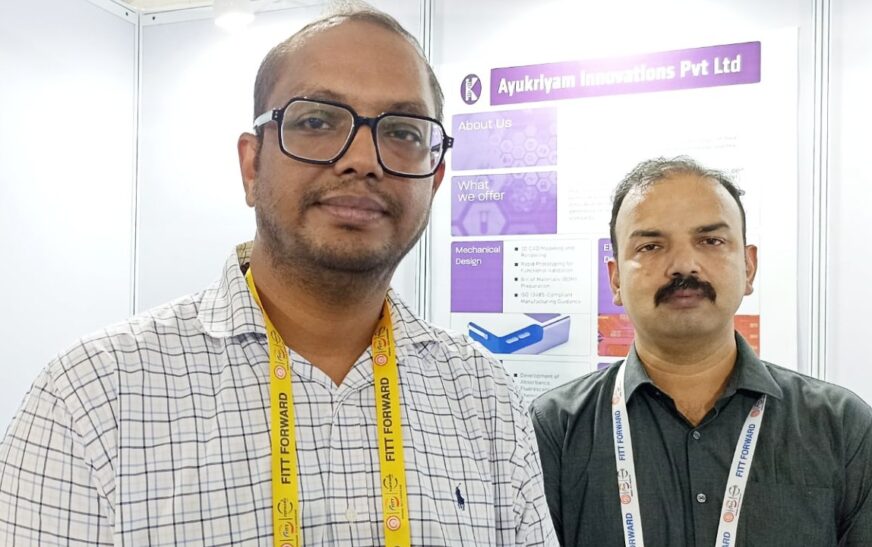
Ayukriyam Innovations Pvt. Ltd. is redefining the future of diagnostics. Emerging from the Molecular Imaging & Diagnostics Lab at IIT Delhi, this pioneering deep-tech venture integrates AI, automation, and microfluidics to engineer healthcare solutions that are faster, smarter, and more reliable.
At the heart of its innovation lie transformative platforms for pathology. Its AI-powered slide preparation and scanning systems produce crisp, high-resolution images while delivering seamless, streamlined reports. Simultaneously, Ayukriyam is advancing cartridge-based, point-of-care molecular assays. These systems automate nucleic acid extraction from complex samples—stool, serum, and saliva—bringing advanced testing within reach and ensuring both accessibility and efficiency.
Yet the company’s ambition does not stop there. It takes on one of the gravest global health challenges of our time: antimicrobial resistance across humans, animals, and ecosystems. By tackling this crisis head-on, Ayukriyam positions itself at the intersection of science and societal need.
The leadership reflects this bold vision. Founder and Chief Innovation Officer Dr. Ravikrishnan Elangovan drives the scientific direction with the support of mentor Dr. Malini Nagulapalli and the operational expertise of COO Prabhu Balasubramanian. Together, they unite science, engineering, and software in a single mission—to deliver scalable diagnostics that combine precision with affordability.
In an exclusive interaction with The Interview World at FITT Forward 2025, hosted by FITT and IIT Delhi, Dr. Elangovan—Professor at the Department of Biochemical Engineering & Biotechnology, IIT Delhi, and Founder of Ayukriyam Innovations—offered a deep dive into the company’s MedTech breakthroughs. He detailed how Ayukriyam addresses pressing healthcare challenges, described the breadth of diagnostic solutions in its portfolio, and spotlighted products developed specifically for veterinary diagnostics. He also explained the company’s pricing model designed to democratize access and shared his long-term roadmap for building next-generation innovations over the next five to ten years.
What follows are the most compelling insights from this conversation.
Q: What kind of MedTech innovations have you introduced to address critical challenges in healthcare?
A: We are developing a new generation of in vitro diagnostic devices with one clear ambition—to make them truly deployable. Today, nearly 80% of diagnostic services are concentrated in Tier 1 cities such as Delhi, Mumbai, and Chennai. The reason is simple: the equipment required for critical diagnoses remains prohibitively expensive and accessible only to large hospitals.
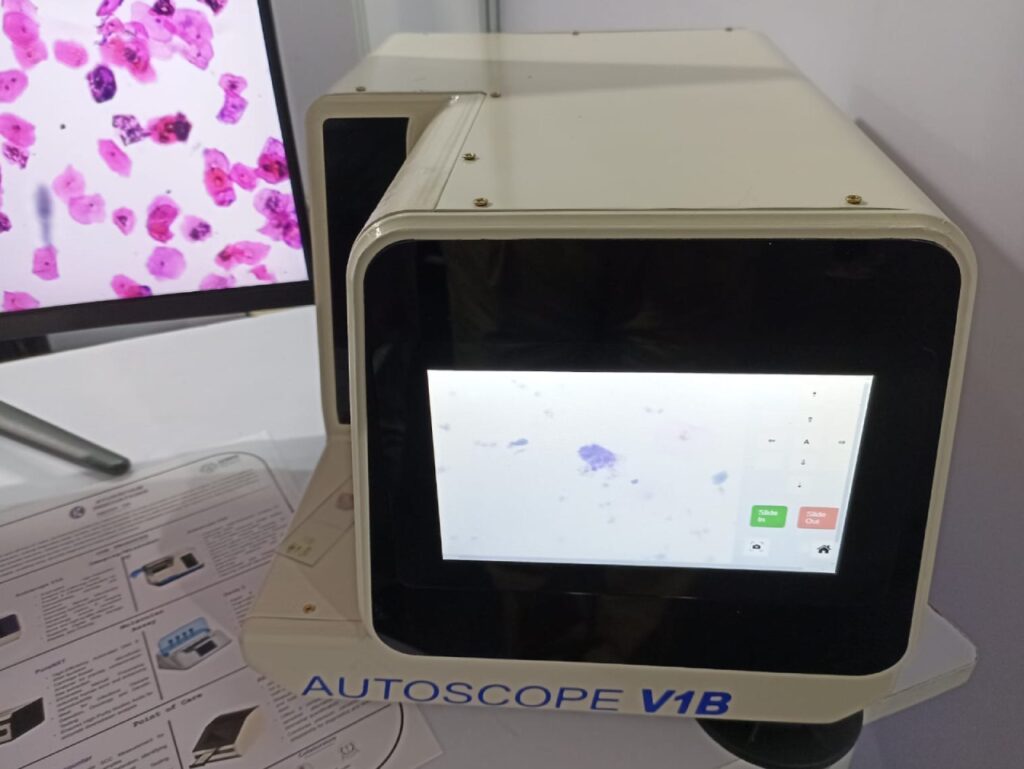
We intend to change that. Our approach is to engineer compact, fully automated systems that demand minimal training for operation. One such breakthrough is the Autoscope—a platform designed to scan and digitize pathology slides with precision.
Once the slides are digitized, pathologists can remotely access and review them in real time. To further accelerate accuracy, we have embedded AI algorithms capable of classifying cells automatically.
This combination of automation, digitization, and AI transforms diagnostics. It breaks the dependency on capital-intensive equipment and enables advanced testing to move beyond metropolitan centers. As a result, smaller cities can now access reliable, scalable, and affordable diagnostic solutions.
Q: Could you elaborate on the types of diagnostic solutions your organization is working on?
A: Take cervical cancer as an example. It is caused by HPV infection and progresses slowly, often taking nearly a decade to become malignant and life-threatening. Because of this long latency, global guidelines recommend that women between the ages of 30 and 50 undergo screening every five years. Early detection can save lives.
Yet, in practice, we often detect cases only at the tertiary stage, when the disease has already advanced. The gap lies not in knowledge but in access to timely diagnostics.
Our solution bridges that gap. The sample for cervical cancer screening can be collected, processed, and imaged not just in large hospitals but also in small laboratories and district-level centers. With this approach, the liquid-based cytology techniques currently confined to big-city hospitals become accessible to smaller healthcare facilities.
In effect, we are shifting critical diagnostics from centralized institutions to the grassroots, ensuring that women in underserved regions receive timely, life-saving screening.
Q: Where do you stand in terms of commercialization, and who are the core customer segments benefiting from your product?
A: This product is currently undergoing validation with the support of ICMR. We are rigorously testing the technology to ensure reliability and accuracy.
Within the next six to nine months, we expect to launch the system commercially. Our primary customers will be diagnostic centers and healthcare laboratories, who form the core market for this innovation.
Q: Besides Autoscope, what other products have you developed?
A: Let me highlight another key innovation—M-Cytocounter. The dairy sector in India is one of the largest in the world, and it faces a massive challenge. Every year, mastitis—an udder infection in cattle—causes economic losses of nearly ₹4,000 crore.
At present, diagnosing mastitis involves collecting samples and sending them to veterinary hospitals. This process introduces delays in both accuracy and turnaround time, leaving farmers at a disadvantage.
We set out to change that. Our team has developed a portable somatic cell counter designed for use directly on farms. This cartridge-based system enables farmers to measure somatic cell counts instantly and detect mastitis infections on-site.
The impact is transformative. By placing advanced diagnostics at the point of need, we eliminate delays, improve accuracy, and empower farmers to take timely action. Ultimately, our vision is clear—to create portable diagnostic devices that remain close to the customer, extending healthcare access to more people and more places.
Q: What price range are you targeting to ensure the product remains affordable for end customers?
A: We also offer a capital-intensive version alongside a subscription-based model. Under the subscription model, customers commit to performing a minimum number of tests annually. In return, we deploy the device with only a minimal upfront investment.
The goal is simple: capital costs should never restrict access to advanced diagnostics. By lowering the financial barrier, we can deploy more devices and reach a far larger base of customers.
Q: What innovations do you plan to build on top of your existing products over the next 5 to 10 years?
A: We are beginning our journey with a diagnostic solution for cervical cancer. Building on this foundation, we plan to expand the platform to include other critical diseases such as malaria and tuberculosis. Step by step, we aim to broaden its scope and deliver a comprehensive suite of diagnostic solutions.




1 Comment
This made me rethink some of my assumptions. Really valuable post.
Comments are closed.