
Matix Fertilisers and Chemicals Limited ranks among India’s youngest and fastest-growing fertiliser companies. It commands approximately 20% of the urea market in Eastern India. With its principal marketing office in Noida, the company operates one of the world’s largest single-train urea plants at Panagarh, West Bengal with an installed capacity of 1.27 MTPA.
Beyond urea, Matix offers 17 crop-nutrition solutions along with 26 agrochemical molecules, and serves farmers across 10 states through a distribution network comprising more than 1,100 dealers and 75,000 retailers. The company combines innovation with operational excellence while advancing sustainable agriculture and strengthening food security. Its initiatives extend across soil health, farmer development, environmental stewardship and community welfare. Together, these efforts support Matix’s larger vision: to nourish every farm and help enable food for all.
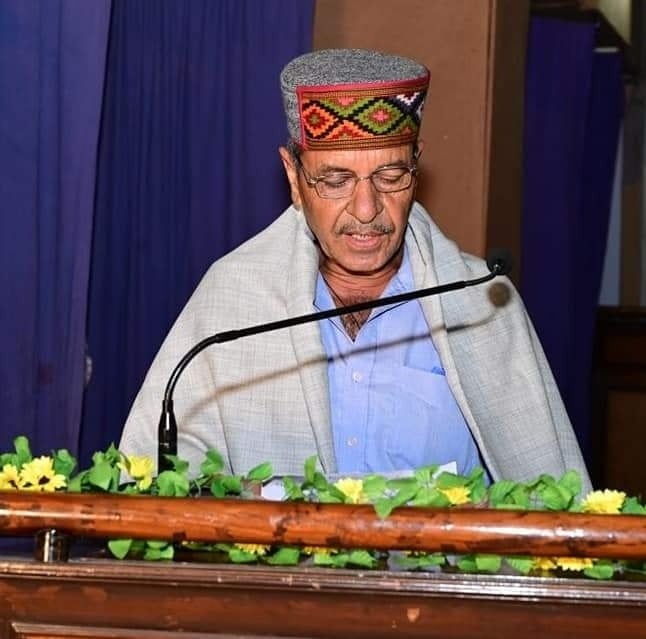
In an exclusive conversation with The Interview World, Sohan Lal, Chief Marketing Officer at Matix Fertilisers and Chemicals Limited, brings over 40 years of rich experience in the fertiliser industry. He has served National Fertilizers Limited (NFL) across diverse functions, ultimately rising to the position of Executive Director. In this conversation, he shares insights into how Matix is shaping its go-to-market strategy to expand its presence across Eastern India’s fertiliser market. He outlines how Matix positions its products range as differentiated crop-nutrition solutions alongside conventional bulk fertilisers.
Sohan Lal also sheds light on the evolving needs of farmers in Uttar Pradesh and Bihar and explains how Matix is adapting its marketing strategy to accelerate growth across North India. Looking ahead, he outlines the company’s five-year strategy to strengthen its presence across India’s fertiliser and chemicals industry.
The conversation also addresses a critical issue for Indian agriculture: ensuring the reliable and timely availability of fertilisers. Moreover, he shares his perspective on the policy measures required from both the Government and fertiliser companies to strengthen supply security. He further discusses how India can build greater resilience across its fertiliser ecosystem and reduce vulnerabilities in the face of changing market and supply-chain dynamics.
Here are the key takeaways from this wide-ranging and insightful conversation.
Q: What go-to-market strategy did Matix adopt to enter eastern India’s fertiliser market and compete effectively with established players like IFFCO, IPL, PPL, and Indorama India Private Limited?
A: The eastern Indian fertiliser market was historically served by major suppliers such as IFFCO and Indorama India Private limited, with NFL also maintaining a presence, particularly in Bihar. Odisha also saw participation from companies such as IPL, Coromandel, PPL, and NFL. However, market supply is not determined solely by company presence or import dependency. It is fundamentally shaped by the supply plan allocated by the Government of India, through the Department of Fertilisers.
With the commissioning of the Matix plant, our primary market has expanded across West Bengal, Bihar, Odisha, Jharkhand, Assam and the northeastern states. Accordingly, we supply these markets in line with the Department of Fertilisers’ allocation. Today, Matix commands approximately 20% of the urea market across this region, representing a significant presence.
From a product perspective, all bulk fertilisers are now marketed under the Bharat brand, irrespective of whether it is supplied by Matix, IFFCO, HURL, and IPL or other manufacturers. Nevertheless, product quality remains critical to farmers. Matix has built a strong reputation for consistent product quality and farmer acceptance. Before the introduction of the Bharat brand, Matix marketed its urea under the Dr. Fasal brand, which had already established strong recognition and acceptance across the eastern states as well as other marketing territories. That farmer trust continues to underpin Matix’s market position today.
Q: How do you position Matix products against conventional bulk fertilisers, as premium or mass products, and what else?
A: Matix operates a urea manufacturing plant at Panagarh, West Bengal. However, our vision extends beyond fertilisers. We believe farmers should have access to a comprehensive range of agricultural inputs under one roof. This vision aligns closely with the Government of India’s Pradhan Mantri Kisan Samriddhi Kendra (PMKSK) initiative, which seeks to make a wide range of agri-inputs available to farmers through a single point of access.
With this objective, Matix diversified into other essential agricultural inputs. We entered the agrochemicals business in 2022–23 and have since built a portfolio of approximately 43 products, which we market through our dealer network to farmers.
Our approach is distinctive. We offer products governed by the Fertiliser Control Order, including Bulk fertilisers, Bio-fertilisers, Organic fertilisers, City compost, Zinc sulphate, Calcium nitrate, PDM, PROM and water-soluble fertilisers. This enables us to address a broader spectrum of farmers’ nutritional and crop-management requirements.
We have also expanded significantly in agrochemicals and now market products under our own brands across our operating territories. In addition, we are now entering the bio-fertiliser manufacturing sector at our existing site. Farmers are increasingly accepting Matix products and recognizing them for their quality.
At the same time, we continue to support the government’s objectives during periods of DAP shortage. Accordingly, we have significantly increased the availability of Single Super Phosphate (SSP). Last year, we sold approximately 1.6 lakh tonnes of SSP in our marketing territory, making us one of the country’s largest SSP traders.
Quality remains central to everything we do. We rigorously monitor product quality, conduct field-level sampling, and work closely with the Department of Fertilisers on testing and compliance. Ultimately, farmer trust is built on consistent quality, and that is what Matix stands for.
Furthermore, Matix extends its farmer-centric approach beyond products by providing farm advisory services and actively supporting government initiatives aimed at strengthening Indian agriculture. It reinforces this commitment through a strong on-ground presence. Matix has deployed two Mobile Soil Testing Vans, one in Panagarh, West Bengal, and the other in Azamgarh, Uttar Pradesh, to bring free soil-testing services directly to farmers’ doorsteps. By enabling farmers to assess soil health conveniently and accurately, these mobile facilities help them make informed decisions on crop nutrition and soil management, ultimately supporting healthier soils and improved crop productivity.
Q: What does your data reveal about what farmers in UP and Bihar value most: price, product results, or brand trust?
A: A farmer is a farmer, whether from Uttar Pradesh, Bihar, or any other state. Ultimately, farmers seek results, and results depend on product quality. This applies not only to urea but also to DAP, MOP, NPK, SSP, and other fertilisers. When a company consistently delivers quality products, farmers recognize the value and gradually build trust in its brand, regardless of geography.
Price, however, remains an important consideration, particularly in a competitive market. For fertilisers such as urea, the MRP is currently regulated by the Government of India. In contrast, prices of other decontrolled fertilisers are determined by individual companies. However, MRP of DAP is also fixed.
Even so, quality remains fundamental. If a fertiliser delivers measurable results and improves crop yield, farmers are willing to adopt it. This is equally true for customized fertilisers and integrated nutrient management solutions. Therefore, performance ultimately drives farmer preference.
At the same time, reliable availability of chemical fertilisers remains a major concern for farmers across the country. Ensuring both quality and availability, while maintaining affordability, is therefore essential to meeting their needs.
Q: Which marketing approach, digital or traditional, will drive Matix’s growth, and what is your strategy for expanding across North India?
A: Our company primarily serves the eastern states, with Uttar Pradesh as our secondary market. We have also identified Punjab and Haryana as our tertiary markets. As we commission new plant, we expect our market footprint to expand. However, the Department of Fertilisers’ supply plan will largely determine our marketing territories and the pace of expansion.
If the proposed project materializes, we could extend our presence into Madhya Pradesh, Chhattisgarh, Andhra Pradesh, Telangana, and other southern markets. In parallel, we are exploring to sell imported urea. If we secure access to a western port, we could further strengthen our presence across North and Western India.
Meanwhile, digital marketing has become increasingly important. We are actively using WhatsApp and YouTube to engage farmers directly. Smartphone penetration among farmers has accelerated this shift, enabling them to access agricultural information and product communication online.
In addition, we have recently launched our toll-free farmer helpline, Matix Krishi Bandhu Sewa, to provide farmers with convenient, timely, and accessible guidance on agriculture-related queries. With a simple phone call, farmers can seek expert assistance and receive practical support when they need it. At the same time, we are expanding our use of digital and technology-enabled channels to deepen farmer engagement, strengthen outreach, and make our overall marketing approach more responsive and effective.
Q: Where do you see Matix five years from now, and how will you strengthen its presence in India’s fertiliser and chemical industry?
A: Regarding urea, our management is engaging with the Department of Fertilisers to establish another plant at our Panagarh site. In parallel, we have expanded our imports of DAP, NPK, and MOP. Last year, we sold more than one lakh tonnes of these imported fertilisers. Going forward, we aim to scale this business significantly. Within our core marketing territory, our target is to sell at least five lakh tonnes of DAP, NPK, and MOP. Accordingly, we plan to build a much larger presence in fertiliser imports and strengthen our market position.
Q: Despite rising domestic production and capacity, fertiliser shortages persist annually. What policy measures should the Government and fertiliser companies adopt to ensure reliable, timely availability?
A: India currently has urea production capacity of approximately 30 million tonnes, against annual consumption of around 39 million tonnes. This creates a structural deficit of nearly 10 million tonnes, which must be bridged through imports. The situation is even more pronounced for MOP, which is entirely import-dependent because India has no domestic reserves. In the case of DAP, roughly half of domestic requirements are met through local production, while the balance is imported.
Therefore, ensuring timely imports and distributing fertilisers efficiently across all states remain critical to maintaining nationwide availability. For urea, although domestic capacity is expanding, demand remains exceptionally strong because urea is the most economical source of nitrogen and its MRP has remained largely unchanged for a long period. Consequently, farmers continue to use it extensively.
At the same time, Indian agriculture is becoming increasingly commercial and productivity-oriented. Farmers are seeking higher yields, while newer crop varieties are also more responsive to fertiliser application. Food-grain production has consequently risen steadily over the past three to four years, supported significantly by the increased and efficient use of chemical fertilisers. Hence, India’s dependence on imported fertilisers is likely to continue.
Recognizing this, the Government of India is pursuing additional nitrogen-fertiliser capacity. Around eight to nine projects involving the public, private, and cooperative sectors are currently under consideration. Once implemented, these projects should strengthen domestic capacity and gradually ease supply pressures.
Q: Given volatile subsidy policies and rising import dependence amid shifting geopolitics, how should India strengthen fertiliser security and policy resilience?
A: India’s dependence on imported fertilisers makes import viability a critical concern. Since imported fertilisers are decontrolled and governed by the Nutrient-Based Subsidy (NBS) regime, the economics of imports have become increasingly challenging.
Last year, certain fertilisers became economically unviable to import. In response, the government introduced a special DAP advantage-disadvantage scheme, under which it reimburses the difference between the import cost and the prescribed economics while allowing companies a fixed margin. However, this mechanism does not fully address the underlying problem. Companies still face under-recovery when procurement costs exceed viable market economics.
The government should therefore provide greater predictability under the NBS policy. Earlier, the policy was announced annually, typically in February or March, giving companies sufficient visibility to plan imports. Now, the policy is announced seasonally, making import planning significantly more difficult for both large and small players.
Freight costs have also risen sharply because of ongoing geopolitical conflicts, further increasing landed fertiliser costs. Farmers can absorb higher prices only to a point. Beyond that threshold, they may reduce fertiliser consumption, affecting both demand and agricultural productivity.
If these conditions persist, DAP imports will remain under considerable economic pressure despite the existing support mechanism.