
Medicant Hospital & Research Centre (MHRC), Bokaro, is a modern, patient-centric healthcare institution dedicated to delivering comprehensive, compassionate, and high-quality medical care. The hospital brings together advanced medical technology, experienced healthcare professionals, and ethical clinical practices to address a broad spectrum of healthcare needs. The hospital places particular emphasis on personalized treatment, advanced diagnostics, and integrated cancer care. By combining clinical expertise with technology-driven healthcare and a patient-focused approach, Medicant Hospital seeks to make high-quality medical care more accessible while improving treatment outcomes and the overall patient experience.
MHRC has established key areas of clinical expertise across oncology, cardiology, orthopaedics and joint replacement, urology, paediatrics, obstetrics and gynaecology, neurosurgery, nuclear medicine, critical care, and emergency services. At the core of its approach is a commitment to collaborative care, clinical innovation, research, and patient safety. Its advanced infrastructure and modern facilities further strengthen its capacity to deliver sophisticated, multidisciplinary treatment.
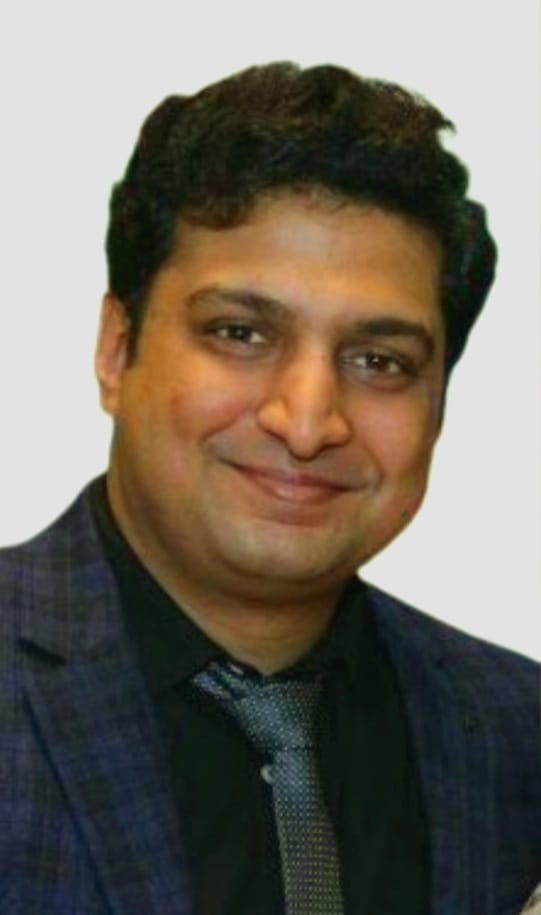
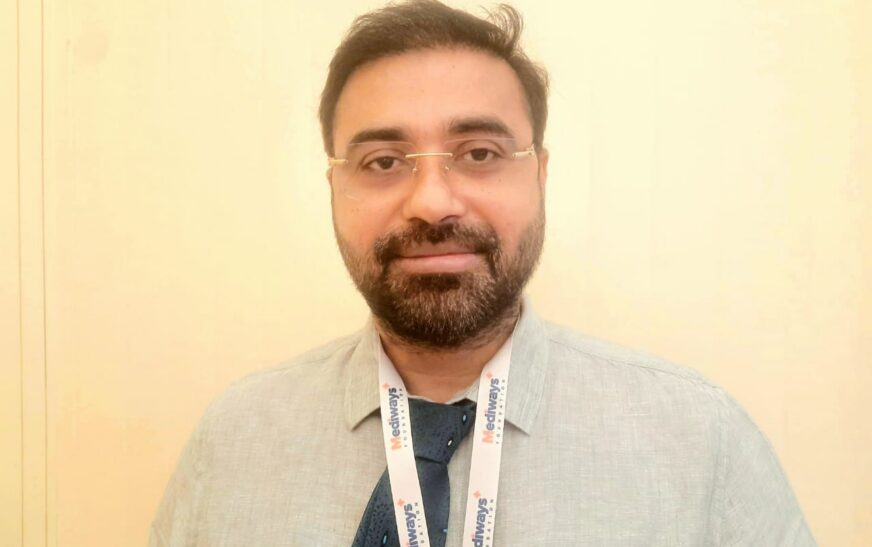
In an exclusive conversation with The Interview World at Nari Shakti 3.0, organized by Mediways Health Foundation, Prof. Dr. Majid Ahmed Talikoti, Chairman & Managing Director, Medicant Hospital & Research Centre, Bokaro, shared the vision and inspiration behind establishing a dedicated cancer hospital in Bokaro. He discussed the hospital’s healthcare infrastructure, outlined the range of advanced medical services it offers, and reflected on the response of the local community since its establishment.
He also shared his perspective on the evolving landscape of cancer care and healthcare infrastructure in India, emphasizing the need to strengthen access to advanced, multidisciplinary treatment. Importantly, he highlighted the role of collaboration in addressing the psychological and emotional dimensions of cancer, underscoring why comprehensive cancer care must extend beyond clinical treatment to include meaningful emotional and psychosocial support.
Here are the key takeaways from his wide-ranging conversation.
Q: What inspired you to establish a cancer hospital in Bokaro, and what vision did you have for its role in the region?
A: The vision was to bring quality healthcare closer to people, particularly those in underserved and remote areas, and make it accessible and affordable at their doorsteps. For many communities across the region, access to world-class medical care remained limited because of distance, infrastructure, and affordability. The objective, therefore, was not merely to build a healthcare institution, but to create a wider healthcare hub capable of serving patients across Eastern India.
The larger ambition was to extend advanced medical facilities to communities that had historically lacked access to them. By combining modern infrastructure, clinical expertise, and affordable care, the initiative sought to bridge the healthcare gap across the region. Ultimately, it represented a meaningful step towards building a healthier India, one in which quality healthcare is accessible not only to those who live in major cities, but also to those who need it most.

Q: What kind of healthcare infrastructure have you built at the hospital in Bokaro, and how does it compare with the facilities and standards available at leading hospitals in India’s major cities?
A: Medicant houses the most sophisticated cancer detection and treatment machines. For example, we have the Varian TrueBeam, one of the world’s most advanced radiotherapy systems. It enables highly precise treatment while minimising exposure to surrounding healthy tissue and reducing side effects.
We also have a five-ring PET-CT system that delivers high-quality imaging with a lower radiation dose. It reduces patient exposure, shortens examination time, and makes diagnosis faster and more comfortable.
Our Nuclear Medicine Department provides specialised treatments, including high-dose radioiodine therapy, for patients who require advanced nuclear medicine care.
In cardiac care, we have an advanced Philips imaging system in which the machine rotates around the patient rather than requiring the patient to rotate. This enhances safety, comfort, and imaging efficiency.
Equally important is accessibility. We operate a large, comprehensive hospital and are empanelled under Ayushman Bharat and other major healthcare schemes. This enables us to extend advanced treatment to patients who may otherwise struggle to afford or access it.
Our guiding principle is simple: no patient should be left untreated because of financial constraints or lack of access.
With this vision, we combine advanced technology, specialised expertise, affordability, and accessibility to provide comprehensive healthcare. Our goal is to make world-class treatment available to those who need it most, particularly across Eastern India.
Q: How are people and the local community responding to the work you’re doing there?
A: We are receiving a very encouraging response, with a steady and growing flow of patients. Although we are still in the early stages of establishing our presence, the momentum is strong. As we continue to strengthen our capabilities, expand our services, and build greater trust among patients, we expect to establish ourselves firmly over the next two to three years. Our clear ambition is to emerge as one of India’s leading healthcare providers, delivering high-quality, accessible, and affordable healthcare to the common man.
Q: Where does India stand today in terms of cancer care and healthcare infrastructure?
A: I take great pride in the fact that India is now serving patients not only from across the country but also from Bangladesh, Nepal, Afghanistan, and several African nations. Increasingly, even patients from developed countries are choosing India for their healthcare needs. This reflects the growing confidence in the quality, accessibility, and capabilities of our healthcare system.
At the same time, what is equally significant is the transformation taking place within India. Until recently, advanced healthcare of this scale was largely concentrated in major metropolitan centres. Today, however, high-quality healthcare is reaching tier-two, tier-three, and smaller cities as well. This progress is being further accelerated by the Government of India through initiatives such as Ayushman Bharat, which has emerged as an important model for expanding access to healthcare.
We have come a long way, and we are continuing to move forward. Yet, the journey ahead remains long. We should not look at what we have achieved as the destination; we should see it as a foundation for what we can achieve next.
There is no room for complacency. We have achieved a great deal, but there is still much more to accomplish. We will continue to raise the bar, expand access, strengthen our capabilities, and strive for excellence. In many respects, India is making remarkable progress and demonstrating that high-quality, accessible healthcare can be delivered at scale.
Q: Mental health is a critical part of cancer care. How can collaborative efforts help ensure that psychological and emotional support becomes an integral part of cancer treatment?
A: When a person is diagnosed with cancer, the first reaction is often that it is a passport to death. That fear can shake the entire family. Work suffers, businesses are disrupted, and life suddenly feels uncertain. One night, you may feel ready to conquer the world; the next morning, a cancer diagnosis can make you believe that your life is coming to an end.
But the challenge goes beyond the disease itself. Social perceptions can deepen the crisis. People may think, “He has cancer; he cannot continue working or contributing.” As a result, patients and their families face enormous emotional, social, and financial pressure.
This is where healthcare providers must step forward. We must stand beside patients, restore their confidence, and show them that cancer does not define the rest of their lives.
We tell them: “Look, you are back. It was a nightmare, not your entire story. It was only one chapter, not the complete book.”
There is a second inning waiting. Be prepared for it, embrace it, and move forward with renewed confidence. That is how we help patients reclaim their lives.