

The Aravalli Virasat Jan Abhiyaan formally announced the launch of the 700-kilometre Aravalli Sanrakshan Yatra at a press conference in New Delhi on 22 January 2026. The initiative seeks to protect the Aravalli range, India’s oldest mountain system and a vital ecological bulwark against desertification in north-west India. Beginning on 24 January in Gujarat, the yatra will traverse Gujarat, Rajasthan, Haryana, and Delhi over a period exceeding 40 days. Along its route, it will engage communities whose water security, livelihoods, and ecological stability depend directly on the Aravallis.
At the press meet, speakers detailed the scale and severity of environmental degradation afflicting the range. They attributed groundwater depletion, biodiversity loss, agricultural decline, and serious public health consequences to unchecked deforestation, legal and illegal mining, rampant real estate expansion, and indiscriminate waste dumping. They further criticised recent judicial and policy developments, including the redefinition of the Aravallis and the continued approval of mining activities. In response, the Abhiyaan demanded that the Supreme Court recall its November 2025 judgment and designate the entire Aravalli range as an Ecologically Sensitive Area or Critical Ecological Zone.
Community leaders and environmental experts underscored persistent violations of environmental clearances, weak enforcement of National Green Tribunal orders, and the disproportionate burden borne by rural, farming, and Adivasi communities. The Abhiyaan called for participatory governance mechanisms, comprehensive cumulative environmental and social impact assessments across all four states, accountability for ecological damage, an immediate halt to illegal mining, and formal recognition of the Aravallis’ ecological rights to secure the region’s long-term future.
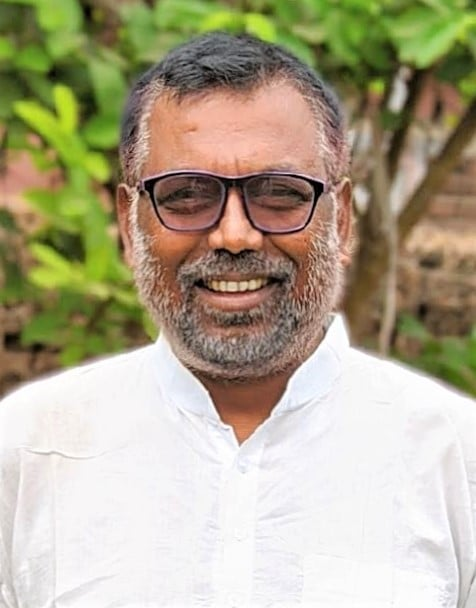
In an exclusive interaction with The Interview World, Dr. Rajendra Singh, Chairperson of Tarun Bharat Sangh, articulates the future direction of the Aravalli movement. He explains the range’s central role in India’s ecological stability, climate resilience, and economic sustainability, evaluates the effectiveness of the movement’s environmental strategies, and critically examines the government’s persistent insensitivity to Aravalli-related concerns. The following are the key takeaways from his incisive and compelling conversation.
Q: What are the plausible futures of the Aravalli movement?
A: The future of this movement lies in restoring and greening the Aravallis. To achieve this, the initiative must now transform into a people’s movement. Until now, it functioned as a mobile campaign. From this point forward, however, it will put down roots in the very stone of the Aravallis and rise steadily, like a living tree sustained by collective effort.
Today therefore marks a decisive shift, from mobilisation to mass ownership. The task ahead demands patience, persistence, and deep community engagement. The Aravallis can be revived only through a gradual, inclusive process that embeds responsibility and stewardship within the people themselves.
Q: Why is the Aravalli range critical to India’s ecological stability, climate resilience, and economic development?
A: The Aravallis are fundamental to life itself. They sustain our existence, secure our livelihoods, and anchor our collective conscience. Therefore, if we wish to live responsibly and ensure long-term economic well-being, we must keep the Aravallis green and alive.
The Aravallis replenish water systems, and water, in turn, sustains air and life. More critically, however, the range performs a function unmatched by ordinary mountains. It intercepts moisture-laden clouds from both the Bay of Bengal and the Arabian Sea and compels them to release rain over arid and semi-arid regions. Without the Aravallis, these regions would receive little to no rainfall.
Consequently, the significance of the Aravalli range extends across ecological, environmental, economic, cultural, and spiritual dimensions. Yet above all, its most decisive role lies in regulating climate. Acting as a natural climatic engine, the Aravallis draw, compress, and precipitate clouds moving from the Vindhyas and the Satpuras, making life possible where desert would otherwise prevail.
Q: How effective are the environmental approaches adopted by the Aravalli movement?
A: People carry the Aravallis in their blood. However, that innate connection has been systematically suppressed. Modern education has severed our cultural and spiritual relationship with the range, reducing a living landscape to an abstract geography.
Our task, therefore, is to restore those broken bonds. Once people rediscover this connection, they will rise on their own to defend the Aravallis. Our responsibility is clear and singular: to speak the truth about the Aravallis.
To that end, we released a book today. The publication will be widely available next week under the title Aao Aravalli Ko Jaane. Through this work, we seek to reclaim knowledge, revive consciousness, and re-anchor people in their enduring relationship with the Aravalli range.
Q: How would you assess the government’s insensitivity to the concerns related to the Aravalli range?
A: Governmental insensitivity has persisted across every era. Power, by its nature, tends to grow indifferent. This is not the fault of any single party or administration; it is a structural reality.
To correct it, principled individuals must rise: people who carry no personal agenda, seek no fame, and harbour no hidden interests. They are driven solely by a deep reverence for nature, recognizing it as their highest authority. When such individuals step forward, they restore accountability and conscience to power.