
WealthVidya is an EdTech platform focused on building practical financial literacy and money-management skills among young Indians. Its programmes help learners understand saving, investing, banking, insurance, borrowing, digital finance, risk management, and financial planning through India-relevant, activity-based learning.
The platform uses its proprietary Financial Quotient (FQ) assessment to measure and track financial knowledge, attitudes, and behaviours. Its Learn–Apply–Build–Engage–Leverage approach combines workshops, projects, community interaction, competitions, and internship opportunities to move learners beyond theoretical knowledge towards practical financial decision-making.
With programmes designed for students, schools, higher-education institutions, and adults, WealthVidya aims to strengthen financial confidence and equip learners to make responsible financial decisions in an increasingly digital economy.
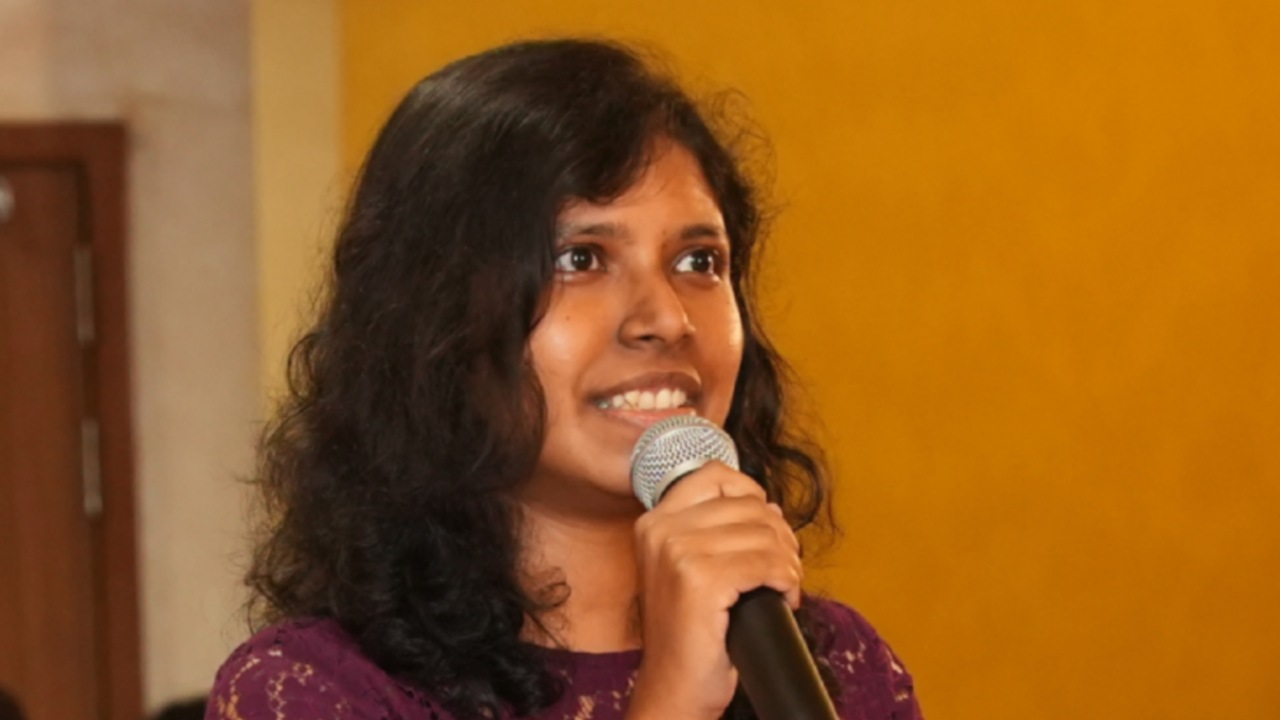
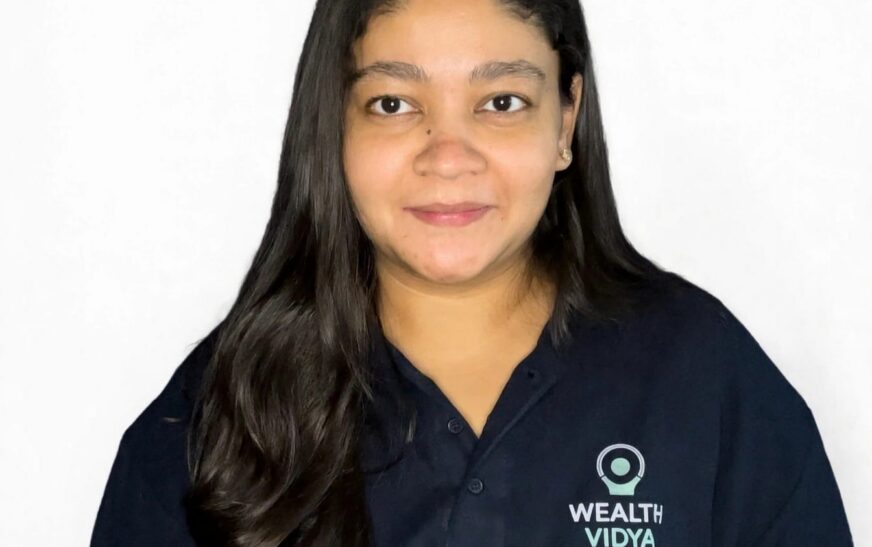
In an exclusive conversation with The Interview World, Shruti Poddar Lohia, Co-founder, WealthVidya, explains how the company is advancing financial literacy and money management among young Indians. She discusses the most common misconceptions teenagers have about money, explains how WealthVidya converts financial education into practical decision-making, and outlines her vision for the platform’s next phase of growth. Here are the key takeaways from the conversation.
Q: How does WealthVidya drive meaningful outcomes in financial literacy and money management?
A: WealthVidya’s growth has been measured less by vanity metrics and more by the institutional trust we have built over time. We hold AICTE accreditation, NSDC-BFSI Sector Skill Council certification, and a DVET Maharashtra MoU signed in 2023. We have also received support from NITI Aayog, which has opened doors that would have remained difficult to access as an early-stage startup.
In May 2025, ICICI Lombard came on board as a CSR partner. That partnership was significant because it demonstrated that financial literacy is increasingly being recognised as an investable social outcome rather than simply a desirable educational initiative. We were also recognised as a Top 20 startup in Stanford Seed’s Spark Program for South Asia in 2023.
On the ground, we have delivered financial-literacy orientations at schools such as GEMS Genesis International and, for the third consecutive year, Children’s Academy School. Repeat engagements matter because they indicate that institutions see sustained value in the work.
Our BFSI partnership funnel has also matured. Roughly one in five qualified conversations now converts into an active collaboration each quarter.
However, what makes me proudest is not any single metric. It is the fact that every credential, partnership, and institutional association has come from an organisation willing to put its own name behind our work. That institutional trust is perhaps our strongest measure of progress.
Q: What money mistake or misconception among teenagers, young adults, or women convinced you that financial education needed a new approach?
A: In 2023, during an early WealthVidya pilot, we asked a 13-year-old boy in a small town in Uttar Pradesh what “saving money” meant to him. He smiled and replied, “Save toh nahi, ma’am — har hafte ₹500 mein khelta hoon.”
That moment became an inflection point for us.
We realised that the challenge was not simply a lack of financial knowledge. It was the way young people think about money, make decisions with it, and translate knowledge into behaviour. Teaching them about saving, budgeting, or banking would not be enough. We needed to address mindset, behaviour, confidence, and decision-making together.
That is the gap WealthVidya seeks to close, and it remains one of our strongest differentiators.
We build the entire journey from being unaware to becoming informed, confident, and capable of taking action. Many literacy-first platforms stop at generating interest and awareness. At the other end of the spectrum, BFSI-led inclusion programmes can sometimes move directly towards product adoption without first building the confidence required to make an informed decision.
Our approach connects these stages.
This full-funnel model has become an important differentiator for us with institutional partners. It is one reason they return to us, and it also changes the nature of pricing conversations. Once you can demonstrate behavioural change rather than simply content delivery, the value proposition becomes much stronger.
Q: What makes WealthVidya’s learning practical enough to influence an actual financial decision?
A: Financial content is everywhere today, from social-media reels and newsletters to finfluencers and online courses. The real problem is not the absence of information. It is the absence of a reliable bridge between “I understand this” and “I acted on this.”
That is precisely the gap we designed our Financial Quotient Score to address.
The framework evaluates learners across areas such as banking, financial protection, and saving and investing. It then moves them through a deliberate learning journey, beginning with a free WhatsApp-based quiz and progressing towards affordable, practical learning interventions that learners can complete and apply.
The real inflection point for us came when we recognised that we were not competing with content creators at all. We were solving a fundamentally different problem: turning financial understanding into an informed decision.
For example, 72% of learners in one cohort demonstrated readiness to purchase basic insurance. That kind of behavioural insight is more meaningful to us than simply knowing how many people watched a workshop or completed a module.
This distinction has changed the way we pitch, price, and build partnerships. Institutions do not engage with us merely to explain financial concepts. They engage with us because we can demonstrate movement from knowledge to action, whether that means opening a bank account, purchasing an insurance policy, or starting a SIP.
That is a fundamentally different and more defensible business proposition.
Q: Looking ahead three to five years, what is your vision for WealthVidya’s next growth engine?
A: Over the next three to five years, we see the Finance for India Fellowship, scheduled to launch by the end of 2026, as one of WealthVidya’s most important growth engines.
The Fellowship will train undergraduate and postgraduate finance students as well as working teachers. Participants will receive certification through NSDC-BFSI and then work as paid fellows to advance financial literacy in their own cities and towns, including through local-language delivery. The programme will be supported and funded by BFSI corporates.
If executed effectively, this model will do more than expand our geographical reach. It will create a standing network of trained financial-capability builders who can take financial education deeper into communities across India.
The Fellowship is also deliberately designed as the first phase of something much larger: a two-sided Financial Readiness Platform that can eventually connect learners directly with financial institutions and products for which they are genuinely ready.
The principle guiding us has remained consistent from day one: financial literacy alone does not change lives; informed action does. Therefore, every growth engine we build must ultimately bring a learner closer to making a sound financial decision, not simply knowing another financial fact.