
Avaada Energy, the energy platform of the Avaada Group, is one of India’s leading renewable energy companies, driving the nation’s transition toward a sustainable, low-carbon future. The company develops, owns, and operates a diversified portfolio of clean-energy assets spanning solar, wind, hydro, green fuels, and energy storage. Guided by its philosophy, “Always Clean, Always On,” Avaada integrates renewable generation with advanced storage solutions to deliver reliable round-the-clock green power while strengthening energy security and supporting India’s decarbonization goals.
Expanding beyond power generation, Avaada is investing across the clean-energy value chain, including solar PV manufacturing, green hydrogen derivatives, and sustainability initiatives aligned with the United Nations Sustainable Development Goals (SDGs). Through its growing presence across India, the company is helping shape the country’s evolving green-energy ecosystem and advance its net-zero ambitions.
A significant recent initiative is the Avaada Bharat Uday Yatra, a pioneering nationwide green-energy movement that covered 10 states and 27 cities in 36 days, engaging millions of citizens. The campaign fostered a nationwide dialogue on sustainability, climate action, and clean energy awareness.
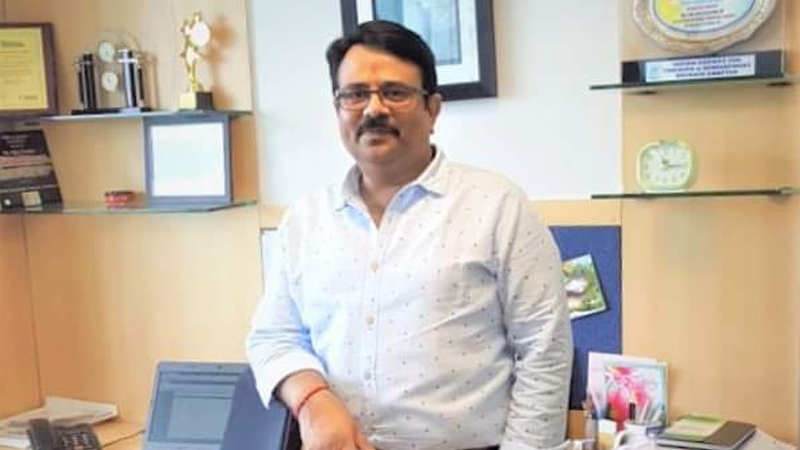
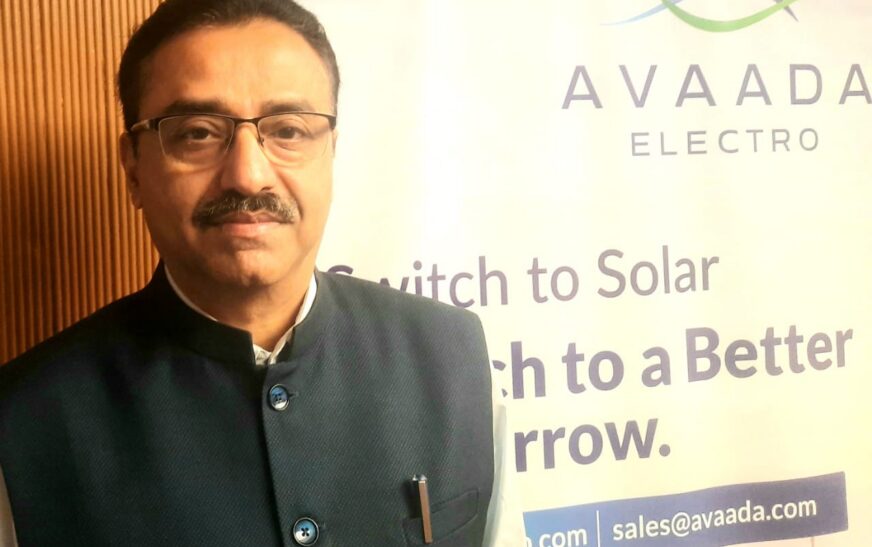
In this exclusive interaction with The Interview World, Kishor Nair, CEO of Avaada Energy, discusses the vision behind the Yatra, India’s renewable energy challenges, the role of storage in enabling 24×7 green power, and Avaada’s strategy to support the country’s clean-energy future. Presented below are the key insights from this thought-provoking conversation.
Q: What is the vision behind the Avaada Bharat Uday Yatra, and are there plans to expand the initiative nationwide to reach broader markets and communities across India?
A: The vision behind the Avaada Bharat Uday Yatra was both clear and ambitious: to bring the message of clean energy directly to the people of India and create widespread awareness about the opportunities emerging from the country’s renewable energy transition. We wanted to go beyond conventional outreach and engage communities at the grassroots level, helping both rural and urban citizens understand the clean-energy initiatives introduced by the Government of India and the tangible benefits these programs can deliver.
Our efforts centered on two flagship schemes. The first was the PM-KUSUM Scheme, which promotes the solarization of agricultural feeders and irrigation systems. For decades, many farmers have depended on diesel-powered pumps and irregular electricity supply, often irrigating their fields late at night when power became available. Solarization is changing that reality. By enabling access to reliable daytime electricity, the scheme helps farmers improve productivity, lower fuel expenses, and enhance operational efficiency. However, awareness of these benefits remains limited in several regions. Through the Yatra, we sought to bridge this information gap and encourage greater participation in the program.
The second focus area was the PM Surya Ghar Rooftop Solar Scheme. Despite the government’s strong push to accelerate rooftop solar adoption, many households remain unaware of the financial incentives available to them. We educated citizens about how rooftop solar systems can significantly reduce electricity bills while providing subsidies of up to ₹78,000 for installations of up to 3 kW. We also highlighted the additional earning potential through net metering, which allows homeowners to export surplus power to the grid.
The response surpassed our expectations. Thousands of people participated in awareness programs organized along the route. To maximize engagement, we conducted Nukkad Nataks in local languages and collaborated with local artists and community groups. These interactive performances sparked meaningful discussions on renewable energy, government subsidies, application processes, rural electrification, and rooftop solar adoption.
The Yatra covered a vast geographical footprint across eastern, western, and central India, enabling us to connect with diverse communities. Although the initiative has not yet expanded into southern India, where renewable energy awareness is relatively stronger, the overwhelming public response has encouraged us to actively evaluate future expansion opportunities.
Q: With India targeting 500 GW of renewable energy by 2030, what key challenges and constraints could hinder achieving this goal?
A: As India accelerates its journey toward achieving 500 GW of renewable energy capacity by 2030, land availability and transmission infrastructure have emerged as two of the sector’s most significant challenges. Utility-scale solar projects require large contiguous parcels of land, which are largely concentrated in states such as Rajasthan, Gujarat, and parts of Madhya Pradesh. As deployment expands, securing suitable sites is becoming increasingly difficult. Wind-energy projects face similar constraints, as they can only be developed in locations with adequate wind resources.
Land acquisition further complicates project development, often involving delays, disputes, and complex stakeholder negotiations. Developers must navigate local concerns, administrative hurdles, and evolving expectations before projects can proceed.
The challenge extends to transmission infrastructure as well. Right-of-way (RoW) issues frequently delay the installation of transmission lines, increasing costs and affecting project timelines. These bottlenecks can hinder the efficient evacuation of renewable power from generation hubs to consumption centers. Addressing land and RoW challenges through streamlined regulations, stakeholder engagement, and faster approvals will be critical to achieving India’s renewable energy ambitions.
Q: What are the key transmission-related challenges facing India’s renewable energy sector, and how can they be addressed effectively?
A: Transmission infrastructure remains one of the most critical enablers of India’s renewable energy transition. While the Central Electricity Authority (CEA) and the Ministry of Power have taken proactive steps to develop transmission corridors for renewable integration, the growth in generation capacity is outpacing the expansion of the grid. This widening gap is creating increasing pressure on available transmission networks and raising concerns about grid readiness.
A key challenge lies in the difference between project-development timelines. Renewable energy projects can typically be commissioned within 18–24 months, whereas large-scale transmission infrastructure often requires four years or more due to extensive planning, approvals, land acquisition, and construction activities. As a result, generation assets may become operational before adequate evacuation infrastructure is in place, limiting their utilization.
Achieving India’s goal of 500 GW of renewable energy capacity by 2030 will require the addition of nearly 50 GW annually, making parallel investments in transmission infrastructure essential. The challenge extends beyond the interstate grid, as many state transmission networks also require significant augmentation to absorb growing renewable capacity. Although several states have initiated modernization and expansion programs, much more needs to be done.
Ultimately, India’s clean-energy ambitions depend not only on building renewable-generation assets but also on creating a robust, future-ready transmission ecosystem capable of efficiently delivering green power across the country.
Q: What is your perspective on delivering reliable 24×7 renewable power, and what role can solar energy and storage play in achieving it?
A: As India rapidly expands its renewable energy capacity, ensuring grid stability has become a critical priority. The growing share of solar power, much of which is generated during daylight hours, presents new challenges in balancing electricity supply and demand. When large volumes of solar energy flow into the grid, conventional thermal power plants often need to reduce output, requiring careful coordination to maintain system reliability, frequency control, and voltage stability.
To manage this transition, the government has introduced a comprehensive scheduling and forecasting framework for renewable energy generation. Developers must provide generation forecasts and update them at frequent intervals, enabling grid operators to anticipate fluctuations and optimize power dispatch. These measures, supported by stronger operational standards and grid-management protocols, have significantly improved renewable energy integration.
However, the long-term solution lies in large-scale energy storage. Recognizing its importance, developers are increasingly pairing renewable energy projects with storage systems. This approach allows excess electricity generated during peak sunlight hours to be stored and delivered when demand rises, including during evening and nighttime periods.
As a result, renewable energy is evolving from an intermittent source into a dependable 24×7 power solution. Advances in battery and storage technologies now enable renewable projects to provide round-the-clock electricity at highly competitive tariffs. In many cases, renewable energy combined with storage can compete directly with thermal power while offering greater price certainty through long-term fixed tariffs. Beyond enhancing grid stability, energy storage is accelerating the shift toward a cleaner, more reliable, and economically sustainable energy future.
Q: As India advances toward its 500 GW renewable energy target, what supply-side capacities is Avaada prioritizing to help achieve this goal?
A: We have set an ambitious target of achieving 30 GW of renewable energy capacity by 2030, and we remain highly confident of accomplishing it. This confidence stems from the strong foundation we have already established across the project-development pipeline. More importantly, we have secured the necessary project allocations and strategic assets required to support this growth trajectory.
As a result, the pathway to achieving our 2030 objective is already well defined. With robust project visibility, a disciplined execution strategy, and a strong portfolio of secured opportunities, we are steadily building the capacity needed to meet our target. Consequently, we view the 30 GW milestone not merely as an aspiration but as a realistic and achievable goal that reflects our long-term commitment to accelerating India’s clean-energy transition.