

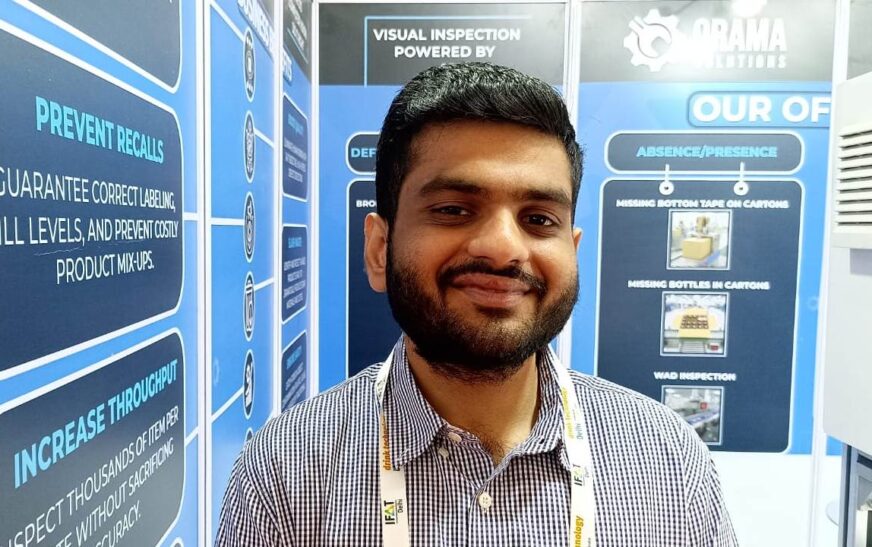
Orama Solutions, an India-based automation and AI firm, engineers advanced computer vision systems for manufacturing environments. Since its founding in 2020, the company has designed and deployed tailored solutions for defect detection, surface inspection, OCR, classification, and counting. As a result, it strengthens quality control while simultaneously improving operational efficiency.
By integrating deep learning, image processing, and Industry 4.0 frameworks, Orama Solutions enables high-precision, real-time inspection with minimal human intervention. Moreover, its no-code platform accelerates the development and deployment of vision AI applications, allowing manufacturers to scale rapidly without extensive technical overhead. Consequently, organizations reduce manual errors, lower operational costs, and minimize customer complaints—while moving decisively toward data-driven manufacturing excellence.
In an exclusive interaction with The Interview World at IFAT Delhi 2026, Shrinand Aggarwal, CTO of Orama Solutions, articulates the company’s strategic vision. He outlines its AI and computer vision portfolio, evaluates emerging market opportunities, and explains the firm’s export strategy. In addition, he sheds light on upcoming innovations and product developments. The following are the key insights from this in-depth and thought-provoking discussion.
Q: Can you provide a detailed overview of the AI and computer vision solutions offered by Orama Solutions?
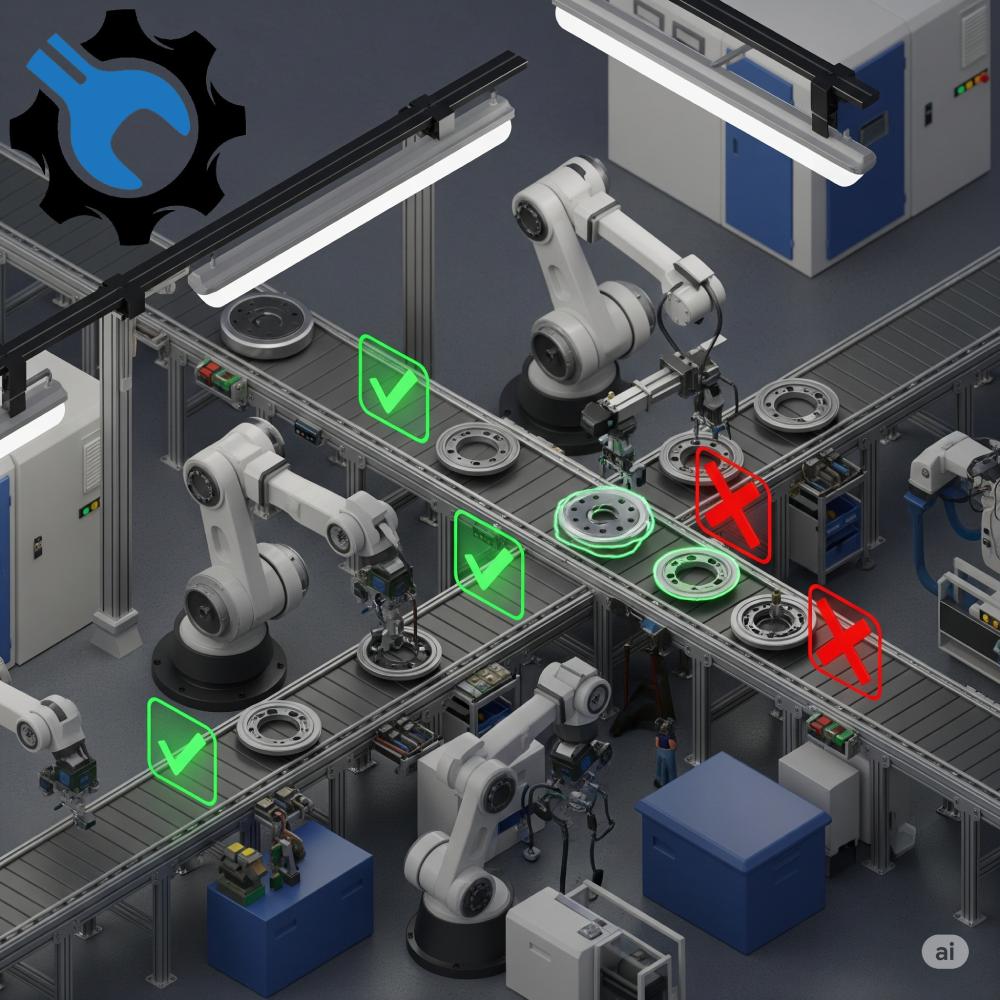
A: We apply computer vision and AI to engineer a wide range of vision-based solutions. Specifically, we deliver systems for assembly verification, contamination detection, and batch code validation. More broadly, wherever visual inspection is required, we replace manual checks with camera-driven intelligence that detects defects with speed and precision. As a result, our solutions standardize quality assurance while improving reliability. Notably, we design and build these systems entirely in India.
Furthermore, we rely on no imported technologies; we develop every component in-house. In recognition of this capability, our software recently earned a prestigious award in Germany. Significantly, we became the first Asian company to receive this honour since the award’s inception.
Q: How do you assess the market opportunities for AI and computer vision solutions?
A: The market for these solutions is both vast and rapidly expanding. Initially, we served clients primarily in the automotive sector. However, we have since diversified into pharmaceuticals, consumer goods, and FMCG. Consequently, the scale and complexity of demand have increased significantly.
Earlier, we delivered roughly ten projects per year. Now, we receive approximately ten projects in a single week. This sharp acceleration clearly reflects the market’s momentum. Therefore, the growth trajectory is not only evident but also sustained.
Q: Are you currently exporting your products? If not, what are your plans and timeline for entering international markets?
A: We are now preparing to enter international markets. Beginning this year, we will actively export our solutions. Until now, we have operated exclusively within India; however, we are moving decisively to establish a global footprint.
To start, we will target Eastern Europe, the Americas, and key African markets. These regions are witnessing strong growth in manufacturing and, therefore, present substantial opportunities for our offerings.
Q: What new products or innovations are you planning to develop?
A: We have developed a no-code platform that enables users to build vision applications independently. As a result, organizations can design, deploy, and iterate solutions without relying on specialized programming expertise. In parallel, our systems integrate seamlessly with existing infrastructure, as we retrofit our machines onto virtually any legacy setup.
Moreover, our solutions communicate effortlessly with leading PLCs and industrial systems, including Mitsubishi, Siemens, and Allen-Bradley. Consequently, we ensure interoperability across diverse manufacturing environments without disruption.
Most importantly, scalability defines our core advantage. While many competitors deliver one-off, custom-built solutions, we have engineered a platform that supports customization at scale. Therefore, clients not only receive tailored applications but also gain the ability to expand them rapidly across operations. In this regard, we have established a first-mover position in delivering scalable, platform-driven vision AI solutions.
Q: Do you hold any patents related to these products or their underlying technologies?
A: We have not yet filed a patent; however, we will do so in the near term.






2 Comments
This is exactly what I was looking for.
I wasn’t expecting to learn so much from this post!
Comments are closed.