

WHEELS Global Foundation (WGF), a U.S.-based 501(c)(3) nonprofit, is driven by the ingenuity and passion of IIT alumni. Inspired by Dr. A.P.J. Abdul Kalam’s 2006 call to action, WGF aims to transform 20% of “Rurban” India by 2030 through scalable, technology-driven social impact. The foundation focuses on six critical pillars, such as Water, Health, Energy, Education, Livelihood, and Sustainability, turning innovative ideas into measurable change. From community clean water systems and rural telemedicine hubs to affordable biogas solutions and skill-building programs for women and youth, WGF delivers solutions that directly improve lives.
By harnessing a global network of IIT alumni, professionals, and institutions, WGF scales its projects with expertise, innovation, and unwavering commitment. With active chapters across India, the U.S., and beyond, the foundation also provides a platform for meaningful volunteerism, mentorship, and philanthropy, enabling professionals to make a tangible and lasting impact.
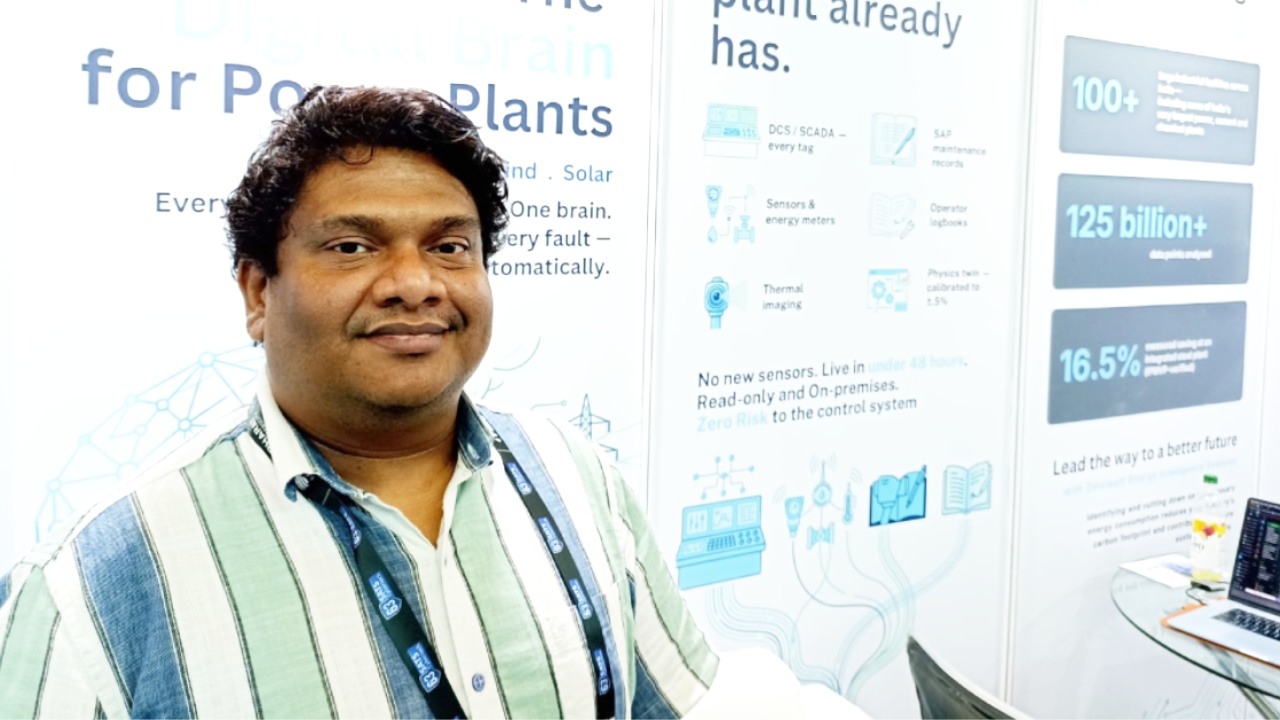
In an exclusive conversation with The Interview World at SPRINT North Edition 2025, hosted by IIT Ropar and iHub–AWaDH, Kishan Goenka, Chairperson of WGF’s North India Chapter and Water Council, shared valuable insights. He discussed the societal impact of WGF’s initiatives, highlighted the startups and NGOs collaborating with the organization, emphasized AI’s catalytic role, and outlined WGF’s efforts in other countries. Here are the key takeaways from his enlightening conversation.
Q: Since its inception in 2006, WHEELS Global Foundation has run flagship programs in water, healthcare, education, energy, livelihood, and sustainability. Could you share specific insights into the impact these initiatives have created in society?
A: WHEELS Global Foundation (WGF) was founded in response to Dr. A.P.J. Abdul Kalam’s clarion call during a pan-IIT session in Washington, D.C. This initiative led to the establishment of the foundation in the U.S., which has since expanded its presence to India. WGF’s core purpose is to give back to India by supporting diverse communities across the country.
The acronym WHEELS represents Water, Health, Education, Energy, Livelihood, and Sustainability, the six critical areas where the foundation drives impact. Its immediate mission is ambitious: to transform 20% of India’s rural-urban (“Rurban”) population, nearly 180 million people, by 2030.
In the water sector, WGF has implemented several transformative projects. A flagship initiative in Himachal Pradesh addressed the drying streams that had devastated agriculture and livelihoods, forcing many villagers to migrate to Shimla. Partnering with IIT Roorkee, IIM Ahmedabad, and other technical institutions, WGF conducted a detailed study of 50 streams to identify the root causes of water scarcity. Within 18 months, 15 streams were rejuvenated, restoring agriculture, drinking water, and local livelihoods. Remarkably, this project was entirely government-funded, and WGF optimized a modest budget of just ₹1 lakh per stream to achieve maximum impact, a model of collaborative governance. Today, the Himachal Pradesh government has scaled this approach, issuing tenders for 500 streams, which could ultimately benefit over 20 million people, drastically reducing rural-to-urban migration.
In healthcare, WGF has deployed telemedicine centers across multiple states, including 300 centers in Madhya Pradesh, in collaboration with the Indian Army’s Western Command. These centers deliver critical medical services even at altitudes above 10,000 feet, serving travelers and remote villagers who otherwise lack access to healthcare.
Addressing maternal and child health, Dr. Rupal Dalal from the U.S. identified that newborns in India often have low birth weight due to insufficient maternal knowledge of breastfeeding. Using research-backed techniques developed by IIT Bombay’s Spoken Tutorials program and funding from U.S. partners, WGF implemented interventions across seven districts in Madhya Pradesh. In just 18 months, average newborn weights increased from 1.2 kg to 4 kg, and stunting rates dropped from 45% to 5–6%. The program’s success has prompted directives to expand it statewide in Madhya Pradesh and led to new MoUs with Jharkhand, Meghalaya, and Chhattisgarh.
In education, WGF leverages the Spoken Tutorials platform from IIT to teach soft skills and computer literacy. To date, the foundation has trained over 10 million children, empowering them with essential skills for the future.
In energy, WGF focuses on smart grid solutions, connecting small-scale solar plants to village networks to ensure reliable and sustainable power access.
For livelihoods, WGF partnered with IIT Gandhinagar to engage 1,500 students in rural research across the Aravalli region of Gujarat. Their insights facilitated the creation of 40 startups, managed primarily by women, directly boosting local economies and employment.
In sustainability, WGF has revitalized village ponds, many of which had become dumping grounds. In the Yamuna Expressway region, 27 villages saw their ponds restored, attracting wildlife and becoming community spaces. This initiative has inspired the local authority (EDA) to replicate the model across 70–80 additional villages.
Through targeted interventions across these six pillars, WHEELS Global Foundation transforms communities, leverages technology, and drives scalable social impact, creating measurable change in the lives of millions.
Q: Could you share how many startups and NGOs are currently partnered with your organization to implement these projects on the ground?
A: Currently, WHEELS Global Foundation collaborates with over 100 organizations, including NGOs and startups. Terminology aside, what matters is their impact on the ground.
As I mentioned earlier, we are not a funding agency. Instead, we identify initiatives that are already delivering meaningful results and provide them with a platform to scale. By leveraging our network and expertise, we help ideas that are working in one village expand to 100, or even more, villages.
Today, roughly 80% of these organizations are led by IIT alumni, while 20% come from other backgrounds. However, we remain open to any idea with strong potential, any initiative that can be scaled to create significant, nationwide impact.
Q: AI has become increasingly ubiquitous across sectors, enhancing productivity, efficiency, and decision-making. How do you see AI acting as a catalyst in the areas where WHEELS Global Foundation is active?
A: When it comes to AI, I have one guiding principle: make AI your faithful servant, not your master. I repeat this wherever I go.
Treat AI as a tool to execute meaningful work. Give it clear tasks, and it will deliver. There is no reason to fear it.
In the early days of computing, people worried about losing jobs and even protested against computers. I witnessed it myself. Yet today, computers are everywhere, and far from causing unemployment, they have created more opportunities. Only the nature of work has changed.
The same will hold true for AI. There may be temporary challenges, but ultimately, it will enhance productivity, innovation, and growth, if we control it wisely.
The key is simple: AI must remain a good servant, never a controlling master.
Q: While WHEELS Global Foundation has a strong focus on India, is the organization also implementing similar initiatives in other developing countries?
A: WHEELS Global Foundation is founded by Indians and dedicated primarily to India. However, many of our leaders are also based in the U.S., and their perspective shows that not all areas there reflect the prosperity often portrayed in movies. In some regions, such as parts of Michigan, conditions can be as challenging as those in developing countries, sometimes even less favourable.
Recognizing this, we have begun extending our support in the U.S., applying the same scalable, impact-driven approach we use in India. Recently, several African countries have also reached out for collaboration, and we are exploring ways to assist them.
While WGF remains open to supporting initiatives globally, India continues to be our primary focus.