
Over the last two decades, women’s empowerment in India has undergone a profound transformation, driven by landmark policies, grassroots movements, and shifting societal attitudes. What began as a push for political participation and economic independence has now expanded into a reimagining of what it truly means for women to belong to the “mainstream.”
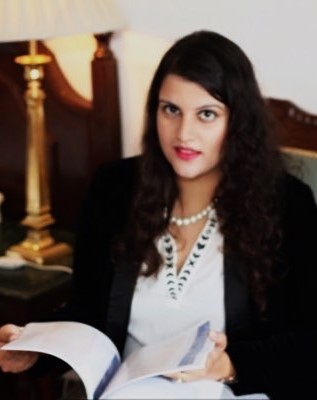
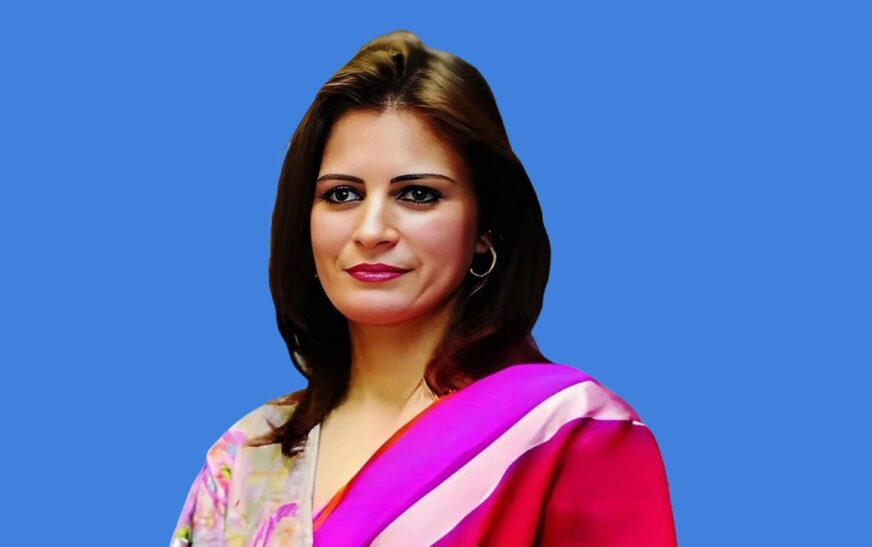
At Ideate 2025, hosted by FICCI, under the theme “Margin to Mainstream: Empowering Women to Lead,” Sara Abdullah Pilot, Founder and Chairperson of the Centre for Equity and Inclusion (CEQUIN), engaged in an exclusive conversation with The Interview World. She traced the trajectory of empowerment from economic and social breakthroughs to the unifying power of sports, particularly football, in reshaping opportunities for women. She also underscored how the game has sparked remarkable change in both rural and urban communities.
This dialogue illuminated not only the structural reforms redefining gender equity but also the lived realities of women and girls whose aspirations now extend from classrooms to playing fields. The following takeaways capture the essence of her compelling insights.
Q: How do you evaluate the last two decades of government initiatives in women empowerment and mainstreaming marginalized communities within the country?
A: This conversation goes far beyond reflecting on the past two decades. It compels us to confront the present and examine women’s empowerment from every perspective. That is precisely why this conclave holds such significance. By focusing on the theme “Margin to Mainstream,” it challenges us to take the idea of the “mainstream” seriously, not as rhetoric but as a responsibility.
The government’s landmark decision to reserve seats for women in Parliament, set to take effect in 2029, promises a dramatic rise in women’s representation at the national level. Yet empowerment cannot stop there. It must cascade down through Panchayati Raj institutions, districts, blocks, and villages, until women participate equally in shaping society at every tier. At each step, the question remains urgent: are women truly empowered, and are they recognized as equal partners in this nation’s progress?
Q: How do you assess the role of economic empowerment as a crucial driver for achieving genuine and sustainable women empowerment?
A: Economic empowerment lies at the heart of any serious conversation on progress because, quite simply, money speaks. But empowerment cannot succeed without the buy-in of men and boys. They must recognize why it matters for daughters and sisters to attend school, pursue higher education, and secure meaningful jobs. When women participate fully, families benefit directly: more income flows into the household, and the financial burden no longer rests solely on men.
In today’s world, where the cost of living and education continues to climb, shared responsibility is not just desirable but essential. Every additional contributor strengthens both the household economy and the national economy. At the macro level, the logic is undeniable: a country cannot afford to sideline 50 percent of its population. The greater the participation of women in the workforce, the stronger the GDP, the healthier the society, and the more resilient the nation.
Q: What inspired you to choose football as a medium for women’s empowerment, and how has the journey evolved so far?
A: My journey began 16 years ago when I founded my NGO. Very early on, we discovered that sports, especially football, offer a powerful tool for empowerment and development. Unlike many programs that take years to show results, sport delivers change at a strikingly rapid pace.
Deep-rooted issues such as patriarchy and entrenched mindsets cannot transform overnight. No NGO or government can claim instant success. Yet, through football, we have witnessed visible shifts in attitudes and behaviours within a surprisingly short time.
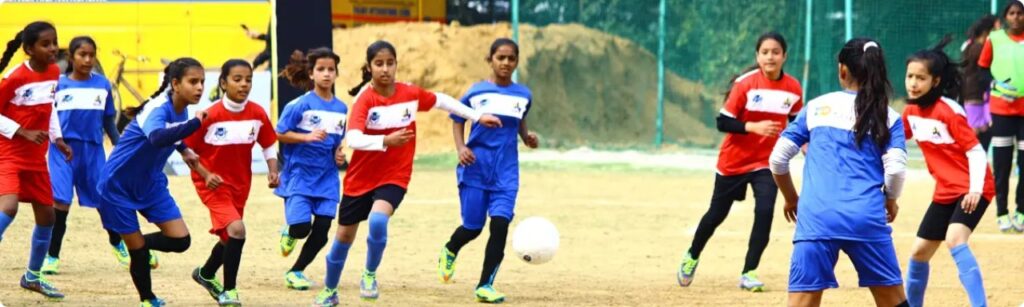
At CEQUIN, we never set out to create a football academy. Our goal is not to produce World Cup players, though excellence is always welcome. Instead, we focus on mass participation: thousands of girls stepping onto the field, reclaiming public spaces, and experiencing empowerment first-hand. The ripple effects are extraordinary.
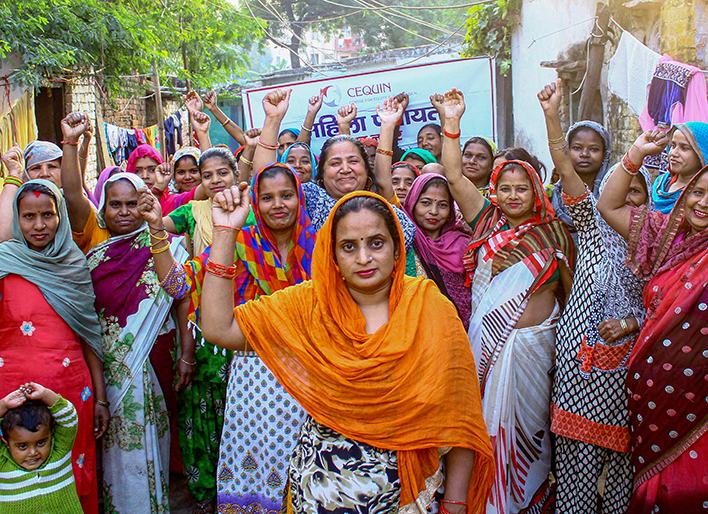
When a girl plays football, the change extends far beyond her. We engage her family, her school, her village. We involve mothers, local leaders, teachers, police, MLAs, and sarpanchs. Football becomes the spark that ignites broader transformation, binding entire communities into the journey of equality and inclusion.
Q: What transformative changes has sports brought into the lives of girls from rural areas, both personally and within their communities?
A: Our work spans both rural and urban contexts, including cities like Delhi. Across these settings, the impact is striking. Girls who join our programs stay in school, defying the massive dropout rates that otherwise persist. In regions where child marriage remains a serious problem, participants in our football project avoid early marriage. Our community mobilizers stay closely connected with the girls, their families, and their schools, ensuring they are supported at every step.
The change runs deeper still. These girls develop aspirations, whether to pursue higher education or to build careers. Some choose to stay in sports, becoming football coaches or engaging in related fields. Others follow different professional paths. The common thread is empowerment: they step into economic independence and contribute to society with confidence and agency.