


Women’s health stands at a decisive crossroads. Cancers such as breast and cervical cancer continue to rank among the world’s leading causes of death. In India, the urgency is stark: every eight minutes, a woman dies from cervical cancer, most often because the disease is detected too late.
Yet this crisis also carries hope. Government initiatives, global collaborations, and rapid advances in screening, vaccination, and treatment are transforming the outlook from delayed response to timely prevention. Strategies like the WHO’s 90-70-90 framework and India’s rollout of the Cervavac vaccine signal a deepening commitment to women’s health, even as challenges in implementation persist.
At Healthcare Horizon 2025, hosted by Mediways Foundation and OSVI Healthcare, The Interview World spoke exclusively with Dr. Rashmi Shriya, Head of Laparoscopic Gynaecology at MASSH Super Speciality Hospital. Dr. Shriya outlined the latest progress in detecting, preventing, and treating women’s cancers. She emphasized the critical role of HPV vaccination, public awareness, lifestyle changes, and palliative care in saving lives and strengthening women’s agency over their health.
Her insights highlight one urgent truth: education, access, and proactive healthcare are not optional; they are the lifelines that can empower women and reshape the future of cancer care.
Q: In the context of women-related cancers, what recent developments have emerged in treatment and detection, and what success rates are being achieved?
A: Governments across the world, including India, are committing significant resources to women’s health. Substantial funding is being directed toward women’s development, and in India, the Federation of Obstetric and Gynaecological Societies of India (FOGSI) has joined hands with the government to advance the cervical cancer eradication program. At the global level, the WHO has introduced its landmark 90-70-90 strategy for cervical cancer control.
The government’s current focus is on breast and cervical cancers, and rightly so. Breast cancer remains the leading cause of cancer-related deaths among women, followed closely by cervical cancer. Unlike ovarian cancer, which lacks reliable early-detection tests, both breast and cervical cancers are largely preventable. Therefore, channelling infrastructure, funding, and public health efforts toward these two cancers offers the greatest potential to save lives.
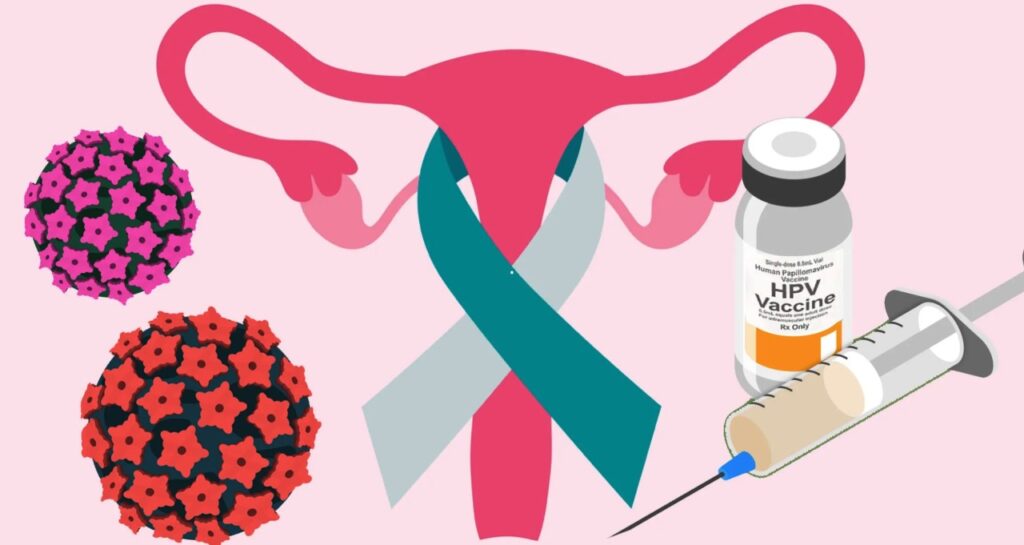
Cervical cancer, in particular, stands apart. It is the only major cancer that is fully preventable. With effective vaccines, reliable early-detection tools, and proven treatments, including surgery, chemotherapy, and radiotherapy, cervical cancer can be both prevented and cured with high success rates.
Despite this, India continues to lose one woman every eight minutes to cervical cancer, primarily because most cases are detected at stage four, when treatment options become limited. This grim reality underscores the urgency of the WHO’s 90-70-90 initiative. The program sets three ambitious targets: vaccinate 90% of girls aged 9–11, ensure 70% of women aged 30–45 undergo screening, at least twice, with Pap smears or other methods, and guarantee that 90% of women diagnosed with cervical cancer receive timely treatment.
India has taken a promising step with the launch of Cervavac, its indigenous HPV vaccine. However, significant challenges remain. The vaccine has yet to be fully integrated into the national immunization schedule, a delay that hampers widespread access and undermines the country’s ability to meet global elimination targets.
Q: How does cervical cancer develop, and in what ways can vaccination help in its prevention and control?
A: Cervical cancer is, above all, a preventable disease. Its primary cause is infection with the high-risk strains of the Human Papillomavirus (HPV). Vaccination directly targets these strains, eliminating the virus before it can cause lasting harm.
To achieve true protection, however, both males and females must be vaccinated. Only then can we build herd immunity across the population. Without the virus circulating, new infections cannot take hold, and the chain of transmission is broken.
The science is clear: when an HPV infection persists over time, often for 8 to 10 years, it can progress to cancer. By stopping the infection at its source, vaccination not only prevents HPV but also removes the very foundation on which cervical cancer develops.
Q: Is there a link between IVF treatments and increased cancer risk, and what does current medical research suggest?
A: In vitro fertilization (IVF) itself is not always the direct cause of concern. When a woman struggles to conceive, there is usually an underlying condition, such as polycystic ovary syndrome (PCOS) or endometrial hyperplasia. Both PCOS and endometrial hyperplasia are established risk factors for ovarian cancer.
Now, when women undergo IVF, ovarian stimulation occurs. A single cycle, or even two, rarely raises concern. Most patients do not face a significant cancer risk after just a few rounds of treatment. However, when stimulation is repeated multiple times, six or seven cycles, the ovaries experience sustained stress. This repeated stimulation may slightly increase the risk of ovarian cancer.
Still, it is important to emphasize that the risk remains relatively low. The bigger challenge is that ovarian cancer lacks an effective screening method, which makes early detection extremely difficult. Therefore, while repeated IVF cycles can contribute to a marginally higher risk, ovarian stimulation alone is not considered a major cause of ovarian cancer unless the exposure is prolonged and frequent.
Q: Considering palliative care’s importance, what guidance would you offer women and families on self-care while supporting loved ones with disease?
A: Everyone agrees that prevention is better than cure. This principle applies not only to cancer but to health at every stage of life. Let me begin with adolescence, because that is where awareness must start.
At this age, schools should emphasize sexual health education. Adolescents must learn about the risks of early sexual activity and multiple sexual partners, since these are major causes of cervical cancer. They should also be taught about menstrual health, personal hygiene, and proper nutrition. Awareness in these formative years lays the foundation for lifelong health.
In my own practice, I run a “Teenage Tuesday” clinic, and I see alarming trends. For example, I recently met a 20-year-old weighing 110 kilograms. Such obesity not only increases the risk of cancer but also predisposes young people to diabetes, hypertension, and other non-communicable diseases. Obesity is becoming the next global pandemic. The solution is simple yet critical: adopt a healthy lifestyle. Eat balanced meals: eat less, but eat right. Exercise regularly. Encourage active living.
We, as parents and caregivers, often focus on giving children everything they want. Instead, we must train them in discipline and healthy habits. Cultures such as the Chinese and Japanese emphasize training over indulgence, and we should learn from them. Children and adolescents need activity, not just access. A healthy and active lifestyle in early years pays dividends later.
By the time a person reaches their twenties, stress management and emotional well-being become equally important. After the age of 25, reproductive health must also take priority. Beyond the age of 30, regular medical check-ups become essential. Periodic tests, such as a whole-abdomen ultrasound every one to two years, can detect silent diseases at an early stage, when they are most treatable.
Unfortunately, awareness remains low. Even in affluent areas like South Delhi, I see patients who are unaware of basic preventive practices. Just yesterday, a 68-year-old woman came to me with a massive, rock-hard breast lump. Such a condition develops over years, and yet she had never undergone a simple breast examination. This shows how critical self-awareness is. In fact, even a blind woman can detect breast abnormalities by touch, which proves that anyone can. Knowing the difference between normal and abnormal is the first step toward saving lives.
Self-examination for breast cancer is vital, and so is recognizing red-flag signs for other diseases. For example, abnormal vaginal discharge, irregular bleeding, intermenstrual bleeding, or post-coital bleeding should never be ignored. These symptoms demand immediate medical attention.
Ultimately, health awareness, beginning in adolescence and continuing throughout life, is the cornerstone of prevention. When we know what to look for, we can act early, prevent disease, and protect lives.
Q: How effective is vaccination for survival, and what impact does missing the recommended timeframe have on its effectiveness?
A: According to the global vaccination schedule, the recommended age for the HPV vaccine is between 9 and 11 years. However, India does not yet have a uniform national schedule. The World Health Organization (WHO) advises that if vaccination is completed before the age of 15, only two doses are required, one at zero months and the second after two months.
If the vaccine is administered after 15 years of age, three doses are necessary: the first at day zero, the second at two months, and the third at six months, maintaining a four-month interval between the second and third doses.
In India, the Federation of Obstetric and Gynaecological Societies (FOGSI) recommends vaccination up to the age of 40. While it cannot guarantee 99 percent protection, the vaccine does provide significant safeguarding against cervical cancer. Most importantly, when given before the onset of sexual activity, the vaccine serves as one of the most effective preventive measures available.







3 Comments
Your thoughts are always so well-organized and presented.
I love how well-organized and detailed this post is.
This content is gold. Thank you so much!
Comments are closed.