

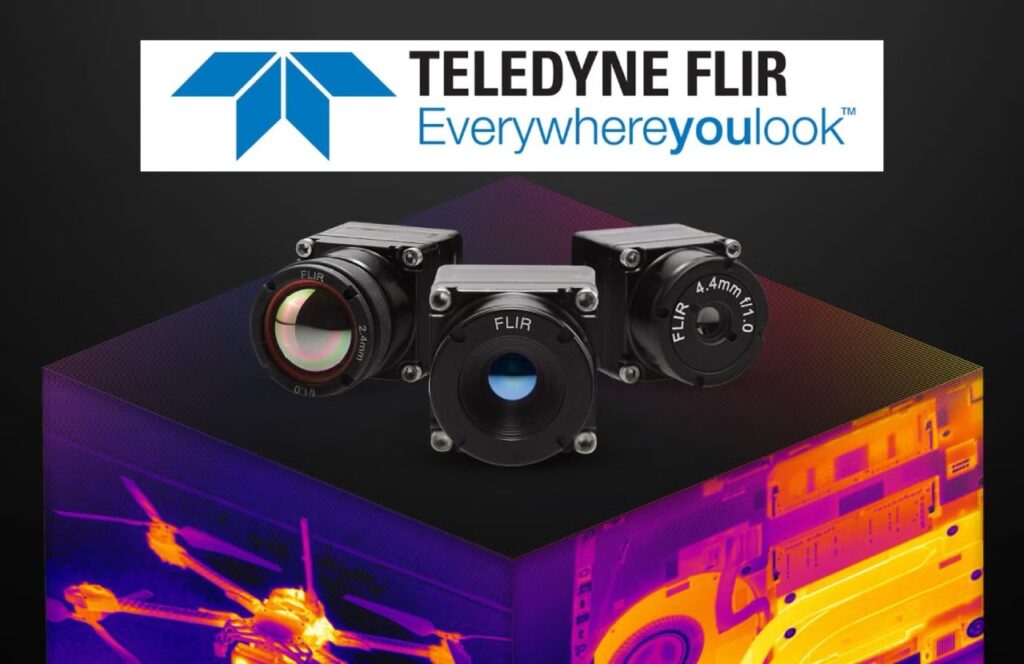
Teledyne FLIR, founded in 1978 as FLIR Systems, stands as a global pioneer in advanced sensing technologies, aptly described as delivering the “world’s sixth sense.” Headquartered in Wilsonville, Oregon, with a major base in Arlington, Virginia, the company engineers and markets state-of-the-art solutions in thermal imaging, visible-light imaging, video analytics, measurement, diagnostics, and threat detection. Its innovations power mission-critical operations across government, defense, industry, and commerce, ranging from public safety and border security to industrial inspection and smart mobility.
Over the years, the company strengthened its technological edge through strategic acquisitions, including Agema, Inframetrics, Indigo Systems, Extech Instruments, Prox Dynamics, and Endeavor Robotics. A decisive milestone arrived in 2021, when Teledyne Technologies acquired FLIR in an $8 billion transaction. The integration gave birth to Teledyne FLIR, aligning its legacy with Teledyne’s expansive portfolio.
Today, Teledyne FLIR offers an unmatched range of solutions: thermal security systems, drone payloads, robotic platforms, infrared cameras for research and industrial testing, automotive sensors, and OEM modules enhanced with artificial intelligence. With a mission to build a safer, more efficient, and sustainable future, the company continues to innovate at the nexus of perception and awareness. Its intelligent sensing technologies now empower first responders, defense forces, industries, and everyday users worldwide.
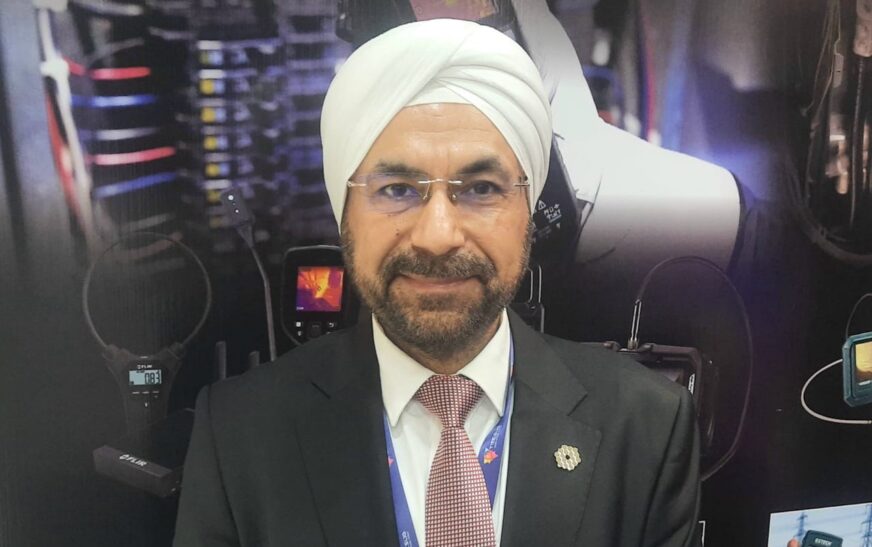
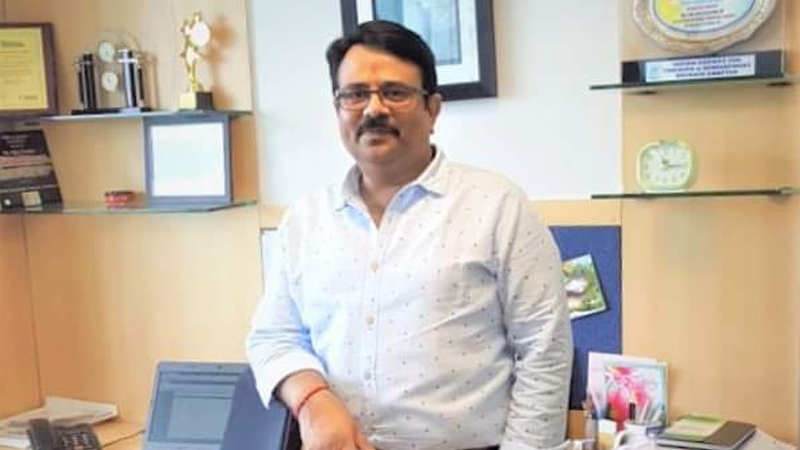
At ETES 2025, organized by Electrical Mirror, The Interview World held an exclusive dialogue with T. P. Singh, Vice President, Sales – APAC Instrumentation at FLIR. Singh outlined the company’s pioneering technologies and their role in accelerating digitization. He highlighted distinctive applications of thermal cameras, explained how these innovations deliver measurable economic advantages to end users, and emphasized the adaptability of FLIR’s solutions within India’s dynamic market. The following sections capture the most compelling insights from his conversation.
Q: What innovative solutions and technologies are you introducing to advance electrical digitization across the country?
A: Earlier, thermal imaging cameras served a limited purpose. Teams captured images and generated reports only after completing the condition-monitoring process, often taking a week or more. That model has now changed dramatically. The latest innovation, Route Creator, transforms the workflow by guiding field personnel with precise, real-time instructions directly from management.
Here’s how it works. Suppose Manager X wants Technician Y to inspect CT No. 1, PT No. 2, and City No. 3 in a specific order. X simply programs the sequence into the system. As Y completes the first task, the next instruction automatically appears. The process ensures absolute clarity, eliminating ambiguity about what needs to be done next.
Moreover, if the system connects to the cloud via Wi-Fi or mobile networks, Manager X can monitor progress live from the office. Every image Y captures becomes instantly visible, creating a seamless flow of information across locations. What once took 10 to 12 days now happens in just 10 to 12 minutes. Distance is no longer a barrier.
The advantages extend further. Historical comparisons become effortless. For instance, an image taken in January can be instantly matched against one captured in August. FLIR’s Thermal Studio Suite compiles the data on a single digital platform, making trend analysis and diagnostics far more efficient.
Finally, the system also integrates acoustic imaging. Users can combine multiple data streams, thermal, acoustic, and more, within one cohesive platform. The result is a powerful, unified tool that accelerates decision-making, enhances accuracy, and redefines condition monitoring for the digital age.
Q: Can you elaborate on the unique applications of thermal cameras across industries?
A: Thermal cameras open a window beyond the limits of human vision. Their applications keep multiplying as users uncover new possibilities. During the COVID-19 pandemic, they gained global visibility when airports deployed them to detect elevated body temperatures with remarkable accuracy, down to 0.1°C, while maintaining safe, contactless screening.
Since then, their impact has broadened across sectors. In building diagnostics, thermal cameras pinpoint insulation flaws by detecting heat or air leakage through walls, enabling precise energy efficiency assessments. In the automotive industry, they play a vital role in R&D. By measuring the temperature of steel radial wires in high-performance tires at speeds exceeding 200 km/h, where conventional contact methods fail, they ensure safety, reliability, and innovation.
Defense and research institutions, including DRDO laboratories, rely on thermal imaging for diverse thermodynamic applications. Firefighting teams use it to see through dense smoke, guiding critical rescue and response operations. In electrical utilities, these cameras detect invisible gases such as SF6, identifying leakages as small as 20.26 grams per hour from a safe distance. The result: enhanced safety, efficiency, and preventive maintenance.
Industries requiring uninterrupted oversight also benefit from automation-integrated thermal cameras. These systems provide continuous 24×7 monitoring, supporting mission-critical operations where downtime is not an option.
In essence, thermal cameras are redefining industrial standards. They deliver non-invasive, precise, and versatile solutions across healthcare, infrastructure, automotive, defense, and safety. Often, one intended application reveals ten more, making these cameras indispensable to a rapidly digitizing world.
Q: How do thermal cameras deliver economic value and practical benefits to end users?
A: For the end user, the benefits are extensive and measurable. First and foremost, efficiency rises sharply. Earlier, generating reports consumed days, sometimes weeks. Now, the same task concludes within minutes.
Second, comparison becomes seamless. In the past, a user searching for an image captured in January had to dig through folders, retrieve the file, and then rely on separate software to compare it with newer data. That cumbersome process no longer exists. With the integrated platform, comparisons happen instantly, without effort or delay.
The outcome is twofold. Efficiency multiplies, and with it, the return on investment accelerates. In fact, utilities and end customers typically recover their investment within just 9 to 12 months, a dramatic improvement over earlier timelines.
Q: How adaptable are electrical and manufacturing companies in the country to adopting your products?
A: Adaptability remains exceptionally high. The real challenge lies only in awareness. Once utilities or customers understand the product’s benefits and features, adoption follows almost instantly. The technology proves its effectiveness in the field, leaving little room for hesitation.
As a result, penetration across sectors, electrical utilities, manufacturing, automotive, and pharmaceuticals, has been strong. The response has been consistently positive, and the company now counts a growing base of satisfied customers across India.



2 Comments
“Great content, learned a lot from this post!”
“Great content, learned a lot from this post!”
Comments are closed.