


Dr. Seema Alawa embodies a rare synthesis of discipline and artistic flair—an acclaimed Pithora painter and the Additional Deputy Commissioner of Police (Headquarters), Indore. A 1998-batch officer of the Madhya Pradesh State Police Service, she leads with a powerful blend of integrity, empathy, and an unwavering commitment to community welfare. Her leadership transcends the boundaries of traditional policing—whether through eldercare initiatives or wellness programs for law enforcement personnel, she champions a holistic vision of public service.
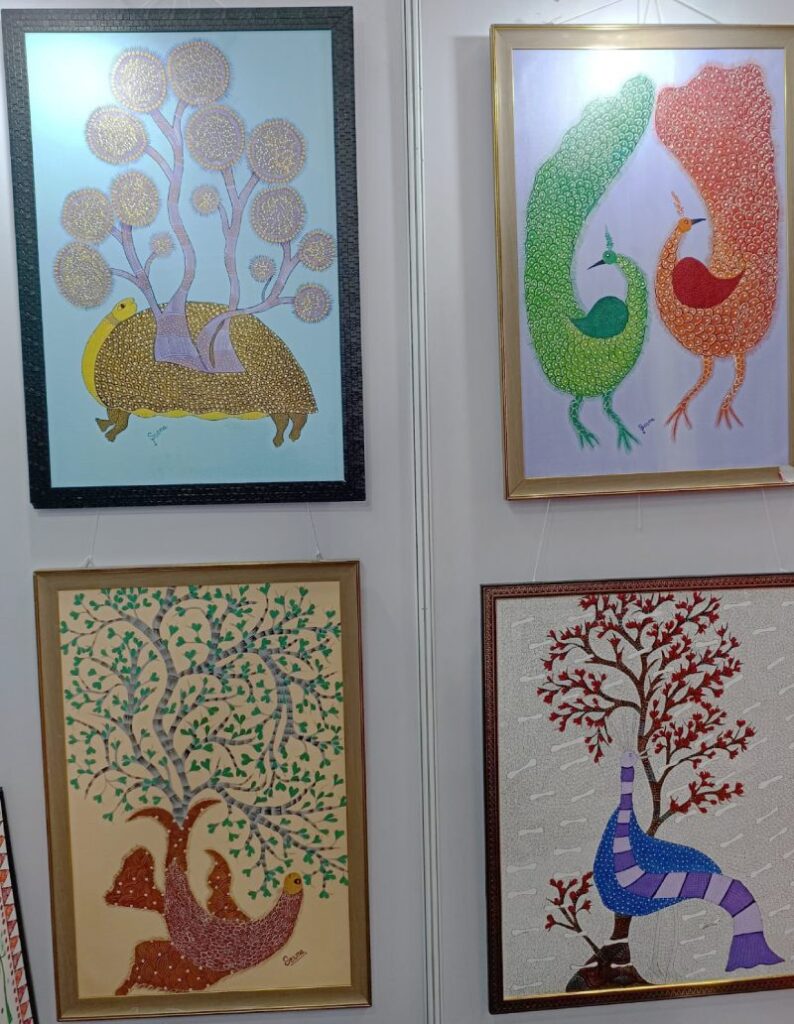
Yet, her impact resonates far beyond her uniform. In 2015, while investigating a case in Jhabua, a fleeting glimpse of tribal wall art transformed into a lifelong calling. That moment sparked a journey into the world of Pithora painting—an ancient, ritualistic art form rooted in the culture of the Rathwa and Bhilala tribes. What began as an encounter evolved into a mission of revival. Since then, Dr. Alawa has created over 200 Pithora works—ranging from intricate canvases to expansive murals that now adorn temples, government buildings, cultural academies, and even international venues. Her largest work stretches across an astonishing 147 square meters. In recognition, her artistry earned a place in the Guinness World Records.
Driven by purpose, she has used art as a vehicle for empowerment. Through workshops supported by NGOs and UNICEF, she trains women officers, police families, and tribal youth—melding artistic expression with cultural preservation and social upliftment. In 2023, the Government of Madhya Pradesh honoured her with the prestigious Jangan Shyam Samman—the state’s highest accolade for tribal artists. This distinction not only celebrates her creative mastery but also salutes her tireless dedication to safeguarding indigenous heritage.
Armed with a PhD in tribal art and gender empowerment, Dr. Alawa weaves two worlds into one—law enforcement and traditional artistry. Her canvas tells stories of ancestry; her service reflects a deeper purpose. Together, they shape her identity as both guardian and storyteller. She does not merely paint; she reimagines India—more inclusive, more rooted, more resilient.
In an exclusive interview with The Interview World at The Haat of Art, Dr. Seema Alawa opens up about her artistic journey as a Pithora artist, the delicate equilibrium between duty and creativity, the deeper themes that animate her work, her presence in global forums, and the spaces where her art has found a home. Most importantly, she shares guiding wisdom for emerging artists. Here are the key insights from her inspiring dialogue.
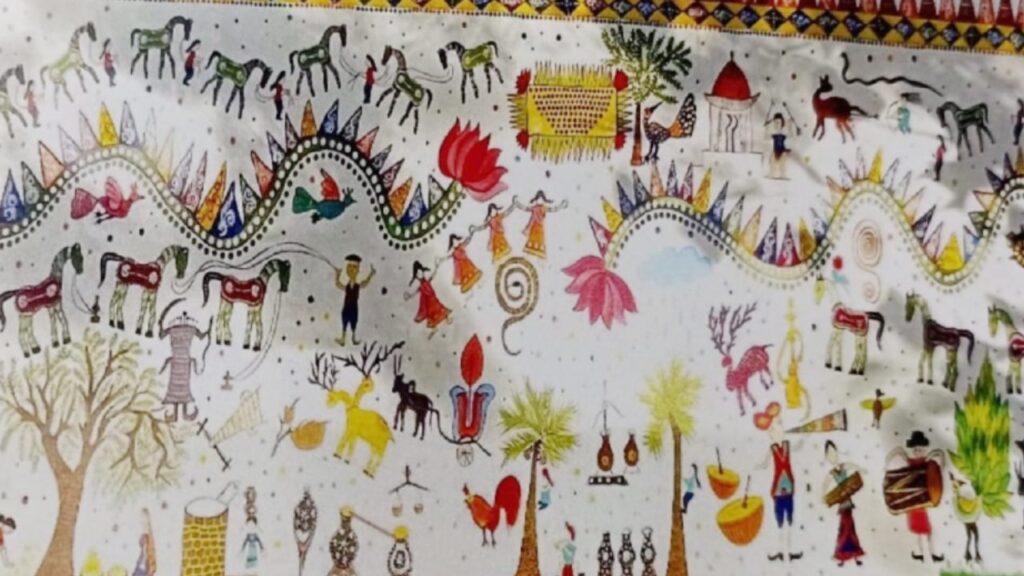
Q: Could elaborate on the artwork you have displayed here, and what motivated you to pursue this creative passion despite the demanding schedule of your role at the Indore Police Headquarters?
A: During my posting in the tribal district of Jhabua, Madhya Pradesh, I first encountered Pithora art. That moment changed everything. I realized that this ancient and sacred art form was fading into obscurity—barely anyone truly understood its depth or symbolism. Moved by this realization, I made a conscious decision: I would not let Pithora art be forgotten. I would learn it, live it, and introduce it to the world.
I immersed myself in its tradition—studying its motifs, practicing its technique, and understanding its cultural essence. I began creating my own Pithora works and displayed them in spaces of authority—the District Collector’s office, the District Panchayat, and even my own office. Gradually, I expanded its reach through public platforms, including the UNICEF portal and various social media channels. My intent was clear: to amplify the voice of a rich tribal legacy.
After three to four years of relentless work, the Government of Madhya Pradesh recognized my efforts and honoured me with the Jangan Shyam Samman—the highest state award for tribal artists. That moment reaffirmed my mission. For me, Pithora is not a pastime. It is not just a visual language. It is a passion and a responsibility—a commitment to preserve, promote, and pass on this living tradition.
Now, after nearly a decade, I actively participate in national art exhibitions. This marks my eighth edition with The Haat of Art, and through it, I have showcased Pithora across cities like Bengaluru, Mumbai, and Delhi. I have also brought it home to Indore and to the prestigious Bharat Bhavan in Bhopal.
One of my proudest moments was presenting a Pithora painting to the Hon’ble President of India, Smt. Droupadi Murmu. That gesture wasn’t just a gift—it was a tribute to our indigenous roots, shared from one custodian of culture to another.
Q: Policing demands discipline and resilience, while painting thrives on creativity and imagination. How do you strike a balance between the rigours of your profession and the freedom of your artistic passion?
A: Yes, it’s absolutely true—we are on duty 24 hours a day. The demands of law enforcement never pause. Yet, for me, art isn’t just a hobby—it’s a sanctuary. Unlike work, which follows duty and deadlines, a true passion finds its own time, even in the midst of chaos. Whether I’m managing a night patrol to maintain law and order or reaching for a brush after midnight, I carve out moments for my art.
Each day, I devote at least half an hour to painting. That time is sacred. It offers a quiet reprieve from the intensity of my profession. With every brushstroke, I feel restored. The process centers me—it has become a form of meditation. It doesn’t tire me. Instead, it fuels me. I pursue it not out of obligation, but out of devotion—relentlessly, and without fatigue.

Q: What is the central message you aim to convey through your artwork to the audience?
A: Keep going—my message is simple and unwavering: never stop. Always pursue what stirs your soul and ignites your thoughts. When you act with intention and give your all, the universe responds. Commit sincerely, and the rewards—divine or destined—will surely follow.
Q: How many national and international events have you participated in, and where have your paintings been showcased?
A: I have showcased my work in 8 to 10 national-level exhibitions across India. One of my paintings proudly hangs at Rashtrapati Bhavan. Several others grace the Governor’s House and even the Embassy of Qatar in Doha, where ten of my works are part of the collection.
Internationally, my art has found a home in Leicester, UK. Within India, institutions such as the Madhya Pradesh government and numerous central offices—including the Intelligence Bureau in Delhi—exhibit my paintings. As these are official spaces, my work often reaches distinguished hands. Whenever the opportunity arises to present a painting to a dignitary or VIP, I ensure it becomes a meaningful gesture through my art.
Q: What guidance would you offer to emerging artists striving to make their mark in the world of art?
A: The first principle in art—and for any artist—is to present your work in the right place. When you display your art in the space it truly deserves, recognition inevitably follows.
You never know when, where, or by whom your work might be noticed. Art carries its own destiny. So when the moment comes—whether expected or sudden—you must seize it without hesitation. Each opportunity to showcase your art is a doorway. Walk through it. If you do, your work will find its audience—without fail.




6 Comments
I love the clarity in your writing.
This post gave me a new perspective I hadn’t considered.
I really needed this today. Thank you for writing it.
This gave me a lot to think about. Thanks for sharing.
Nice
Nice
Comments are closed.