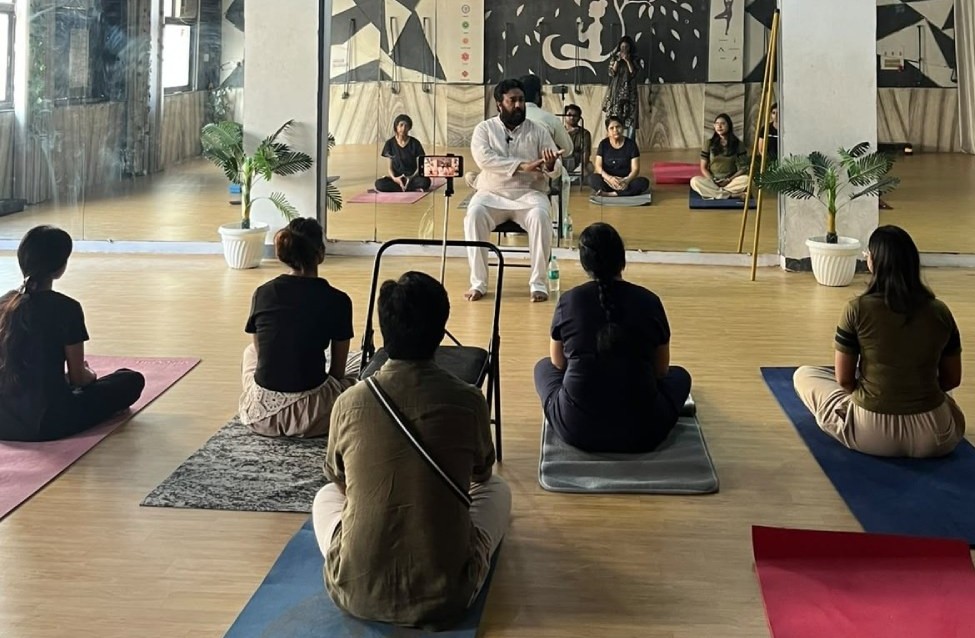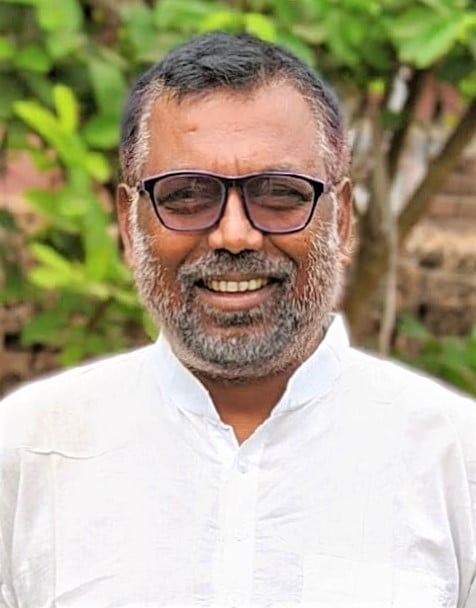

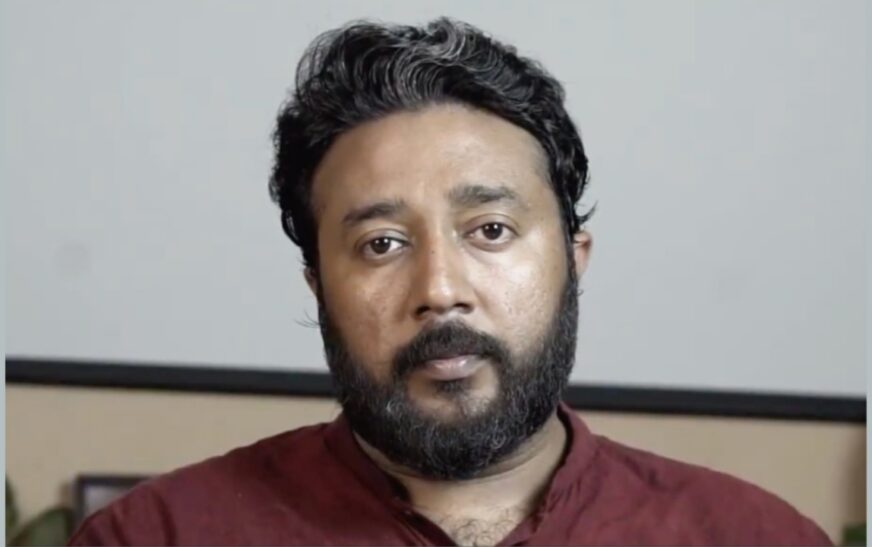
Acharya Nilay is a contemporary spiritual guide who advocates practical spirituality, self-inquiry, and conscious living. His philosophy encourages individuals to question inherited beliefs, examine the workings of the ego, and discover their true Self through awareness and direct observation. Rather than prescribing rigid doctrines or advocating withdrawal from worldly responsibilities, he emphasises the importance of integrating spirituality into everyday life, relationships, professional ambitions, and social commitments.
Through his talks, books, podcasts, and institutional engagements, primarily in Hindi, Acharya Nilay explores fundamental questions concerning identity, happiness, success, and human suffering. His vision of spirituality extends beyond individual transformation to encompass environmental consciousness, meaningful education, critical thinking, and social responsibility. He encourages people to move beyond conditioned patterns of thought and action and cultivate a life guided by clarity, compassion, and deeper understanding.
In an exclusive conversation with The Interview World, Acharya Nilay reflects on the formative experiences that prompted him to question conventional notions of success and happiness. He explains how self-inquiry can help individuals examine their identities, understand their emotional responses, and distinguish intellectual knowledge from genuine awareness. He also discusses the relationship between material achievement and inner freedom, the role of self-awareness in confronting social prejudice and inequality, and the importance of investigating one’s identity amid technological disruption and relentless social comparison. Here are the edited excerpts from this insightful conversation.
Q: You have experienced life as an entrepreneur before dedicating yourself to spirituality and self-inquiry. What pivotal experiences prompted you to look beyond conventional definitions of success and happiness?
A: I cannot attribute this transformation to a single defining moment. Several experiences, unfolding over the years, gradually drew me towards deeper self-inquiry.
I was born into a poor family, and questioning the world around me came naturally from an early age. I won a UNICEF award in Class VII, yet the recognition and applause did not make me feel genuinely happy. I remember how, during Durga Puja, my grandparents would dress me in new clothes. Instead of simply enjoying the occasion, I often thought about children back home who lacked even adequate clothing and food. This raised a troubling question in my mind: Why does such inequality exist?
As I grew older, I established a business and achieved what society would generally describe as success. However, my fundamental questions remained unanswered. Travelling across India exposed me to people from different social and economic backgrounds, and I encountered suffering in countless forms.
Then, during one visit to Kerala, I was meditating beside the sea when something shifted within me. It is difficult to articulate that experience in words. Nevertheless, it marked an important turning point. I began examining suffering, happiness, and identity more deeply, shifting my attention from the external world to the inner dimensions of human existence.
Q: We often define ourselves through our thoughts, memories, emotions, and personality. From the perspective of self-inquiry, how can we determine whether these constantly changing experiences truly define who we are?
A: The inquiry begins with a simple but profound question: What am I not?
Our names, professions, beliefs, opinions, and social identities emerge through family, education, culture, and personal experiences. Moreover, they continue to change throughout our lives. Yet we rarely question whether these acquired identities represent our complete existence.
Start by observing your thoughts. They arise and disappear. Emotions emerge and subside. Your body changes, and your personality evolves with experience. Despite these constant changes, we identify ourselves with almost every thought, feeling, and reaction.
Self-inquiry requires us to examine this identification. When anger arises, observe it rather than immediately acting on it. When someone criticises you, examine your reaction. Ask yourself why a particular comment affects you so deeply. What insecurity, expectation, or attachment does it expose?
Through such observation, you gradually recognise how conditioning shapes your identity. You begin questioning the beliefs, memories, and assumptions that you have accepted as defining features of yourself. The inquiry then moves deeper: Who is observing these experiences? What is the nature of the one who identifies with them? These questions cannot be resolved through borrowed conclusions; they demand direct observation and personal understanding.
Q: Awareness occupies a central place in your philosophy. How would you distinguish intellectual knowledge from genuine awareness? Can you illustrate how awareness transforms an individual’s response to anger, fear, or conflict?
A: Intellectual knowledge provides information, whereas awareness involves directly observing what is happening within you in the present moment.
For instance, someone may understand that anger clouds judgement and damages relationships. They may read books about emotional regulation and recognise the consequences of uncontrolled anger. Yet, when another person insults them, they may react impulsively.
Awareness changes this process. When anger arises, the individual begins observing it as it unfolds. They may recognise the hurt, fear, insecurity, or desire to defend their image beneath the reaction. This observation creates an opportunity to understand the emotion before responding.
The person may still experience anger, but they no longer have to act mechanically under its influence. Instead of allowing conditioning to dictate their response, they can examine what is happening and respond with greater clarity.
That is the distinction between merely knowing something and becoming aware of it. Awareness is not simply another concept to understand intellectually. It requires us to recognise how our conditioning operates and observe its influence on our thoughts, emotions, and actions.
Q: You frequently explore consciousness and the deeper Self. How do you understand consciousness, and how does your perspective differ from psychological explanations of self-awareness or scientific accounts of the brain and mind?
A: My inquiry begins with one fundamental question: Who am I?
We generally associate ourselves with our bodies, minds, thoughts, emotions, memories, and personalities. Psychology helps us understand human behaviour, emotional patterns, and mental processes. Similarly, scientific inquiry investigates the brain and the mechanisms associated with cognition and consciousness.
Self-inquiry, however, directs our attention towards a different question: Why do we identify so completely with these changing experiences?
Our thoughts change. Our emotions fluctuate. Our bodies evolve, and even our understanding of ourselves transforms over time. Yet we rarely investigate the assumptions that lead us to treat these experiences as our entire identity.
My approach emphasises observing the mind and examining the assumptions through which we define ourselves. This requires direct investigation rather than unquestioning acceptance of philosophical or spiritual explanations.
An explanation may introduce the question, but it cannot substitute for personal understanding. Ultimately, every individual must undertake this inquiry independently. The objective is not to adopt another person’s conclusion but to discover through direct observation what is true.
Q: In a world that constantly encourages wealth creation, career advancement, social status, and recognition, must individuals distance themselves from material ambitions to achieve inner clarity? Or can they pursue material success while remaining inwardly free from attachment?
A: Work, ambition, and material responsibilities have their rightful place in life. For instance, someone who cannot provide food and security for their children must address those practical necessities. Spirituality does not require us to neglect our responsibilities or withdraw from the world.
The real question is what we expect success to deliver. We pursue wealth, status, and recognition, often believing that the next achievement will finally make us feel complete. However, once we accomplish one goal, the mind quickly moves towards another. We receive a promotion but immediately seek the next one. We purchase a house and begin comparing it with someone else’s.
Therefore, we must ask ourselves: What do I actually want?
When we depend on achievements to establish our worth, we become prisoners of outcomes and external approval. This dependence breeds insecurity, fear, and anxiety. However, we can pursue our ambitions wholeheartedly while simultaneously examining our attachment to results.
We must also recognise that we are not the independent doers we often imagine ourselves to be. Our actions emerge within a wider network of circumstances, influences, and conditions. When we loosen our identification with the ego and our attachment to outcomes, work can become more intelligent, purposeful, and effortless.
Inner clarity does not demand the abandonment of ambition. It demands that we understand the motives behind it and recognise the conditioning that shapes our desires.
Q: Your philosophy connects self-awareness with compassion and social transformation. How can understanding our own conditioning help address larger challenges such as inequality, prejudice, conflict, and the tendency to divide people into opposing groups?
A: From childhood, we develop identities through our families, religions, educational institutions, cultures, and societies. We learn where we belong and, often without questioning, how to perceive those who belong elsewhere. These early influences shape our attitudes towards other people.
Consequently, we may judge someone by their religion, financial position, social status, or upbringing without ever examining the assumptions behind our judgement. Such conditioning can reinforce prejudice, discrimination, and divisions between communities.
The question of inequality has troubled me since childhood. I witnessed situations in which some children lacked basic necessities while others enjoyed considerable privileges. Later, my travels across India exposed me to vastly different circumstances and forms of suffering among both the rich and the poor.
Self-inquiry enables us to examine the thoughts, beliefs, and fears that influence our responses to others. When we recognise the roots of our prejudices, we become better equipped to challenge them rather than unconsciously reproducing them.
Of course, social problems also demand practical interventions, institutional accountability, and collective action. Self-inquiry alone cannot eliminate inequality or resolve every conflict. However, it can help individuals recognise the biases that shape their decisions and behaviour. Meaningful social transformation requires both inner understanding and responsible action.
Q: What fundamental question would you encourage young people to investigate as they navigate technological disruption, uncertainty, and constant social comparison?
A: I would encourage every young person to begin with one fundamental question: Who am I?
We spend much of our lives trying to become successful, respected, recognised, and accepted. Social media intensifies this pursuit by constantly exposing us to other people’s achievements, lifestyles, and apparent happiness. As a result, we repeatedly compare our lives with carefully presented versions of others’ lives.
Yet we rarely pause to understand the person who is pursuing all these things.
Your name, profession, achievements, and social identity are aspects of your life, but they do not necessarily reveal your complete identity. Therefore, look beyond these external definitions and examine what lies beneath them.
Observe your thoughts, emotions, desires, and reactions. Ask yourself why you want what you want. Do your choices emerge from genuine understanding, or have you simply accepted expectations imposed by family, society, and popular culture?
You do not need to arrive at immediate answers. What matters is the willingness to question honestly and observe deeply. As you examine the identities, beliefs, and assumptions you have accumulated, you begin to understand yourself with greater clarity.
That is where the journey of self-discovery begins.