


COLTENE stands as a Swiss-born global leader in dental innovation, purpose-built to advance everyday dentistry through precision consumables and compact, high-performance equipment. By design, its intelligently engineered portfolio addresses the full clinical continuum—endodontics, restorative dentistry, prosthetics, infection control, treatment aids, and rotary instruments—delivering solutions clinicians rely on when precision and outcomes are non-negotiable. Anchored by its commitment to “Upgrade Dentistry,” COLTENE integrates scientific rigor with real-world clinical insight, thereby enhancing efficiency, reliability, and the standard of patient care. Supported by advanced manufacturing capabilities, a robust global distribution network, and a public listing on the SIX Swiss Exchange, COLTENE goes beyond enabling dental professionals; it empowers them to practice with greater intelligence, consistency, and confidence.
Against this backdrop, The Interview World engaged in an exclusive discussion with Farhat Hasan, Managing Director of COLTENE India, at Expodent International India 2025. During the conversation, he detailed the company’s latest innovations in dental products, outlined its pricing philosophy, articulated the growth trajectory of India’s dental industry, and evaluated the evolving landscape of oral health awareness across the country. What follows are the key insights from this incisive and thought-provoking exchange.
Q: What innovative dental products has COLTENE introduced, and what technological differentiators set them apart in the global market?
A: COLTENE is a Swiss company globally recognized for uncompromising quality and engineering precision. From the outset, it has set industry benchmarks by introducing several breakthrough products ahead of the market. For instance, COLTENE pioneered advanced restorative solutions, including composite materials widely used to deliver natural aesthetics alongside functional durability. Moreover, it became the first company to launch a duo-shade composite, a development that significantly simplifies shade selection for dentists while achieving more lifelike restorative outcomes. In doing so, COLTENE remains true to its philosophy: preserving and enhancing natural teeth, the Swiss way.
Beyond composites, COLTENE continues to differentiate itself through material innovation. One such example is the Creos block, manufactured from advanced composite material rather than conventional zirconia or similar substrates. While zirconia remains common, composite blocks more closely replicate the resistance, elasticity, and overall behaviour of natural teeth. As a result, COLTENE occupies a unique position in the market, having been the first to introduce this solution globally.
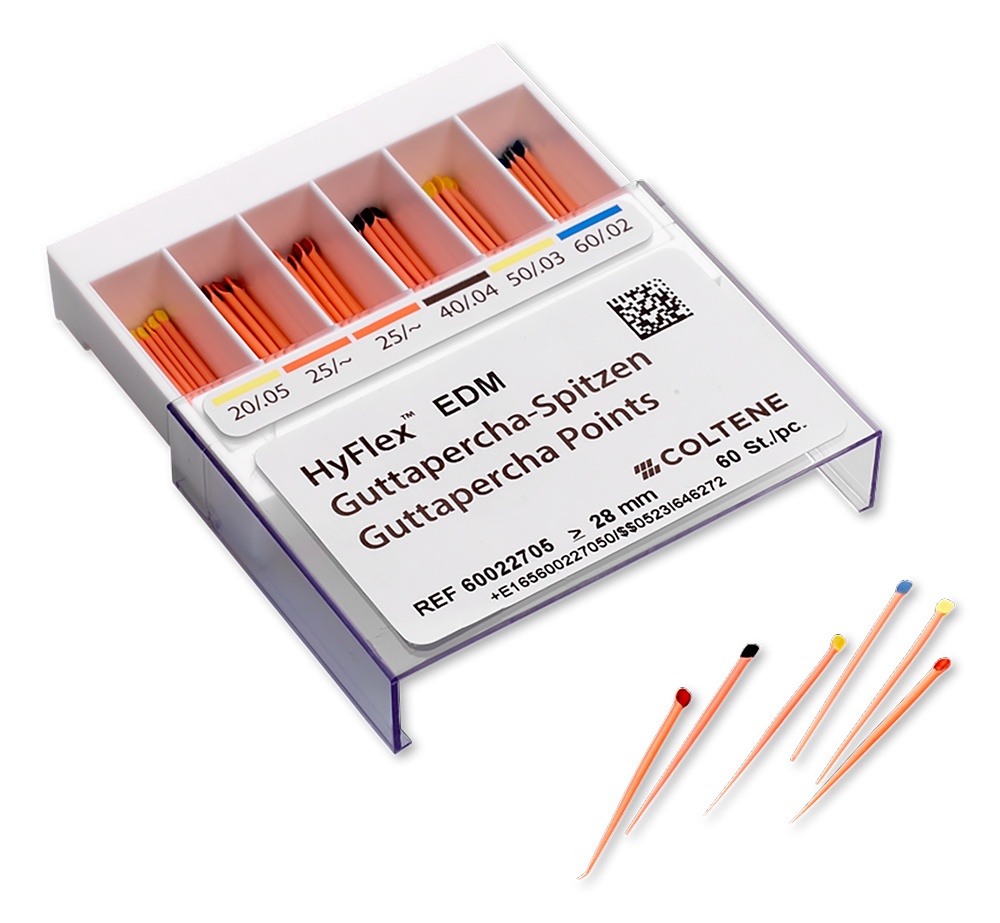
The company’s leadership extends equally into endodontics. In root canal therapy, COLTENE’s HyFlex EDM file system represents a fundamental shift in manufacturing technology. Unlike traditional files that are ground or twisted, HyFlex EDM files are produced using Electric Discharge Machining, a computer-controlled process in which electric sparks shape the instrument. During this process, excess metal is selectively evaporated or condensed, thereby enhancing structural integrity. Consequently, these files demonstrate superior strength, extended lifespan, improved cutting efficiency, and exceptional adaptability to complex canal anatomies. Notably, COLTENE remains the only company offering EDM-manufactured endodontic files in India, reinforcing its position as a category-defining innovator.
Q: Could you outline the pricing range of your dental product portfolio?
A: At first glance, the per-unit price may appear higher. However, when evaluated on a per-application basis, the economics tell a very different story. EDM technology enables clinicians to complete significantly more cases with a single file than conventional systems. As a result, while the initial investment is higher, the cost per use aligns closely with, if not matches, that of other file systems.
More importantly, this value proposition extends beyond pricing. The increased durability and performance directly enhance clinical efficiency, elevate practitioner confidence, and reinforce the assurance of working with one of the most advanced file systems available globally. In practical terms, it minimizes risk, optimizes outcomes, and delivers a level of reliability that few alternatives can match.
Q: What is your perspective on the long-term growth potential of the Indian dental industry?
A: The dental industry in India is currently in a clear phase of transition. On one hand, unorganized players continue to operate across the market; on the other, highly structured and professionally managed organizations are steadily gaining ground. Consequently, the industry is not only expanding but also maturing.
Having spent more than 25 years in this sector, I have witnessed this progression firsthand. Year after year, the trajectory has remained consistently upward. Looking ahead, there is little doubt that over the next two decades the dental industry will continue to grow as a vital and increasingly significant component of India’s broader healthcare ecosystem.
Q: How would you assess the state of oral health awareness in the country?
A: Awareness of dental health in India remains uneven and, overall, insufficient. While a few dentists have begun leveraging platforms such as podcasts and digital media, their reach is still limited. Consequently, public understanding of modern dentistry remains low. This gap calls for coordinated action. Government bodies must take the lead, private corporates must actively participate, and structured outreach initiatives, such as awareness camps, must be scaled up.
In urban centers, awareness levels are relatively acceptable. However, the situation in rural India demands far greater attention. Many patients in these areas remain unaware of the treatment options available to them. As a result, they often approach dentists with a single expectation: tooth extraction to relieve pain. What they do not realize is that, in many cases, the natural tooth can be restored, often simply and effectively, and preserved for 15, 20, or even more years.
Bridging this knowledge gap is a shared responsibility. Government institutions, corporate players, dental professionals, and individuals alike must work together to educate communities and promote preventive and restorative care. After all, the adage holds true: healthy teeth are essential to healthy aging. When oral health is preserved, overall well-being and quality of life improve significantly over the long term.






1 Comment
Excellent interview towards Upgrade Dentistry and our advancement in dentistry. I am also attached with Coltene more than 17years.
Thank you Farhat sir for the interview
Comments are closed.