

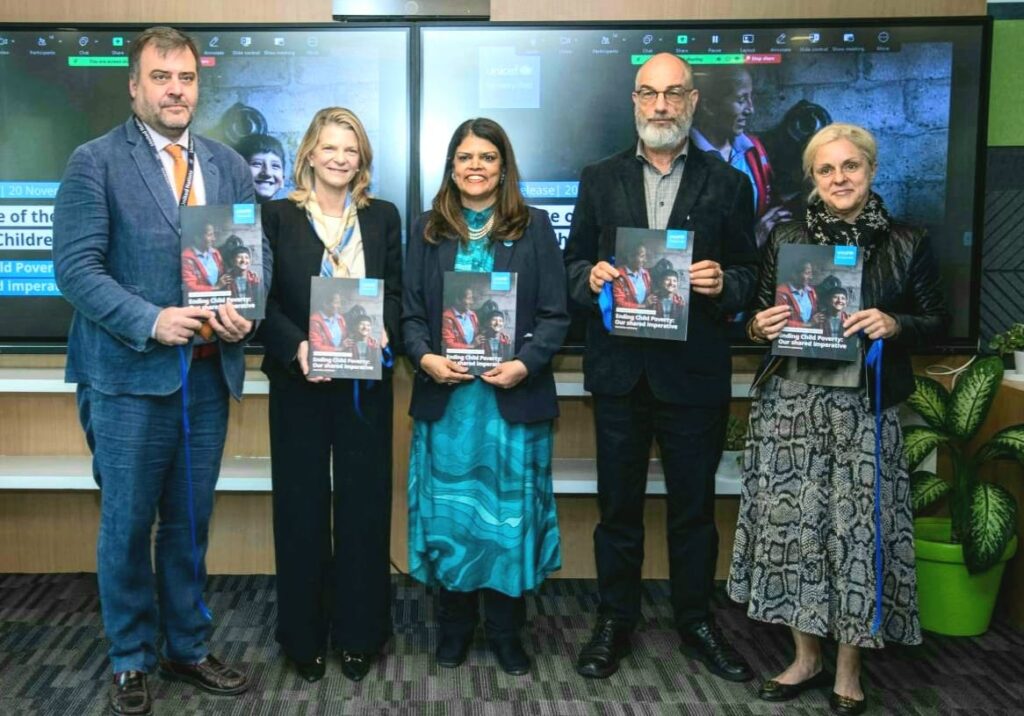
UNICEF’s State of the World’s Children (SOWC) 2025 Report reveals that over 400 million children in low- and middle-income countries lack access to at least two essential services critical for their health, development, and wellbeing. The most vulnerable include young children, those with disabilities, and children living in crises, with climate shocks, political instability, and rising national debts intensifying their hardships.
In India, home to 460 million children, the situation has improved significantly. Between 2013 and 2023, multidimensional poverty fell from 29.2% to 11.3%, while social protection coverage expanded to 64.3% of the population. Flagship programs such as Poshan Abhiyaan, Samagra Shiksha, and the Mid-Day Meal Scheme have strengthened access to nutrition, education, and healthcare.
The report calls on governments to place children at the center of policies and budgets, expand social protection, ensure equitable access to essential services, and empower children in decisions shaping their futures.
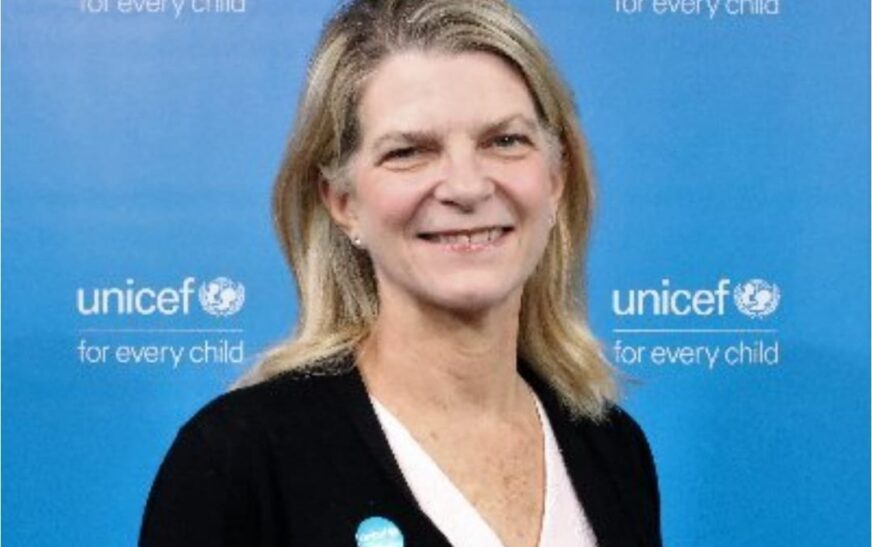
Against this backdrop, The Interview World had the opportunity to speak with Cynthia McCaffrey, UNICEF India Representative. In the conversation, she highlighted the key findings of the 2025 report and emphasized how children can contribute to India’s vision of a Viksit Bharat by 2047. She also discussed the impact of climate change on children, explained UNICEF’s collaboration with government programs to improve the lives of children in poverty, and drew lessons from India’s development that hold relevance globally.
Here are the key insights from her compelling discussion.
Q: Can you share the key takeaways from the State of the World’s Children 2025 Report?
A: The report highlights two fundamental findings. First, far too many children around the world continue to live in poverty: over 400 million survive on three dollars a day or less. It calls for urgent, collective action to address and ultimately end child poverty. Second, the report shows that effective programs and initiatives already exist. By learning from and building on these proven approaches, we can strategically invest in children, reduce poverty, and significantly improve their health, development, and overall wellbeing.
Q: Considering that developing human capital is crucial for India to become a developed nation by 2047, how do you see children contributing to this transformation?
A: The State of the World’s Children report shows that a global lesson applies strongly to India: investing in basic services builds the foundation for children’s future. It emphasizes funding education, healthcare, nutrition, and child protection systems. India has already made significant strides through its national schemes, and by continuing to expand and strengthen these initiatives, the country can ensure children have access to quality learning and healthcare. Such investments not only drive economic progress but also foster social development, laying the essential foundation for a Viksit Bharat.
Q: While the climate crisis affects all of us, what specific impacts is it likely to have on children?
A: Around the world, far too many children are suffering from climate-related shocks, including school closures caused by flooding, extreme heat, or pollution. The global community must come together to address climate change and find collective solutions. At the same time, it is essential to engage young people directly, helping them understand climate change and empowering them to take meaningful action. These efforts not only protect the planet but also ensure that children’s access to healthcare and education remains uninterrupted.
Q: How does your organization engage with government programs to improve the lives of children living in poverty?
A: UNICEF has partnered with India for 76 years. Currently, we are implementing a five-year country program designed in close collaboration with the government. Through this program, we support the design, refinement, and execution of India’s flagship initiatives. We provide technical assistance, share lessons learned, and help strengthen these programs. Our engagement also ensures that these schemes are effectively implemented at the state, district, and block levels, creating tangible impact for children across the country.
Q: What lessons from India’s development can be applied internationally?
A: As a global organization, UNICEF has the ability to observe, learn, and share lessons across countries. Through mechanisms such as our Executive Board, which meets three times a year, we disseminate insights through reports and dialogue, highlighting experiences from India as well as other nations. For example, we have showcased India’s successes at the UN General Assembly, including advancements in child nutrition, healthcare, and efforts to address non-communicable diseases. We also spotlight emerging initiatives and forward-looking strategies. Through these global meetings and platforms, UNICEF ensures that the lessons learned in India inform and strengthen child-focused programs worldwide.



2 Comments
I’ll be sharing this with a few friends.
I love the clarity in your writing.
Comments are closed.